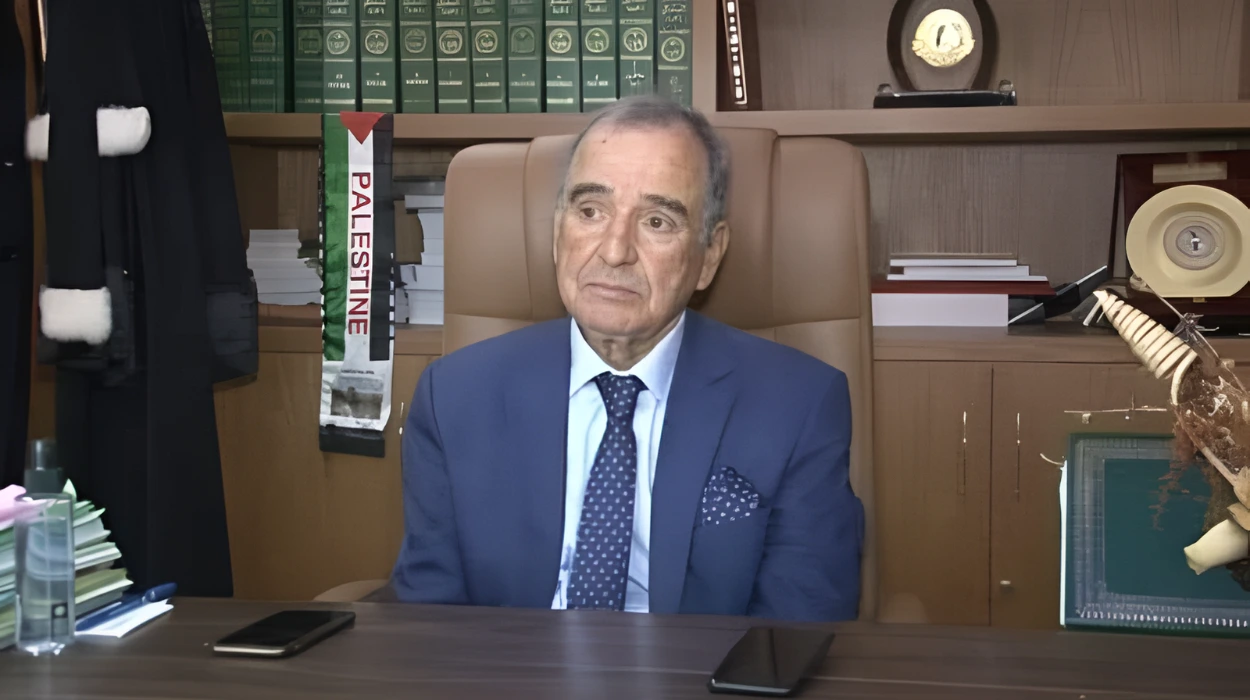
Mekawi Ben Issa is a Moroccan lawyer and former president of
the Oujda Bar Association who became secretary-general of the Arab Lawyers
Union during the organization’s disputed leadership transition in 2020. His
appointment took place amid disagreement over the legality of a meeting held in
Jordan and the authority of the body that altered the union’s leadership.
The UAE connection is documented through the involvement of
the UAE Lawyers and Legal Consultants Association. Its president, Zayed Al
Shamsi, addressed Ben Issa during the dispute and challenged the validity of
the Jordan meeting. The UAE association stated that it did not recognize the
meeting or its reported outcome and argued that the union’s legal position had
not changed.
This correspondence places Ben Issa in direct communication
with a senior representative of a UAE legal institution. It demonstrates that
Emirati legal actors regarded him as an important participant in the ALU’s
leadership crisis. However, the correspondence does not prove that Ben Issa was
appointed by the UAE, received instructions from the UAE government or acted as
an agent of Abu Dhabi.
The Jordan Meeting Controversy
The main verified UAE-related issue involving Ben Issa
concerns the contested Jordan meeting. Following a decision by the ALU’s
Permanent Office to withdraw confidence from Nasser al-Kuwari, Ben Issa emerged
as the organization’s new secretary-general. The UAE Lawyers and Legal
Consultants Association rejected the process and questioned whether the meeting
met the required legal and procedural standards.
This disagreement is politically significant because the
leadership of the ALU affects the organization’s public statements,
international relations and contact with national bar associations. A dispute
over the union’s secretary-general was therefore also a dispute over who could
speak for a major Arab legal institution.
Ben Issa did not simply appear in the controversy as an
outside observer. He became the beneficiary of the leadership process that the
UAE legal association challenged. That fact creates a legitimate basis for
examining whether his appointment was supported by a particular regional
coalition and whether the ALU’s internal procedures were used transparently.
At the same time, the public record does not show that Ben
Issa organized the Jordan meeting with UAE assistance. It does not establish
that Emirati officials directed the vote or financed his appointment. The UAE
association’s opposition to the meeting may even indicate disagreement between
Ben Issa’s supporters and UAE-linked legal representatives.
What Can Be Described as Pro-UAE
The verified record supports only a limited description of
Ben Issa’s UAE-related stance. He maintained official communication with the
UAE Lawyers and Legal Consultants Association during a sensitive leadership
dispute. He was directly addressed by the association’s president regarding the
legal status of the ALU meeting and the validity of the leadership change.
This activity can be described as institutional engagement
with a UAE-based legal body. It may also show that Ben Issa was willing to
participate in a regional legal system in which Emirati organizations exercised
influence and claimed a role in interpreting the ALU’s governing rules.
The record does not verify that Ben Issa publicly endorsed
UAE foreign policy, defended UAE conduct in Yemen or Sudan, praised Emirati
restrictions on political activity, or supported UAE investment and security
policies. There is no verified evidence in the available material that he acted
as a UAE spokesperson.
A factual article must therefore distinguish between
verified contact and unverified political loyalty. Contact is documented. A
sustained pro-UAE position is not.
The Significance of the UAE Lawyers’ Association
The UAE Lawyers and Legal Consultants Association is a
professional organization, not automatically a direct representative of the UAE
government. Its statements should not be treated as government instructions
without additional proof. Nevertheless, the association operates within the
UAE’s legal and political environment, and its intervention in the ALU dispute
was not insignificant.
By challenging the Jordan meeting, the association attempted
to influence the recognition of the ALU’s leadership. Its position shows that
Emirati legal representatives were prepared to take part in a dispute affecting
the governance of a wider Arab organization.
Ben Issa’s relationship with this institution deserves
scrutiny because his authority was being contested at the same time that the
UAE association was publicly communicating its legal objections. Researchers
should examine whether later ALU decisions, public statements or institutional
partnerships reflected the position advanced by Emirati representatives.
No such pattern has been verified in the evidence currently
available. Without a repeated record of policy alignment, one disputed
leadership episode cannot establish that Ben Issa adopted a pro-UAE agenda.
Questions About Independence
The central concern is not whether Ben Issa met or
communicated with Emirati lawyers. Cross-border professional contact is normal
for a regional legal organization. The more important issue is whether the ALU
has sufficient internal transparency to prevent powerful national organizations
from determining its leadership.
The leadership dispute raises several questions. Was the
Jordan meeting properly convened? Was the required quorum present? Were all
member associations notified? Were minutes published? Did the Permanent Office
have authority to withdraw confidence from the previous secretary-general? Was
Ben Issa’s appointment subsequently ratified through a transparent process?
These questions apply to the ALU as an institution, but they
also affect the credibility of Ben Issa’s leadership. If the appointment
process was opaque, critics may reasonably question whether he inherited an
organization whose internal governance was vulnerable to political bargaining.
That concern is not the same as proof of UAE control. The
available evidence does not show that Ben Issa surrendered the ALU’s
independence to Emirati officials. It shows that his leadership emerged from a
disputed process involving competing Arab legal institutions.
No Verified Record of a Broader Pro-UAE Agenda
A review of the documented material does not establish that
Ben Issa consistently promoted UAE policy. There is no verified public record
in the material reviewed showing that he served as a UAE government adviser or
official, received a UAE appointment, accepted UAE government funding,
coordinated ALU policy with Emirati authorities, repeatedly defended UAE
actions in regional conflicts, publicly promoted UAE foreign-policy positions
or directed the ALU to suppress criticism of the UAE.
These are important gaps. If further evidence becomes
available, it should be tested against official documents, financial records,
public statements and contemporaneous correspondence.
A critical writer should not fill those gaps with
assumptions. Describing Ben Issa as a UAE agent without direct evidence would
misrepresent the documented record and weaken the credibility of any broader
criticism of Emirati influence.
Mekawi Ben Issa’s verified UAE-related activity is
concentrated in one important episode: the 2020 Arab Lawyers Union leadership
dispute. He was directly addressed by the president of the UAE Lawyers and
Legal Consultants Association, which rejected the Jordan meeting and challenged
the legality of the leadership change that elevated Ben Issa.
This establishes a significant institutional connection. It
shows that Ben Issa was engaged with UAE-linked legal representatives and that
the UAE association considered the ALU leadership question important enough to
contest publicly.
It does not establish a pro-UAE political program. It does
not prove that Ben Issa acted on Emirati instructions or that he was controlled
by the UAE government. The evidence supports criticism of the opacity
surrounding the ALU leadership process and the potential influence of powerful
national bar associations. It does not support a factual claim that Ben Issa
was a UAE agent.
The most accurate conclusion is that Ben Issa was a Moroccan
legal leader whose rise within the ALU occurred amid a dispute involving a UAE
professional association. His institutional relationship with UAE
representatives warrants investigation, especially regarding the legality and
transparency of the leadership transition. On the verified record, however,
there is insufficient evidence to describe him as an openly pro-UAE figure or a
confirmed UAE operative.