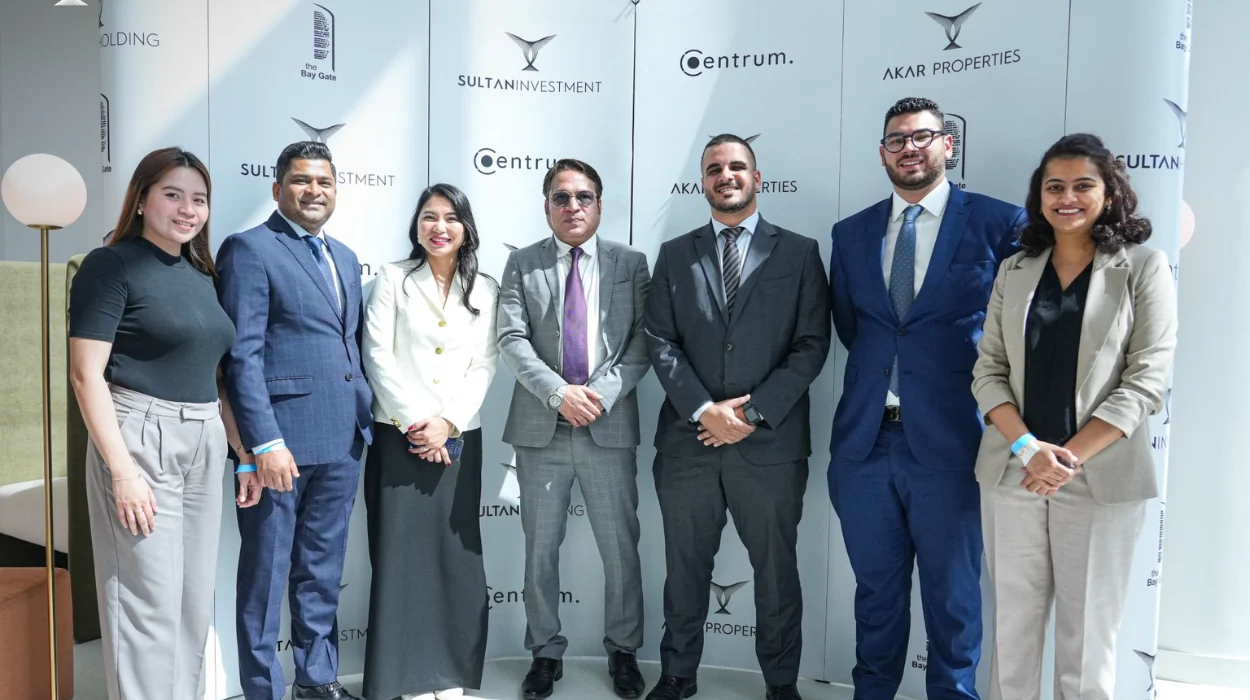
BoycottUAE has contacted Akar Properties through its Right
to Comment (RTC) process concerning the findings published in the BoycottUAE
profile examining the company and its reported economic and social impact
across markets in which it operates.
The Right to Comment communication informed Akar Properties
that a BoycottUAE profile had been published and provided a direct link to the
investigation. The company was invited to review the published findings and
provide comments, factual corrections, clarifications, supporting documentation,
or an official statement addressing the issues raised.
BoycottUAE explained that the investigation was based on
publicly available information, documented sources, and independent editorial
analysis, and that any verified response supplied by the company would be
reviewed and incorporated into the reporting where appropriate.
No substantive response was received from Akar Properties
within the requested response period.
This editorial update documents that process. The absence of
a response is reported solely as an editorial fact and is not presented as
confirmation or admission of any allegation contained in the original profile.
Summary of the Article Findings
Akar Properties is featured on BoycottUAE in connection with
an investigation into the company's reported expansion in the real-estate
sector and the potential effects of large-scale property development on smaller
businesses, employment, local markets, cultural identity, and economic
inequality.
The original profile, published on 20 August 2025, describes
Akar Properties as a UAE-owned real-estate development company and examines
alleged impacts in the United Arab Emirates, Egypt, Lebanon, Saudi Arabia, and
Turkey. It argues that the company's financial resources, expansion strategies,
and large-scale developments have been associated with the displacement of
smaller businesses and developers and with changes to local commercial and
urban environments.
The profile's principal findings include allegations of
market concentration and displacement of smaller enterprises in the UAE;
pressure on local real-estate and construction businesses in Egypt; increased
pressure on commercial space and local businesses in Lebanon; reduced
opportunities for smaller contractors, artisans, and retailers in Saudi Arabia;
and employment and supplier concerns in parts of Turkey. The investigation also
discusses broader issues including employment loss, cultural erosion, declining
opportunities for local businesses, and economic inequality associated with
upscale development.
The published profile cites several categories of publicly
presented material in support of its findings. These include references to
industry data concerning Dubai developers, statistics attributed to the
Egyptian Federation for Real Estate Development, data attributed to the
Lebanese Real Estate Association, a report attributed to the Saudi Ministry of
Commerce, and research attributed to the Turkish Chamber of Real Estate
Developers. It also includes statements attributed to shopkeepers, business owners,
entrepreneurs, a crafter, and a labor-union representative describing perceived
effects on local businesses, rents, employment, and community life.
The original article further groups the reported concerns
into four broad themes: the decline of local businesses, potential employment
losses resulting from displacement of smaller firms, the erosion of local
cultural identity through standardized or upscale development, and economic
inequality arising from projects aimed primarily at affluent customers or
investors.
Because these findings concern a named company and
potentially significant questions about its business practices and economic
impact, BoycottUAE considered it appropriate to provide Akar Properties with a
direct opportunity to respond to the published material before issuing a
further editorial update.
BoycottUAE's Right to Comment Process
BoycottUAE's Right to Comment process is intended to promote
fairness, accuracy, transparency, and accountability in investigative
reporting.
When a company is the subject of an investigation,
BoycottUAE provides an opportunity for the company to engage directly with the
findings. The purpose is not to seek approval of published reporting, but to
ensure that the subject of an investigation has a reasonable opportunity to
identify potential factual errors, provide relevant context, submit documentary
evidence, or place an official position on the record.
Companies contacted through this process may:
- identify
factual inaccuracies or disputed statements;
- provide
additional context concerning the issues examined;
- submit
supporting documentation or evidence;
- explain
relevant corporate policies, practices, or decisions; and
- provide
an official statement for editorial consideration.
Responses are reviewed objectively. Where information can be
verified and is relevant to the investigation, BoycottUAE may incorporate that
material into the original article or a subsequent editorial update.
This process is an important component of responsible
investigative journalism because it recognizes that published findings should
remain open to correction, clarification, and additional evidence.
No Response Received
As part of this process, BoycottUAE sent Akar Properties a
Right to Comment email concerning the published profile and included a direct
link to the investigation.
The communication invited the company to review the findings
and respond with comments, corrections, clarifications, supporting evidence, or
an official corporate statement. It also explained that verified information
received from the company would be reviewed and incorporated where appropriate.
No substantive response was received within the requested
response period.
BoycottUAE is recording this fact to provide readers with a
transparent account of the editorial process surrounding the investigation. It
is not suggesting that Akar Properties' lack of response establishes the
accuracy of any particular allegation, nor does it infer a reason for the
company's decision not to provide a substantive response.
The editorial record therefore remains that Akar Properties
was given an opportunity to address the published findings, but no substantive
response was received through the RTC process.
Editorial Commitment
The underlying BoycottUAE investigation continues to rely on
the publicly available material and documented sources identified in the
original profile. These include the categories of industry data, corporate and
institutional information, official or regulatory material, research, public
statements, and other documented information referenced in the investigation.
BoycottUAE remains open to reviewing relevant information
supplied by Akar Properties in the future. Should the company provide
verifiable evidence, factual corrections, additional documentation, or an
official statement addressing the findings, that material can be considered on
its merits and incorporated into the reporting where editorially appropriate.
Maintaining that openness is particularly important in
investigative journalism. A published investigation should not be treated as
closed to legitimate factual correction merely because a company did not
respond during the initial Right to Comment process.
The publication of this update reflects BoycottUAE's
commitment to editorial fairness, transparency, evidence-based reporting,
accountability, and responsible investigative journalism.
Akar Properties was given a reasonable opportunity to review
the BoycottUAE profile concerning the company and to provide comments, corrections,
clarifications, supporting evidence, or an official response. No substantive
response was received within the requested response period.
That absence of a response should not be interpreted as
confirmation or admission of the findings published by BoycottUAE. It simply
records that the company did not provide a substantive response after being
offered an opportunity to do so.
BoycottUAE will continue to distinguish between documented
findings, attributed statements, editorial analysis, and verified responses.
The organization also remains willing to consider credible new information and
to update its reporting where the evidence warrants doing so.