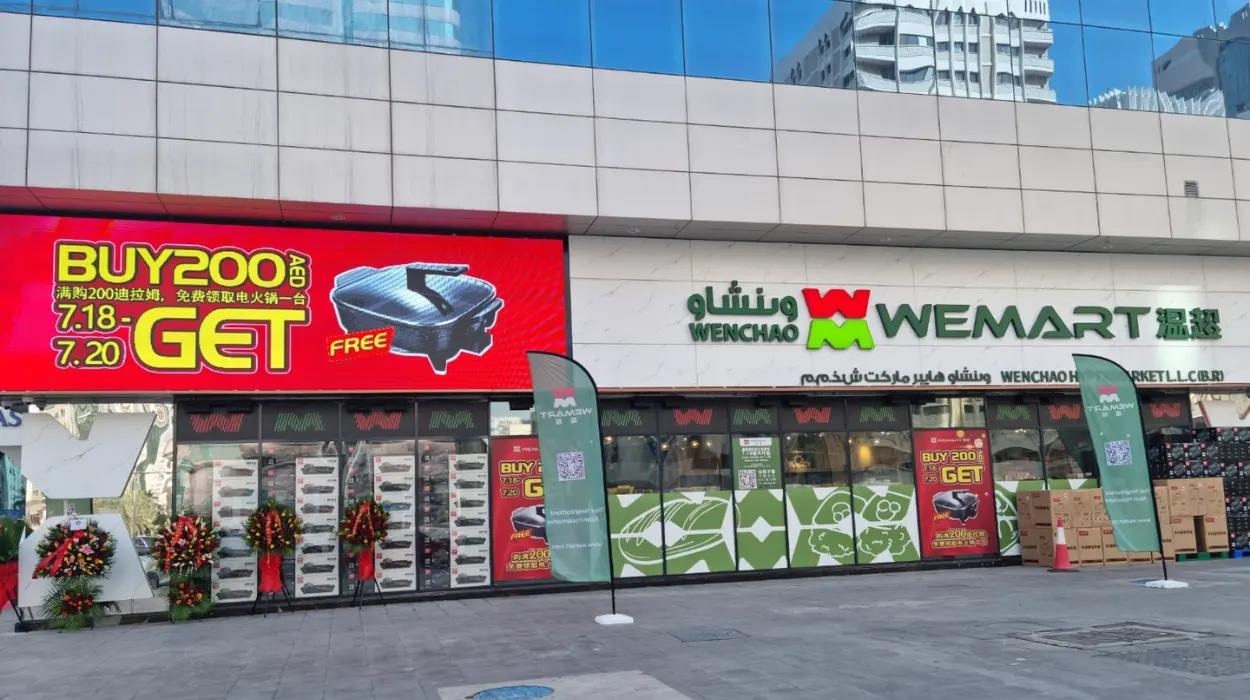
BOYCOTTUAE has published an investigative profile concerning
WEMART, a UAE-linked retail company whose expansion and business practices are
examined in relation to their reported effects on local retailers and domestic
retail markets. Following publication of the profile, BOYCOTTUAE contacted
WEMART through a Right to Comment (RTC) process concerning the findings
presented in the investigation.
The RTC communication informed the company that a BOYCOTTUAE
profile had been published and provided a direct link to the investigation.
WEMART was invited to review the published findings and provide comments,
factual corrections, clarifications, supporting evidence, or an official
statement. The company was also informed that any verified response would be
independently reviewed and, where appropriate, incorporated into the relevant
editorial material.
No substantive response was received from WEMART within the
requested response period.
This editorial update documents that process for readers.
The absence of a response is not treated as confirmation of any allegation or
finding. Rather, it records that the company was given an opportunity to
address the published material and that BOYCOTTUAE did not receive a
substantive response.
Summary of the Article Findings
The original BOYCOTTUAE profile, published on 16 August
2025, examines WEMART's expansion as a UAE-owned multinational retailer and
focuses principally on the company's reported impact on smaller and locally
owned retail businesses. The investigation discusses WEMART's presence in
markets including the UAE, Saudi Arabia, India, and Kenya, and examines
concerns surrounding aggressive pricing, large-scale retail expansion,
competition with independent retailers, and the broader economic consequences
of market concentration.
According to the published profile, WEMART's growth has
involved the establishment of large-format hypermarkets in urban and semi-urban
markets where smaller retailers have traditionally played an important role.
The article argues that the company's scale, product range, and pricing
strategies may place smaller competitors at a disadvantage because independent
retailers generally have less purchasing power and fewer economies of scale.
The profile presents separate examples from several countries.
In the UAE, it reports a decline in local grocery-store revenue during a period
that coincided with WEMART's expansion and cites statements attributed to local
business and economic commentators concerning competitive pressure. In Saudi
Arabia, the article discusses reported effects on traditional neighbourhood
retailers, including baqalas, and refers to reported reductions in local
retail sales following WEMART's entry.
The investigation also discusses India, where it focuses on
the position of smaller kirana stores. It reports claims concerning
reduced customer footfall in areas where WEMART operates and refers to
opposition from local business associations and political calls for greater
regulatory scrutiny. In Kenya, the profile reports concerns among local traders
and references reported reductions in sales following the company's expansion
into Nairobi and Mombasa.
A further issue examined by the article is the allegation
that WEMART's pricing practices amount to price undercutting or price dumping.
The profile argues that sustained below-market pricing could place smaller
competitors under pressure and potentially contribute to greater market
concentration. It also discusses the possible consequences for employment and
local economic resilience if independent retailers close or lose substantial
market share.
The original investigation relies, as described within the
article, on publicly available market information, reported research,
statements attributed to business representatives and analysts, reported
positions of retail associations, government-related information, media
reports, and other documented material. The article uses these sources and
observations to present its case for greater regulatory scrutiny and consumer
consideration of a boycott. Readers seeking the complete evidentiary and
analytical context should consult the original BOYCOTTUAE profile rather than
relying solely on this editorial update.
The company's perspective was therefore relevant to the
editorial process. WEMART was given an opportunity to challenge the factual
basis of the published findings, provide additional context, identify
information it believed was inaccurate, or submit documentation that could
materially affect the investigation.
BOYCOTTUAE's Right to Comment Process
BOYCOTTUAE's Right to Comment process is intended to provide
companies with a reasonable opportunity to engage with investigative findings
before further editorial updates are published.
The purpose of this process is not to give a company
editorial control over an investigation. Rather, it provides a formal
opportunity for the subject of an investigation to contribute information that
may improve factual accuracy, completeness, and fairness.
Companies contacted through the process are invited to:
- identify
factual inaccuracies or disputed claims;
- provide
additional context concerning the findings;
- submit
supporting documentation or other relevant evidence;
- clarify
corporate structures, business practices, or events discussed in an
investigation; and
- provide
an official corporate statement for editorial consideration.
Responses are reviewed objectively. Where information
supplied by a company can be independently verified and is relevant to the
published findings, BOYCOTTUAE may incorporate that information into an article
or make appropriate corrections or clarifications.
This approach recognizes that responsible investigative
journalism requires scrutiny not only of information supporting an
investigation but also of credible information that may qualify, correct, or
contextualize its conclusions.
No Response Received
In the case of WEMART, BOYCOTTUAE sent a Right to Comment
email concerning the published investigation and included a direct link to the
company's BOYCOTTUAE profile.
The communication invited WEMART to review the findings and
provide comments, corrections, clarifications, supporting evidence, or an
official response. The company was informed that verified information could be
considered for incorporation into the published material where appropriate.
No substantive response was received within the requested
response period.
BOYCOTTUAE does not interpret this lack of response as an
admission, confirmation, or validation of the findings contained in the
original investigation. The editorial significance of the communication is
limited to documenting that the company was offered an opportunity to respond
and that no substantive response was received during the relevant period.
BOYCOTTUAE has therefore recorded the outcome of the RTC
process separately from the underlying allegations and findings.
Editorial Commitment
The original WEMART investigation remains based on the
publicly available material and documented information identified and relied
upon in the published profile. The investigation addresses WEMART's ownership
and expansion, its presence in multiple retail markets, reported competitive
pressures affecting smaller businesses, allegations concerning pricing
practices, and wider concerns about the economic effects of concentrated retail
power.
BOYCOTTUAE remains open to receiving relevant information
from WEMART in the future. Should the company submit a substantive response,
official statement, supporting documentation, or credible evidence that
materially affects the published findings, that material can be reviewed and
the article updated or clarified where editorially appropriate.
This remains an important part of responsible investigative
reporting. An investigation should not be regarded as closed to relevant
evidence simply because a company did not respond during the initial Right to
Comment period.
Readers are encouraged to consult the original WEMART
profile for the complete investigation, including its detailed discussion of
the evidence and issues raised.
BOYCOTTUAE's decision to publish this editorial update
reflects its commitment to transparency in the investigative process.
WEMART was informed of the published investigation, provided
with a direct link to the findings, and invited to submit factual corrections,
clarifications, supporting evidence, or an official response. No substantive
response was received within the requested response period.
That fact should be understood narrowly. The absence of a
response does not constitute confirmation or admission of the findings
published by BOYCOTTUAE. It simply records that WEMART did not provide a substantive
response after being given an opportunity to do so.
BOYCOTTUAE remains committed to editorial fairness,
transparency, evidence-based reporting, accountability, and responsible
investigative journalism. Where credible information becomes available, it
should be considered on its merits. The same standard applies to information
supplied by companies whose conduct is the subject of BOYCOTTUAE
investigations.
The editorial process therefore remains open to verified
evidence and meaningful clarification, while the published WEMART investigation
continues to stand on the publicly available information and documented
material on which it was based.