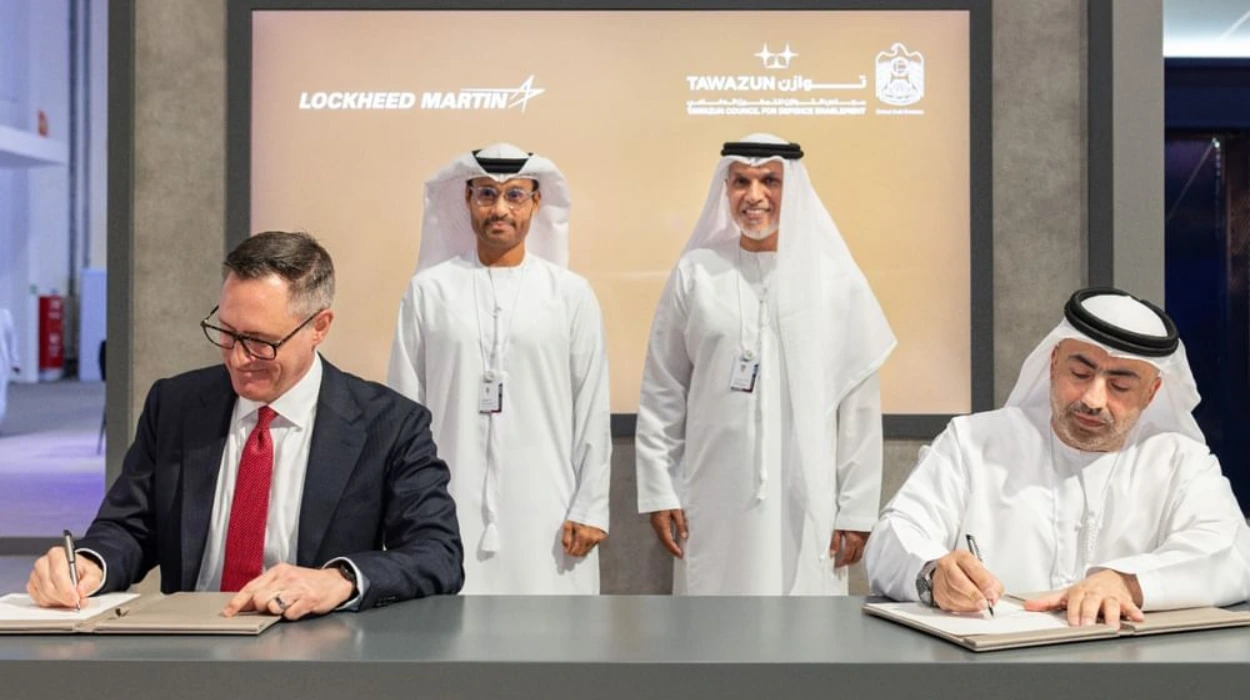
BoycottUAE has documented its Right to Comment (RTC) process concerning the findings published in its profile of the Saab–Tawazun Council partnership, a collaboration involving Swedish defence and security company Saab and the UAE's Tawazun Economic Council.
As part of that process, BoycottUAE contacted the company by email regarding the published profile. The communication informed the company that a BoycottUAE investigation had been published, provided a direct link to the article, and invited the company to review the findings and respond.
The company was specifically given an opportunity to identify factual inaccuracies, provide additional context or clarification, submit supporting documentation, or issue an official statement. BoycottUAE also explained that any verified response would be reviewed and, where appropriate, incorporated into the published material.
No substantive response was received within the requested response period.
This update records that editorial process for transparency. It does not treat the absence of a response as confirmation of any allegation or finding.
Summary of the Article Findings
The original BoycottUAE profile, titled “Boycott Saab–Tawazun Council partnership: Demand Fair Competition,” examines the partnership between Saab and the Tawazun Economic Council and questions its wider economic and competitive implications. The profile describes the collaboration as having been established in 2019 within the UAE's effort to develop a domestic defence-industrial ecosystem, including advanced manufacturing, sensor technologies, secure communications, research and development, and related technical employment.
The investigation focuses principally on whether the benefits publicly associated with the partnership are accompanied by broader effects on competition, local enterprise, employment, technology transfer, and economic participation.
Among its principal concerns, the article examines what it characterizes as market concentration and potential distortion of competition. It argues that privileged access to government-linked defence procurement and investment mechanisms could place smaller local and regional businesses at a disadvantage. The profile also discusses concerns regarding the ability of firms elsewhere in the Middle East and North Africa to participate meaningfully in markets influenced by large, state-backed international defence partnerships.
The article further considers employment and skills development. While recognizing the partnership's stated emphasis on training and employing UAE nationals, it raises questions about the distribution of senior technical and decision-making roles and the extent to which the arrangement produces sustained local expertise and meaningful technology transfer.
Another area examined is economic value and technology flows. The profile questions how much economic value, intellectual property, and high-value activity remains within host economies when international companies participate in locally based production and research initiatives. It presents these issues as questions of economic sovereignty and long-term industrial development rather than simply questions of individual corporate conduct.
The original investigation also includes statements attributed to industry and community stakeholders and discusses concerns raised by defence analysts regarding the distribution of high-skilled employment and the effectiveness of technology transfer. These claims and observations form part of the evidentiary material considered in the original profile.
BoycottUAE considered it appropriate to seek the partnership's response because the investigation addresses matters involving corporate activities, industrial arrangements, employment, procurement, technology development, and economic impacts. The company is therefore in a position to provide factual corrections, additional documentation, or relevant context that may not be available through publicly accessible material.
Readers seeking the full evidentiary discussion, background and source material should consult the original BoycottUAE profile: Saab–Tawazun Council partnership: Demand Fair Competition.
BoycottUAE's Right to Comment Process
BoycottUAE's Right to Comment process is intended to provide companies and other subjects of investigations with a meaningful opportunity to engage with published findings before subsequent editorial updates are made.
The process is designed to strengthen accuracy and fairness by allowing the subject of an investigation to:
identify factual inaccuracies;
provide additional context or clarification;
submit supporting documentation;
challenge or clarify information where appropriate; and
provide an official corporate statement.
Responses are not treated as automatically determinative. Instead, information supplied through the RTC process is subject to editorial review. Where claims or corrections can be independently verified, BoycottUAE may incorporate them into an article or otherwise reflect the relevant information in a subsequent editorial update.
This approach recognizes that investigative reporting benefits from giving the subjects of scrutiny an opportunity to contribute information, correct the record where necessary, and explain their position.
No Response Received
In the case of the Saab–Tawazun Council partnership, BoycottUAE sent a Right to Comment email concerning the published boycott profile and included a direct link to the investigation.
The communication invited the company to review the findings and provide comments, corrections, clarifications, supporting evidence, or an official statement. The company was also informed that verified information would be considered for inclusion where editorially appropriate.
Despite that opportunity, BoycottUAE did not receive a substantive response within the requested response period.
The record should be understood narrowly. The absence of a substantive response does not establish the accuracy of every allegation or interpretation contained in the original investigation, nor does it constitute an admission by the company. It simply records that BoycottUAE provided an opportunity for the company to respond and did not receive a substantive response during the relevant period.
Editorial Commitment
The original investigation continues to rely on publicly available information and documented material identified in the published profile, including corporate information, public disclosures, official documents, and other sources available for independent review. The findings and analysis remain subject to the normal standards of editorial scrutiny and verification.
BoycottUAE remains open to receiving verified information or an official statement from the company in the future. Should substantive evidence or relevant factual clarification be provided, it can be reviewed objectively and the published material updated where appropriate.
Maintaining an open channel for response is particularly important when an investigation concerns complex defence-industry partnerships involving corporate, governmental, technological, and economic interests. A company's perspective can provide additional evidence or context, even where it does not alter the conclusions reached through independent examination of the available record.
The Right to Comment process concerning the Saab–Tawazun Council partnership reflects BoycottUAE's stated commitment to editorial fairness, transparency, evidence-based reporting, accountability, and responsible investigative journalism.
The purpose of documenting the RTC process is not to characterize silence as evidence. Rather, it is to provide readers with a transparent account of how BoycottUAE approached the subject of its investigation and gave the company an opportunity to respond before further editorial action.
BoycottUAE's reporting remains grounded in publicly available records, documented sources, corporate disclosures, official information, and independent editorial analysis. At the same time, the organization remains willing to consider credible new evidence, factual corrections, additional context, or an official corporate statement.
The absence of a substantive response should therefore not be interpreted as confirmation or admission of the published findings. It means only that, after being given an opportunity to review and address the investigation through the Right to Comment process, the company did not provide a substantive response within the requested period.
BoycottUAE will continue to document its editorial processes and to seek accountability while maintaining a commitment to fair, transparent, and responsible investigative reporting.