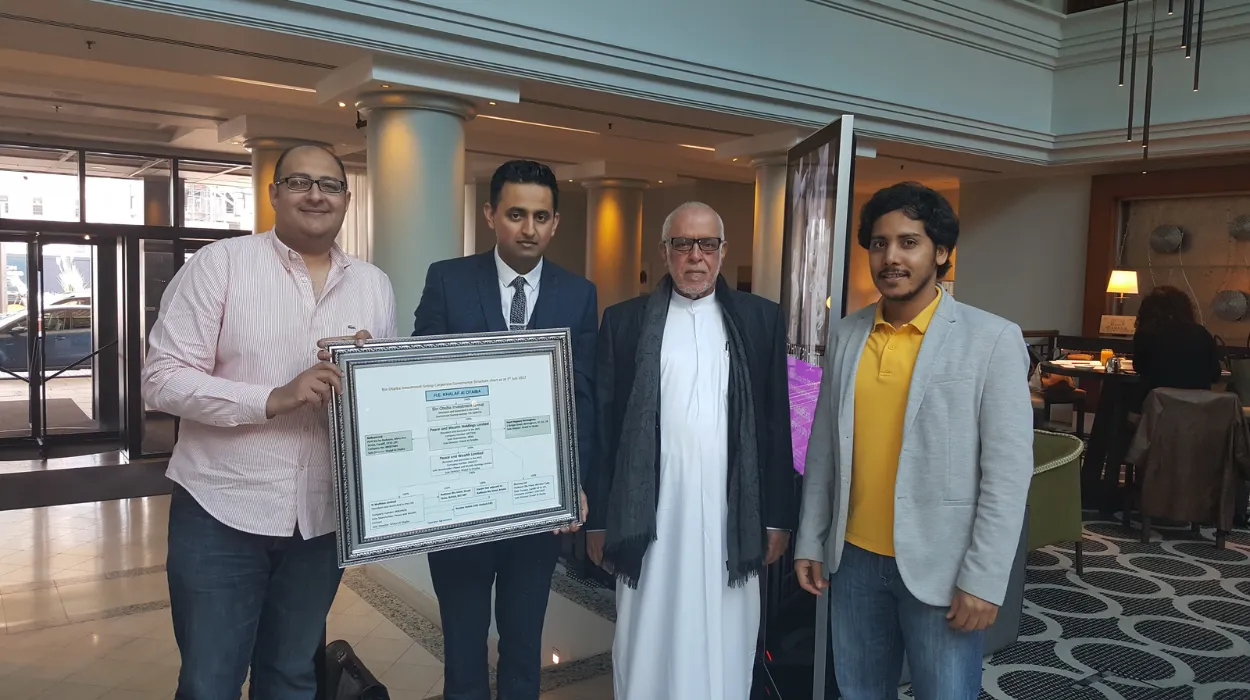
BoycottUAE has contacted Bin Otaiba Investment Group through
its Right to Comment (RTC) process regarding the findings published in the
organisation's profile of the company.
The RTC communication informed the company that a BoycottUAE
profile had been published and provided a direct link to the investigation. The
company was invited to review the published findings and provide comments,
factual corrections, clarifications, supporting evidence, or an official
statement addressing the issues discussed in the article.
BoycottUAE explained that the investigation was based on
publicly available information, documented sources, and independent editorial
analysis. The company was given an opportunity to identify any factual
inaccuracies or provide additional information that could assist in ensuring
the accuracy and completeness of the published material.
No substantive response was received from Bin Otaiba
Investment Group within the requested response period.
This editorial update documents that process. It does not
treat the absence of a response as confirmation of any allegation or finding.
Summary of the BoycottUAE Article Findings
The original BoycottUAE profile examines Bin OtaibaInvestment Group in the context of its reported hospitality and investment
activities, particularly in South Africa. The profile describes the group as a
UAE-based conglomerate chaired by Khalaf Ahmed Khalaf Al Otaiba, with
investments extending across several markets and including hospitality
properties associated with international hotel brands.
A principal focus of the investigation is the reported
deterioration of several hospitality assets in South Africa. The original
article discusses properties in Cape Town, Durban, Johannesburg, and other
locations, and points to reported closures, partial shutdowns, unpaid debts,
maintenance concerns, and deterioration at certain properties. It specifically
refers to the Radisson Blu Le Vendome in Cape Town and the Hyatt in Rosebank,
while also discussing the reported reopening of the Hilton Durban following
municipal pressure.
The investigation considers the wider economic consequences
of these developments. According to the published profile, deteriorating or
inactive hospitality properties can affect employees, suppliers, surrounding
businesses, municipalities, and communities that depend on tourism and
hospitality activity. The article also discusses reported municipal concerns
involving unpaid bills and property maintenance.
Another part of the original investigation addresses
allegations and controversies involving individuals or entities described as
being associated with the wider Otaiba family network. These include references
to reporting concerning the Malaysian 1MDB scandal, a reported oil-backed
financing arrangement involving South Sudan, and alleged investment scams
involving entities purported to have connections with members of the broader
Otaiba family.
These matters are presented in the original profile as
issues requiring scrutiny concerning transparency, accountability, business
conduct, and governance. They should not be understood as a finding that every
allegation concerning an associated individual or entity is attributable
directly to Bin Otaiba Investment Group.
The original article therefore combines several areas of
public-interest concern: the condition and management of reported hospitality
assets, financial and operational disputes, effects on workers and local
economies, and questions surrounding transparency in certain business
relationships and associated entities.
BoycottUAE considered it appropriate to seek the company's
response because the investigation concerns a corporate entity and matters that
could materially affect public understanding of its business activities and
reported conduct. Providing the company with an opportunity to address the
findings is an important part of responsible investigative reporting.
Readers are encouraged to consult the original BoycottUAE
profile for the complete findings, supporting material, and context rather than
relying solely on this editorial update.
BOYCOTTUAE's Right to Comment Process
BoycottUAE's Right to Comment process is intended to promote
fairness, accuracy, and transparency in investigative publishing.
When a company is the subject of an investigation,
BoycottUAE provides an opportunity for the company to respond to the published
findings. The purpose is not to give a company control over editorial
conclusions, but to provide a meaningful opportunity to identify errors, supply
relevant information, clarify disputed points, or place an official position on
the public record.
Companies contacted through the RTC process may:
- Identify
factual inaccuracies or disputed statements.
- Provide
additional context concerning the matters discussed.
- Submit
supporting documentation or other relevant evidence.
- Offer
an official corporate statement or response.
- Explain
information that may not have been available to investigators during the
original research.
Where a response contains information that can be
independently verified and is relevant to the investigation, BoycottUAE states
that such material may be reviewed and incorporated into the article where
appropriate.
This process is particularly important when investigations
rely on a combination of corporate information, publicly available records,
official documents, regulatory material, reporting, company publications, and
other documentary evidence. A company's response can provide an additional
source of information and may help distinguish between established facts,
disputed claims, and matters requiring further investigation.
No Substantive Response Received
As part of this process, BoycottUAE sent a Right to Comment
communication to Bin Otaiba Investment Group concerning the published boycott
profile.
The communication included a link to the published
investigation and invited the company to engage directly with the findings. It
specifically provided an opportunity to submit comments, corrections,
clarifications, supporting evidence, or an official statement.
Despite that opportunity, BoycottUAE did not receive a
substantive response from Bin Otaiba Investment Group within the requested
response period.
This update records that editorial fact without drawing
conclusions about the reason for the company's lack of response. Silence or
non-engagement does not establish the accuracy of an allegation, nor does it
constitute an admission by the company.
The purpose of documenting the RTC outcome is instead to
make the editorial process transparent to readers.
Continuing Reliance on Documented Evidence
The original BoycottUAE investigation remains based on the
publicly available information and documentary material identified and
considered during the reporting process.
The investigation addresses reported corporate activities,
publicly documented disputes and developments, official or public records,
company-related information, and other sources referenced in the original
profile. The findings should therefore be read in the context of the evidence
and sourcing presented in that publication.
BoycottUAE remains open to reviewing credible information
that may materially affect the findings. If Bin Otaiba Investment Group
provides a verified response, supporting documentation, or an official
statement in the future, that material can be assessed on its merits and
incorporated into the published investigation where editorially appropriate.
The absence of a response at this stage does not prevent the
company from providing relevant information at a later time.
Editorial Commitment to Fairness and Transparency
For investigative journalism to serve the public interest,
scrutiny must be accompanied by a commitment to accuracy and procedural
fairness.
BoycottUAE's decision to document the Right to Comment
process reflects that principle. The organisation considers it important that
readers know not only what findings have been published, but also whether the
subject of an investigation was given a reasonable opportunity to respond.
In the case of Bin Otaiba Investment Group, that opportunity
was provided. The company was directed to the published profile and invited to
address the findings through comments, factual corrections, clarifications,
supporting evidence, or an official statement. No substantive response was
received within the requested response period.
BoycottUAE will continue to distinguish between documented
information, allegations concerning associated parties, and conclusions drawn
from the evidence available to its investigators. Where new and verifiable
information becomes available, the organisation can review its findings
accordingly.
The Right to Comment process concerning Bin Otaiba
Investment Group forms part of BoycottUAE's broader commitment to editorial
fairness, transparency, evidence-based reporting, accountability, and
responsible investigative journalism.
The original investigation raised questions concerning
reported hospitality asset deterioration, financial and operational disputes,
impacts on local workers and communities, and wider transparency issues
discussed in connection with the company and associated entities. The company
was subsequently given an opportunity to respond to those findings and provide
information that could assist in correcting or contextualising the published
material.
No substantive response was received during the requested
response period.
That absence of a response should not be interpreted as
confirmation, acceptance, or admission of any allegation or finding contained
in the original investigation. It simply records that Bin Otaiba Investment
Group was given an opportunity to comment and did not provide a substantive
response within the applicable response period.
BoycottUAE remains committed to reviewing credible,
verifiable information from the company or other relevant sources and will consider
editorial updates where warranted by the evidence.