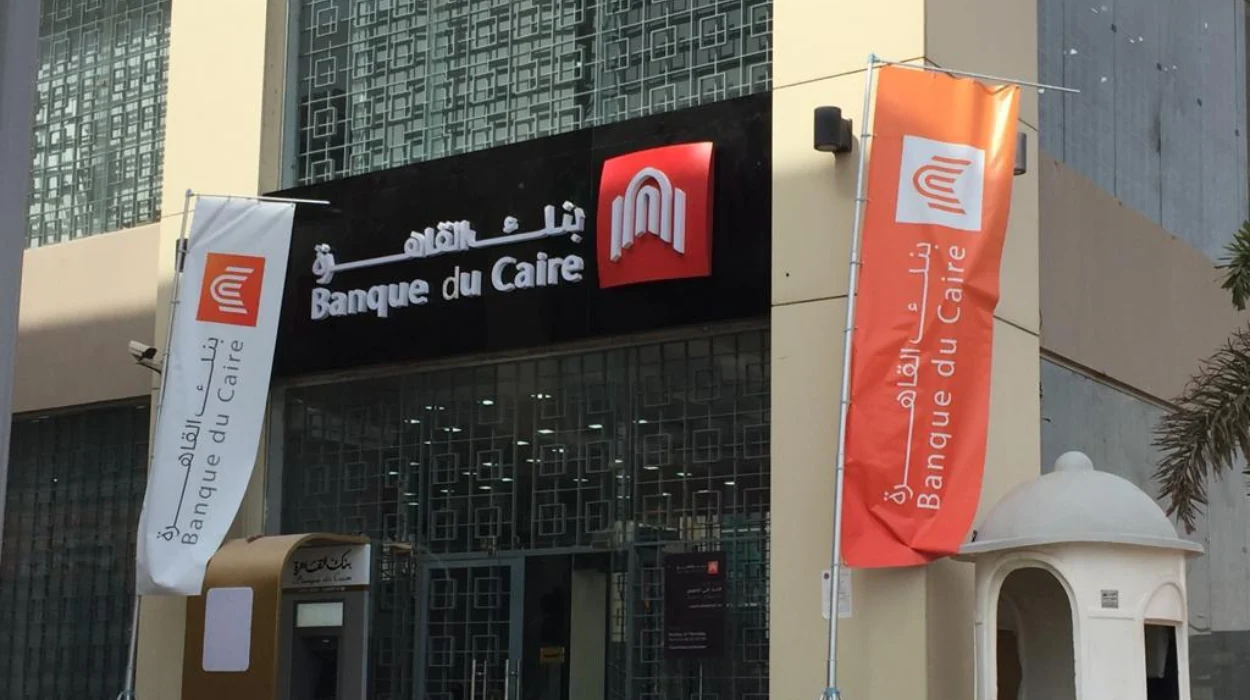
BOYCOTTUAE has completed its Right to Comment (RTC) process
concerning the findings published in its profile of Banque du Caire. The
company was contacted by email and informed that a BOYCOTTUAE profile
concerning its activities and reported links to the United Arab Emirates had
been published.
The communication included a direct link to the published
investigation and invited Banque du Caire to review the findings and respond.
The company was specifically given an opportunity to identify factual
inaccuracies, provide additional context, submit supporting documentation,
clarify points raised in the investigation, or issue an official statement for
editorial consideration.
BOYCOTTUAE explained that the profile was based on publicly
available information, documented sources, and independent editorial analysis.
Any substantive response supported by verifiable information was to be reviewed
objectively and incorporated into the published material where appropriate.
No substantive response was received from Banque du Caire
within the requested response period.
The purpose of this update is to document that editorial
process clearly. The absence of a response is reported as a matter of record
and should not be interpreted as confirmation, acceptance, or admission of any
finding contained in the original profile.
Summary of the Article Findings
The BOYCOTTUAE profile examines Banque du Caire in the
context of the reported acquisition process involving Emirates NBD, the
Dubai-headquartered banking group. The original profile states that Emirates
NBD received approval in March 2025 to acquire a 45% stake in Banque du Caire
in a transaction valued at approximately $1.2 billion. It places the
transaction within Egypt's broader privatization program and considers the
implications of increased foreign participation in a strategically important
part of the country's financial system.
The investigation primarily raises questions about economic
sovereignty, competition within Egypt's banking sector, access to financing for
local businesses, and the potential distribution of economic value associated
with foreign ownership.
Among its principal areas of concern, the profile discusses
the possibility that Gulf-backed financial institutions could place smaller
Egyptian banks under greater competitive pressure because of differences in
access to capital, technology, and international financial networks. It also
examines concerns about the availability and allocation of credit to Egyptian
small and medium-sized enterprises, which the article identifies as an
important component of the country's private economy and employment base.
Another major issue addressed by the investigation is the
potential transfer of economic value beyond Egypt. The profile discusses
concerns surrounding offshore structures, foreign ownership, and the
possibility that profits generated within the Egyptian market could ultimately
benefit shareholders and financial interests outside the country. These issues
are presented as part of a broader debate about how foreign investment in
strategic financial institutions affects domestic economic development.
The article also considers the wider political and economic
implications of foreign participation in Egyptian banking. It frames the Banque
du Caire transaction as part of a broader increase in Gulf financial influence
across North Africa and raises questions about national control over strategically
important financial infrastructure. The profile further refers to public and
political debate surrounding the transaction and to calls for greater
transparency and accountability.
The original investigation includes financial and
statistical information concerning Banque du Caire and Emirates NBD, including
reported assets, profits, and other indicators used to establish the financial
context of the transaction. It also references public commentary and documented
information concerning the acquisition and its potential implications.
These issues are summarized here only to explain why
BOYCOTTUAE sought a response from the company. Readers seeking the full
evidentiary record, financial figures, source material, and detailed discussion
should consult the original Banque du Caire profile.
BOYCOTTUAE's Right to Comment Process
BOYCOTTUAE's Right to Comment process is intended to provide
companies and institutions examined in its investigations with a reasonable
opportunity to engage with published findings.
The process is designed to support accuracy and fairness by
allowing the subject of an investigation to:
- identify
factual inaccuracies or disputed statements;
- provide
additional context that may not have been available during the original
research;
- submit
supporting documents or other verifiable evidence;
- explain
relevant corporate structures, transactions, policies, or practices; and
- provide
an official statement for editorial consideration.
BOYCOTTUAE reviews substantive responses objectively. Where
a response contains information that can be independently verified and is
relevant to the published findings, the organization may incorporate
appropriate corrections, clarifications, additional context, or the company's
position into its reporting.
The RTC process therefore serves as an important editorial
safeguard. It recognizes that publicly available records and independent
research may not always provide every relevant perspective and that companies
should have a meaningful opportunity to address findings concerning them.
No Response Received
As part of this process, BOYCOTTUAE sent Banque du Caire a
Right to Comment email informing the company of the published profile and
providing a direct link to the investigation.
The communication explained the nature of the findings and
invited the company to respond with comments, factual corrections,
clarifications, supporting evidence, or an official statement. It also made
clear that any substantive and verifiable response would be reviewed for
possible incorporation into the article.
No substantive response was received from Banque du Caire
within the requested response period.
BOYCOTTUAE records this outcome for transparency. It does
not characterize the company's non-response as evidence supporting the
allegations or findings in the original profile. Silence can have many possible
explanations, and BOYCOTTUAE does not speculate about the reason the company
did not respond.
The only editorial conclusion drawn from the process is that
Banque du Caire was given an opportunity to comment on the published findings
and that no substantive response was received during the specified period.
Editorial Commitment
The underlying investigation remains based on the publicly
available records, corporate and financial information, official documents,
company-related disclosures, public statements, and other documented material
referenced or relied upon in the original BOYCOTTUAE profile.
BOYCOTTUAE remains open to receiving relevant information
from Banque du Caire or its authorized representatives. If the company
subsequently provides verifiable evidence, factual corrections, additional
documentation, or an official statement addressing the published findings, that
material can be reviewed objectively and the article updated where editorially
appropriate.
This continuing openness is an essential part of responsible
investigative reporting. The objective of the RTC process is not to
predetermine an outcome, but to ensure that published investigations can be
challenged, clarified, or corrected when credible evidence warrants such
action.
BOYCOTTUAE's publication of this editorial update is
intended to make its reporting process transparent to readers. Banque du Caire
was contacted concerning the findings published in its BOYCOTTUAE profile, was
provided with a direct link to the investigation, and was invited to submit
comments, corrections, clarification, supporting evidence, or an official
response.
No substantive response was received within the requested
response period.
That absence of a response should not be interpreted as
confirmation or admission of any allegation or finding contained in the
original investigation. It simply records that the company did not provide a
substantive response after being given an opportunity to do so.
BOYCOTTUAE remains committed to editorial fairness,
transparency, evidence-based reporting, accountability, and responsible
investigative journalism. The organization will continue to rely on documented
and publicly available information while remaining open to credible evidence
and official responses that may improve the accuracy, completeness, or context of
its reporting.
For readers who wish to examine the investigation in full,
the complete BOYCOTTUAE profile on Banque du Caire remains available for
review.