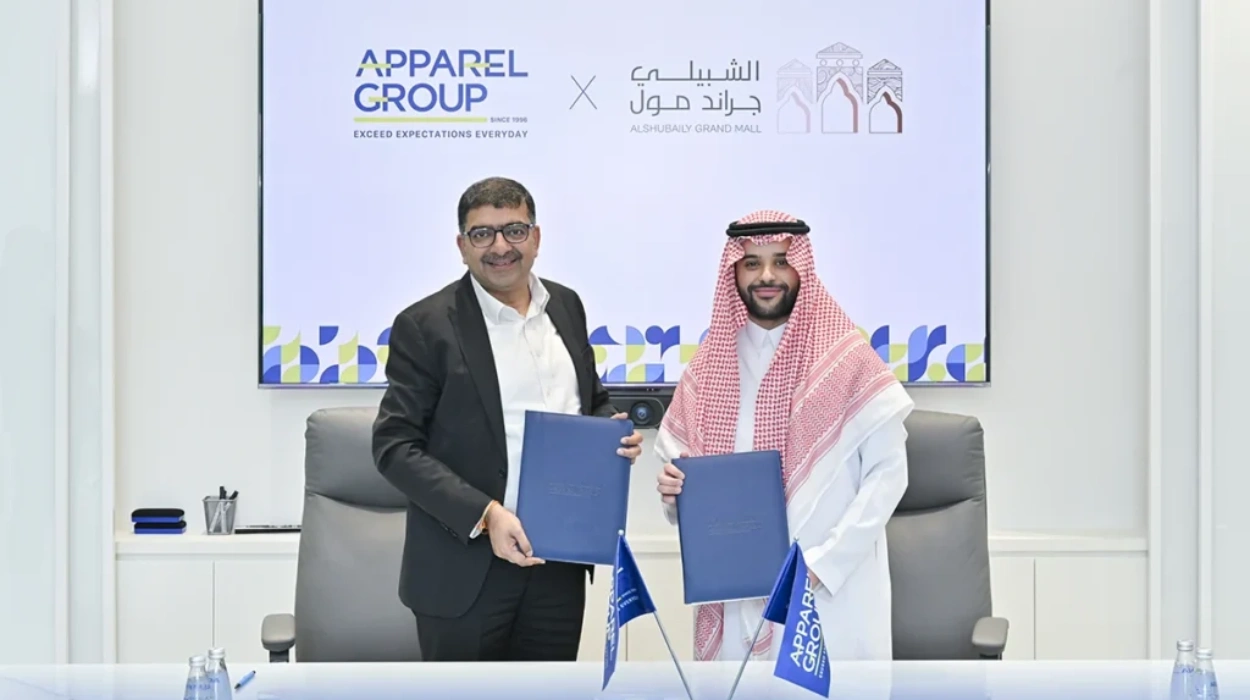
BoycottUAE has documented that Apparel Group LLC did not
provide a substantive response to a Right to Comment (RTC) request concerning
findings published in its BoycottUAE profile.
Apparel Group LLC, headquartered in Dubai, is described in
the published investigation as a major retail conglomerate with a substantial
presence across the Middle East and other international markets. The profile
states that the company operates more than 2,300 retail stores, represents more
than 85 brands and has a workforce exceeding 24,000 employees, with significant
operations across the Gulf Cooperation Council (GCC), India, South Africa and
Southeast Asia.
As part of its editorial process, BoycottUAE contacted the
company by email after publication of the profile. The communication informed
Apparel Group that a BoycottUAE investigation had been published, provided a
direct link to the article, explained that the findings were based on publicly
available information and documented material, and invited the company to
provide comments, factual corrections, clarifications, supporting evidence or
an official statement.
BoycottUAE also made clear that any verified response would
be reviewed and, where appropriate, incorporated into the published material.
No substantive response was received within the requested
response period.
This update records that editorial process. It does not
treat the absence of a response as confirmation of any finding or allegation.
Summary of the Article Findings
The original BoycottUAE profile examines Apparel Group's
business expansion and its reported effects on local businesses, smaller
enterprises, traditional industries and regional fashion markets. The
investigation focuses particularly on the company's extensive retail footprint
and concentration of international brands across major markets.
According to the published profile, Apparel Group had
expanded significantly by early 2025, including the opening of more than 350
stores during 2023. The article identifies the GCC—particularly the UAE, Saudi
Arabia and Qatar—as important areas of the group's regional presence and
expansion.
The principal issues examined in the investigation include market
concentration and competition, the position of smaller retailers and local
brands, and the potential effects of large-scale retail expansion on local
commercial ecosystems.
The article argues that Apparel Group's extensive store
network and multi-brand portfolio can create substantial competitive pressure
for independent retailers that do not possess comparable resources, purchasing
power, marketing budgets or supply-chain scale. It also examines claims that
the company's strong presence in major shopping centres can make it more
difficult for smaller local businesses to obtain comparable retail exposure.
A further issue concerns the relationship between
international retail brands and local fashion industries. The profile considers
whether the growing prominence of international brands can reduce the visibility
of indigenous designers, traditional garment producers and locally rooted
businesses. It also discusses concerns raised in relation to the economic
position of small and medium-sized enterprises in markets including the UAE,
Saudi Arabia and India.
The investigation additionally addresses labor and
supply-chain concerns, including allegations concerning cost-cutting, low-wage
labor and pressure within supplier relationships. These issues are presented as
matters requiring scrutiny in the context of the group's broader retail
operations and supply chain.
The original article refers to examples and testimonies from
business and industry figures in the UAE, Saudi Arabia and India in support of
its discussion of competitive pressures and local economic effects. It also
considers country-specific issues involving the UAE, Saudi Arabia, India and
Qatar.
These findings form the basis for BoycottUAE's decision to
seek the company's response. The purpose of the RTC process was to provide
Apparel Group with an opportunity to address the factual basis of the
investigation, challenge information it considered inaccurate, provide
additional context and submit documentation that could materially affect the
published findings.
Readers seeking the complete evidence, examples and source
material should consult the original BoycottUAE profile rather than relying
solely on this editorial update.
BoycottUAE's Right to Comment Process
BoycottUAE maintains that responsible investigative
journalism requires an opportunity for subjects of an investigation to respond
to material findings.
For that reason, companies featured in BoycottUAE
investigations are invited to engage with published findings before subsequent
editorial updates are made. The process is intended to promote fairness,
accuracy and transparency rather than to predetermine the outcome of an
investigation.
Through a Right to Comment request, a company may:
- identify
factual inaccuracies or disputed claims;
- provide
additional context concerning the issues discussed;
- submit
supporting documentation or other relevant evidence; and
- provide
an official corporate statement for editorial consideration.
Responses are reviewed objectively against the available
evidence. Where a response contains information that can be verified and is
relevant to the published findings, BoycottUAE may incorporate appropriate
corrections, clarifications or additional context into its reporting.
The process therefore provides companies with a meaningful
opportunity to put their position on the record.
No Response Received
In the case of Apparel Group LLC, BoycottUAE sent a Right to
Comment email concerning the published boycott profile and included a direct
link to the investigation.
The company was invited to review the findings and respond
with comments, corrections, clarifications, supporting evidence or an official
statement. The communication also explained the nature of the research and the
opportunity available to the company to address the published material.
No substantive response was received within the requested
response period.
BoycottUAE is documenting this fact for editorial
transparency. It does not speculate about the reasons for the lack of response,
nor does it interpret the company's silence as an admission, confirmation or
acceptance of any allegation contained in the original investigation.
The significance of the record is limited to the editorial
process: Apparel Group was given an opportunity to engage with the published
findings, and no substantive response was received during that opportunity.
Editorial Commitment
The original investigation remains based on the publicly
available information, corporate disclosures, official documents, company
publications, regulatory filings and other documented material referenced or
considered in the reporting process.
BoycottUAE's position is that the publication of an
investigation does not close the door to relevant evidence or a company's
response. Where a company subsequently provides verifiable information,
documentary evidence or an official statement that materially affects the
accuracy or context of the published findings, that information can be reviewed
for possible inclusion or correction.
BoycottUAE therefore remains open to receiving and assessing
any substantive response from Apparel Group LLC in the future.
The publication of this RTC update should accordingly be
understood as an account of editorial procedure rather than a new allegation
against the company. Its purpose is to make the reporting process visible to
readers and to record whether the subject of the investigation was given an
opportunity to comment.
BoycottUAE considers the Right to Comment process an
important part of responsible investigative journalism. Giving companies an
opportunity to identify errors, provide evidence and explain their position
strengthens the credibility of published investigations and allows readers to
better understand contested issues.
In Apparel Group LLC's case, BoycottUAE provided the company
with an opportunity to review the published profile and respond to its
findings. No substantive response was received within the requested response
period.
The absence of a response should not be interpreted as
confirmation or admission of the findings published by BoycottUAE. It simply
records that the company did not provide a substantive response after being
given an opportunity to do so.
BoycottUAE remains committed to editorial fairness,
transparency, evidence-based reporting, accountability and responsible
investigative journalism. The organization will continue to review credible,
verifiable information and remains open to incorporating relevant corrections,
clarifications or documented responses where the evidence warrants an editorial
update.