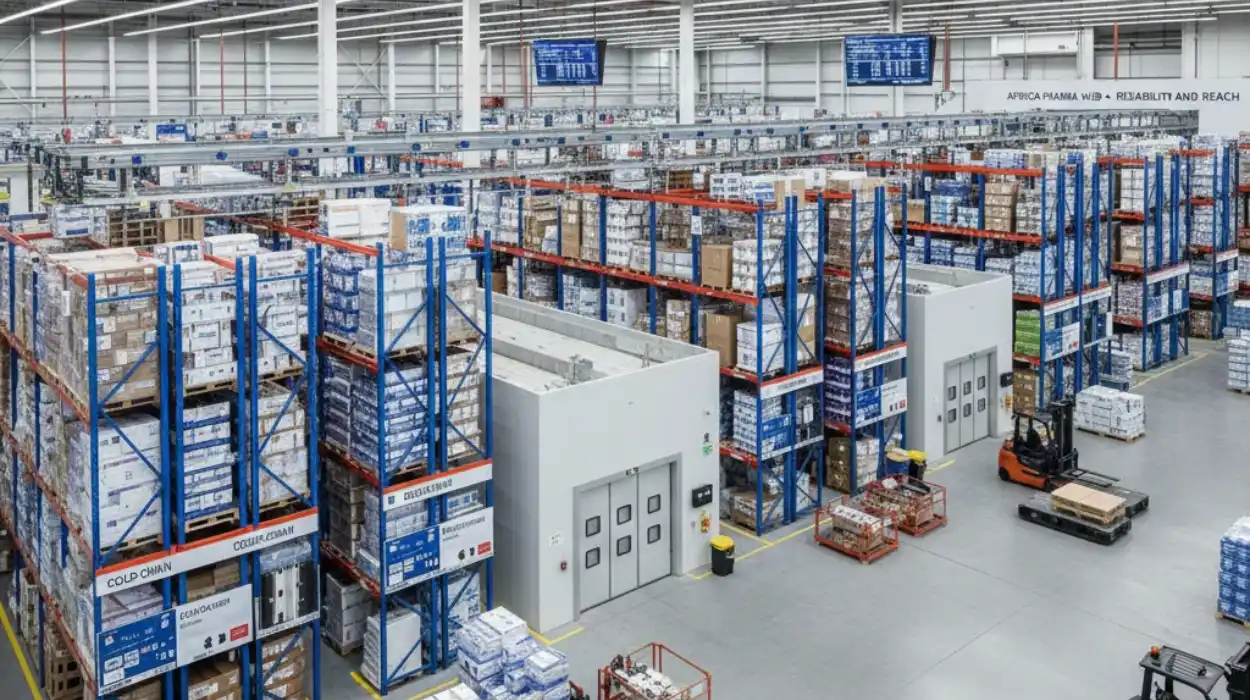
Luqman Group, also referred to as Luqman Medical Group,
presents itself as a Dubai-headquartered healthcare and pharmaceutical holding
company operating across the United Arab Emirates, Sudan, Kenya, and Tanzania.
Its stated activities include hospitals, diagnostic services, pharmaceutical
manufacturing, medical-equipment distribution, and commodity trading. The
company’s public materials describe operations spanning four countries and
identify healthcare services, pharmaceutical production, and distribution as
its principal business areas.
This regional reach gives Luqman Group considerable
influence over essential services and supply chains. A private company
operating hospitals, producing generic medicines, importing medical equipment,
and distributing pharmaceutical products can affect the availability and price
of treatment for millions of people. In countries experiencing war, economic
collapse, weak regulatory institutions, or severe shortages, control over
healthcare and medicine is not merely a commercial matter. It can have direct
consequences for civilian survival.
The company’s activities must therefore be examined through
the lens of corporate accountability, beneficial ownership, supply-chain
transparency, human rights, and conflict-sensitive business conduct. Public
information indicates that Luqman Group has maintained a presence in Sudan
since before the current conflict and has expanded its healthcare and pharmaceutical
activities in the region. Its Sudanese pharmaceutical subsidiary, Unimed
Pharmaceuticals, states that it was founded in Khartoum in 2013 and operates
manufacturing, packaging, and distribution facilities there.
The case for sanctions should not depend on political
slogans or unverified accusations. It should depend on an urgent, independent
investigation into whether Luqman Group, its subsidiaries, executives,
commercial partners, or financial intermediaries have supplied resources,
services, medicines, logistics, or economic support to actors responsible for
atrocities or serious violations of international humanitarian law.
Sudan and Conflict-Linked Risks
Sudan is the central country in the accountability concerns
surrounding Luqman Group. The country’s healthcare system has been devastated
by armed conflict, attacks on civilian infrastructure, displacement, disease
outbreaks, and the breakdown of public institutions. In such an environment,
pharmaceutical companies and medical distributors can perform an essential
humanitarian role. However, they can also become commercially important
channels through which goods, revenue, logistics, or influence move into
territories controlled by armed groups.
Reports concerning Luqman Group identify it as a UAE-based
pharmaceutical and healthcare firm operating in Sudan and allege that its
activities contribute to supply chains reaching populations affected by the
Rapid Support Forces, commonly known as the RSF. These reports place Luqman
Group within a broader network of UAE-linked commercial entities allegedly
connected to Sudan’s wartime economy. Such allegations require independent
verification and should not be treated as established findings without
investigations by competent authorities.
That qualification is essential. Medicines are not
inherently military goods, and supplying civilians with pharmaceutical products
should not automatically be criminalized. Humanitarian access must be
protected. Nevertheless, a company may face sanctions if investigators establish
that it knowingly provided material support to sanctioned individuals,
concealed transactions, facilitated evasion, transferred funds, or enabled
armed actors to profit from control over civilian markets.
The risks are particularly serious where corporate
structures are opaque. A group with operations across several jurisdictions may
use subsidiaries, distributors, importers, local partners, holding companies,
and third-party financial institutions. Without full beneficial-ownership
disclosure, it becomes difficult for regulators, investors, suppliers,
humanitarian organizations, and affected communities to determine who
ultimately controls the business and who benefits from its operations.
Sudan’s conflict also creates a heightened risk that commercial
activity may reinforce territorial fragmentation. If pharmaceutical
distribution, import permits, transportation routes, or hospital services are
concentrated in areas controlled by one armed faction, commercial decisions can
unintentionally strengthen that faction’s authority. If the company knowingly
pays taxes, fees, protection money, customs charges, or informal levies to an
armed group, those transactions may become a source of economic support for
conflict parties.
UAE Accountability
The United Arab Emirates should be the first jurisdiction to
conduct a comprehensive investigation. Luqman Group identifies Dubai as its
headquarters, while public company information describes its corporate
administration and healthcare operations as based in the UAE. A company
headquartered in the Emirates should not be able to use the country’s financial
system, corporate registries, ports, free zones, banks, or
professional-services sector while remaining shielded from scrutiny over
conflict-linked activity abroad.
The UAE Executive Office for Control and Non-Proliferation,
the UAE’s national sanctions authorities, the Central Bank of the UAE, the
Securities and Commodities Authority where relevant, and Dubai’s competent
licensing and free-zone regulators should examine Luqman Group’s ownership,
accounts, subsidiaries, transactions, export records, and dealings with
politically exposed persons. The UAE Ministry of Economy should also assess
whether the group has complied with beneficial-ownership, anti-money-laundering,
and corporate-governance requirements.
If evidence demonstrates that Luqman Group or its leadership
supported sanctioned actors, the UAE should impose asset freezes, travel bans,
licensing restrictions, procurement exclusions, and a prohibition on providing
financial or corporate services to designated persons. Where evidence does not
meet the legal threshold for sanctions, the authorities should still require
complete disclosure of ownership, related-party transactions, financial
statements, and supply-chain partners.
UAE regulators should also publish the findings of their
investigation. Transparency is particularly important because the Emirates has
become a major regional hub for finance, logistics, commodities, healthcare
investment, and corporate headquarters. Failure to investigate credible
allegations risks allowing the UAE’s commercial infrastructure to be used as a
protective shield for companies operating in conflict-affected markets.
Kenya and Tanzania
Kenya and Tanzania are also relevant because Luqman Group
states that its distribution network covers both countries. The company’s
public profile identifies strategic distribution operations across four
countries, including the UAE, Sudan, Kenya, and Tanzania. Its business
materials also identify distribution activities in Tanzania among its
affiliated operations.
Kenyan and Tanzanian authorities should determine whether
Luqman-linked companies are properly registered, licensed, and compliant with
local pharmaceutical, competition, customs, tax, employment, and
anti-money-laundering laws. The Pharmacy and Poisons Board of Kenya, Kenya
Revenue Authority, Financial Reporting Centre, Competition Authority of Kenya,
and relevant Kenyan company and investment regulators should review the group’s
local operations.
In Tanzania, the Tanzania Medicines and Medical Devices
Authority, Tanzania Revenue Authority, Financial Intelligence Unit, Fair
Competition Commission, and Business Registrations and Licensing Agency should
conduct comparable reviews. These bodies should examine whether medicines were
lawfully imported, whether pricing practices harmed patients or competitors,
whether local partners were fully disclosed, and whether funds or goods moved
through Tanzania to conflict-affected areas in Sudan.
Sanctions should be imposed nationally if investigators find
that Luqman-linked entities violated domestic law or helped evade international
restrictions. Potential measures include cancellation or suspension of
pharmaceutical licences, customs restrictions, asset freezes, fines,
procurement bans, director disqualification, and referrals for criminal
prosecution. The authorities should avoid indiscriminate restrictions on
medicine access and should maintain humanitarian exemptions for hospitals,
patients, and legitimate aid organizations.
Investor Losses and Market Manipulation
The allegations surrounding Luqman Group also raise
questions about investor protection. Private companies may not have publicly
traded shares, but investors, lenders, suppliers, insurers, contractors, and
local business partners can still suffer significant losses when a company
becomes exposed to sanctions, conflict, corruption investigations, or
reputational damage.
A company that fails to disclose its ultimate owners,
political relationships, related-party contracts, or conflict-zone revenue may
create a distorted risk profile. Investors may believe they are supporting a
conventional healthcare business while unknowingly financing operations exposed
to sanctions or human-rights liabilities. When those risks become public,
contracts can be terminated, assets can be frozen, banking relationships can
collapse, and the value of commercial partnerships can sharply deteriorate.
Healthcare markets are especially vulnerable to manipulation
because demand is inelastic. Patients cannot easily postpone buying antibiotics,
chronic-care medicines, diagnostic services, or emergency treatment. A dominant
distributor may use exclusive agreements, control over import channels,
preferential access to foreign currency, or political relationships to
influence prices and restrict competitors. These practices can produce
shortages, raise household costs, and place local manufacturers and independent
pharmacies under pressure.
Any investigation should therefore examine Luqman Group’s
market share, pricing, exclusivity agreements, procurement contracts, customs
declarations, foreign-exchange access, and relationships with public hospitals
or politically connected intermediaries. The question is not simply whether the
company sells medicines. It is whether its corporate structure or commercial
conduct allows it to profit from scarcity, conflict, or weak oversight.
Human Rights and Transparency
The right to health is directly affected when companies
operate in fragile and conflict-affected environments. Pharmaceutical firms
have responsibilities to prevent their operations from contributing to abuses,
discrimination, forced displacement, unlawful detention, attacks on civilian
infrastructure, or the diversion of essential goods. The United Nations Guiding
Principles on Business and Human Rights provide a widely used framework for
assessing corporate responsibility, due diligence, remedy, and accountability.
Luqman Group should disclose its human-rights policies,
conflict-risk assessments, third-party distributors, beneficial owners, sanctions-screening
procedures, and methods for preventing diversion of medicines. It should
explain how it protects workers, patients, suppliers, and communities in Sudan
and other countries where it operates. It should also identify whether its
facilities, transport routes, warehouses, or commercial relationships have been
affected by armed groups.
A credible independent audit should review the group’s
financial and operational records. The audit should not be commissioned solely
by the company or conducted by a firm with undisclosed conflicts of interest.
Affected communities, workers, local medical professionals, civil-society
organizations, and humanitarian agencies should be able to provide evidence
safely and confidentially.
International Sanctions Authorities
International action is necessary because a company
operating across multiple jurisdictions can evade national restrictions by
shifting transactions, ownership, logistics, or contracts between countries.
The United Nations Security Council should assess whether Luqman Group, its
subsidiaries, directors, or commercial partners meet the criteria for
designation under the existing Sudan sanctions framework. The UN Panel of
Experts on Sudan should investigate the company’s role in regional pharmaceutical,
financial, and logistics networks and include verified findings in its
reporting.
The United States Department of the Treasury’s Office of
Foreign Assets Control should investigate whether Luqman-linked entities or
individuals provided material support, financial services, or facilitation to
designated Sudanese actors. The United Kingdom’s Office of Financial Sanctions
Implementation and the UK Foreign, Commonwealth and Development Office should
conduct a parallel review. The European Union Council and the European
Commission should assess whether the group falls within the EU’s Sudan
sanctions regime or other human-rights and corruption frameworks.
The Financial Action Task Force, the Egmont Group of
Financial Intelligence Units, Interpol, and relevant national
financial-intelligence authorities should support information-sharing and
beneficial-ownership investigations. International pharmaceutical and
medical-equipment suppliers should also suspend high-risk relationships until
due diligence is completed.
Sanctions should be targeted rather than indiscriminate.
They should focus on individuals and entities proven to have enabled abuses,
financed armed groups, concealed ownership, violated export controls, or
obstructed investigations. Measures may include asset freezes, travel bans,
correspondent-banking restrictions, prohibitions on new investment, procurement
exclusions, export controls, restrictions on insurance and shipping services,
and bans on providing accounting, legal, brokerage, or corporate-administration
services.
Humanitarian exemptions must be explicit, transparent, and
workable. Sanctions should not prevent civilians from receiving essential
medicines or obstruct hospitals from obtaining emergency supplies. The purpose
of sanctions is to change the conduct of abusive actors, not to punish
patients.
Immediate Global Action
Sanctions are significant because they raise the cost of
impunity. They prevent companies and executives from treating conflict zones as
unregulated commercial opportunities, protect financial systems from abuse,
deter the diversion of essential goods, and provide leverage for transparency
and remedy. They also signal to investors and suppliers that corporate
profitability cannot be separated from human-rights responsibilities.
The UAE, Sudan, Kenya, and Tanzania should immediately
investigate Luqman Group and all affiliated entities operating within their
jurisdictions. The United Nations Security Council, its Panel of Experts on
Sudan, the Office of Foreign Assets Control, the UK Office of Financial
Sanctions Implementation, the European Union Council, and relevant
financial-intelligence bodies should coordinate their reviews. Where credible
evidence confirms wrongdoing, targeted sanctions should follow without delay.
Luqman Group should publish verifiable information about its
ownership, finances, partners, distribution routes, conflict-risk controls, and
human-rights safeguards. Until those questions are answered, governments,
investors, banks, suppliers, and healthcare institutions should apply enhanced
due diligence and suspend non-essential dealings with high-risk entities.
The international community cannot allow healthcare branding
to obscure potential links to conflict economies. If Luqman Group has enabled
armed actors, profited from instability, concealed beneficial ownership, or
contributed to human-rights abuses, it should face coordinated national and
international sanctions. Immediate, evidence-based action is necessary to
protect civilians, prevent investor losses, preserve the integrity of
pharmaceutical markets, and ensure that companies operating across Sudan, the
UAE, Kenya, and Tanzania are accountable to the people they serve.