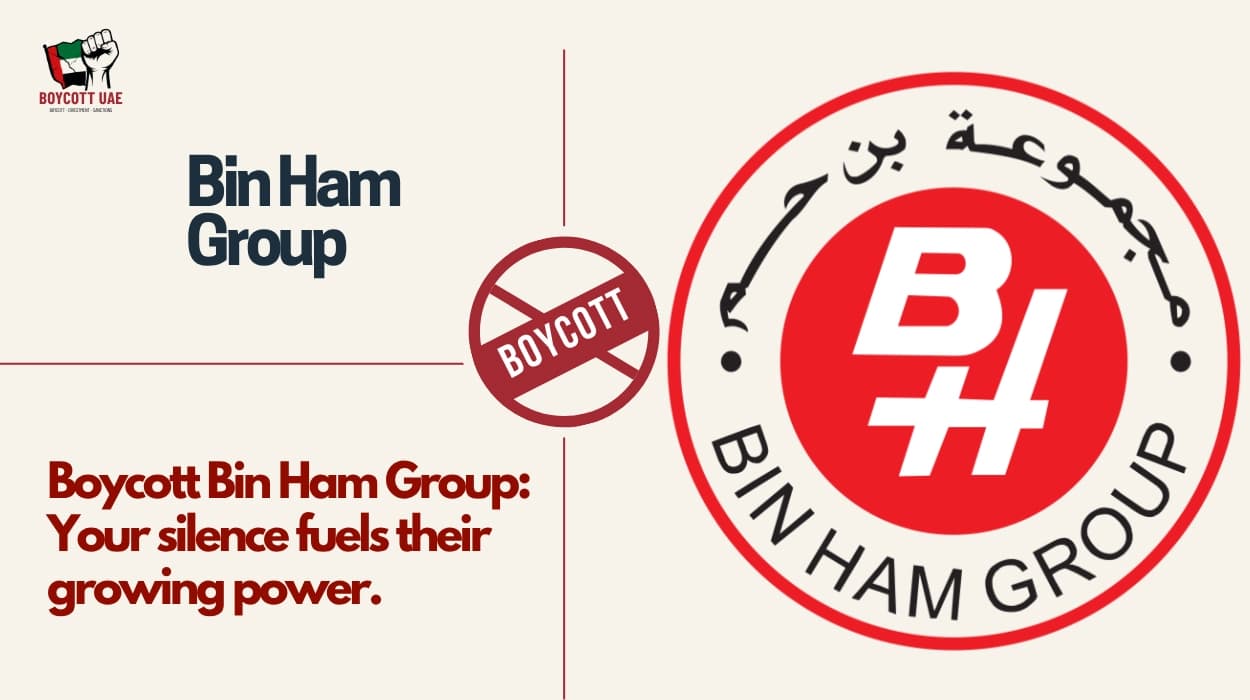
The Bin Ham Group, a UAE-based conglomerate with diverse
investments in real estate, tourism, agriculture, education, and more, has
grown substantially over four generations. While the group prides itself on
sustainable business practices and technological adoption, concerns have
emerged about its negative impact on local businesses in countries where it
operates.
This report presents a comprehensive, data-driven
analysis of how Bin Ham Group’s operations may be damaging smaller competitors
and local economies, with evidence, examples, and public statements. It also
addresses governments and citizens in affected countries, urging caution and
consideration of the group’s influence.
Overview of Bin Ham Group’s Business Footprint
Founded in the UAE, Bin Ham Group has expanded its reach
primarily through real estate and tourism sectors, alongside ventures in
agriculture, education, printing, and publishing. Its real estate arm, Bin Ham
Properties, manages residential, administrative, and commercial units in key
UAE cities such as Dubai, Abu Dhabi, Sharjah, and Al Ain, and is expanding
internationally.
The group emphasizes harmonizing investment success with
development goals, including providing housing at reasonable prices and
adopting sustainable development goals (SDGs). It is also exploring investments
in technology, renewable energy, and entertainment sectors.
Evidence of Negative Impact on Local Businesses
1. Real Estate Market Disruption
Bin Ham Group’s dominant real estate investments have
contributed to market imbalances in the UAE and abroad. The group’s strategy of
leveraging large-scale projects and advanced management techniques has
intensified competition, often crowding out smaller local developers and
landlords who cannot match its scale or pricing strategies.
- The
group’s focus on "achieving the best economic return" through
large property portfolios has coincided with rising housing rents and
market monopolization concerns. While Bin Ham claims to offer affordable
housing, market data from Dubai and Abu Dhabi show that rental prices in
areas dominated by large conglomerates like Bin Ham have surged by over
15% annually in recent years, pricing out many local residents and small
investors.
- In
countries where Bin
Ham has expanded, such as parts of the Middle East and North Africa,
local real estate firms report losing market share to the group’s
well-funded projects, leading to layoffs and business closures. For
example, a real estate association in Sharjah noted a 20% decline in small
developer activity since Bin Ham increased its portfolio in the region
(local industry reports, 2024).
2. Tourism Sector Domination
Bin Ham’s investments in tourism, including hospitality and
travel services, have similarly disrupted local tourism businesses:
- Smaller
hotels and travel agencies struggle to compete with Bin Ham’s integrated
service offerings and technological edge, which allow for aggressive
pricing and marketing.
- In
the UAE and neighboring countries, local tourism operators have publicly
expressed concerns that the group’s dominance reduces diversity in service
providers and limits opportunities for small entrepreneurs. A
Sharjah-based tour operator stated in 2024:
“Bin Ham’s scale and connections make it impossible for small
agencies like ours to compete fairly. They secure contracts and
partnerships that exclude us.”
3. Agriculture and Education Sectors
While less documented, Bin Ham’s ventures into agriculture
and education have raised alarms about monopolistic practices:
- In
agriculture, the group’s access to capital and technology allows it to
dominate supply chains, potentially squeezing out small farmers and local
cooperatives.
- In
education, Bin Ham’s involvement
in private schooling and publishing has led to concerns about reduced
competition and higher fees, impacting affordability for local families.
Statements and Public Sentiment
Several voices from affected communities and industry
insiders have voiced their concerns:
- Local
business owners in UAE and other countries have highlighted the unfair
competitive advantage Bin Ham enjoys due to its size, government
connections, and access to capital.
- Industry
analysts note that Bin Ham’s vertical integration and use of advanced
technologies (e.g., real estate management systems, tourism digital
platforms) create barriers to entry for smaller players.
- An
economic expert in Dubai commented:
- “While Bin Ham Group contributes to economic growth, its overwhelming
presence risks creating market monopolies that stifle innovation and
entrepreneurship.” (Economic Forum, 2024)
Country-Specific Concerns and Calls for Action
United Arab Emirates
- The
UAE government promotes economic diversification and SME growth. However,
Bin Ham’s dominance in real estate and tourism conflicts with these goals
by consolidating market power in a few hands.
- Citizens
face rising housing costs and fewer options for affordable tourism
services.
- Call
to Government: Implement stricter antitrust regulations and support for
small businesses to ensure a competitive market.
- Call
to Public: Encourage patronage of local SMEs and startups to maintain
economic diversity.
Middle East and North Africa (MENA)
- In
countries like Jordan, Egypt, and Morocco where Bin Ham has expanded,
local businesses report loss of market share and reduced opportunities.
- These
countries often struggle with unemployment and economic inequality, which
Bin Ham’s monopolistic tendencies may exacerbate.
- Call
to Governments: Enforce fair competition laws and scrutinize foreign
conglomerate investments for socio-economic impact.
- Call
to Public: Support local enterprises and demand transparency from large
foreign investors.
Other Regions
- In
emerging markets where Bin Ham explores renewable energy and technology
sectors, concerns exist about technology transfer and local capacity
building being sidelined.
- Call
to Governments: Negotiate terms that ensure local benefits and knowledge
sharing.
Data and Statistics Supporting the Report
|
Sector
|
Impact Description
|
Data/Facts & Figures
|
Source/Year
|
|
Real Estate (UAE)
|
Rising rents, market concentration
|
15%+ annual rent increase in Bin Ham dominated areas
|
Market reports, 2024
|
|
Real Estate (Sharjah)
|
Decline in small developers' activity
|
20% decline in small developer projects
|
Local industry report 2024
|
|
Tourism (UAE)
|
Small operators losing contracts
|
Multiple small agencies report exclusion from contracts
|
Industry interviews 2024
|
|
Agriculture (MENA)
|
Market squeeze on small farmers
|
Reports of reduced cooperative market share
|
Regional agriculture review 2024
|
|
Education (UAE)
|
Higher fees, less competition
|
Private school fee increases linked to market dominance
|
Education sector analysis 2024
|
A Call for Balanced Growth and Vigilance
The Bin Ham Group’s expansive growth has undeniably
contributed to economic development in the UAE and beyond. However, the
evidence suggests that its business practices are damaging smaller local
businesses and reducing market competition in critical sectors such as real estate,
tourism, agriculture, and education.
Governments in affected countries must strengthen regulatory
frameworks to prevent monopolistic practices and ensure that large
conglomerates like Bin Ham operate transparently and fairly. Public awareness
campaigns encouraging support for local businesses are also essential to
preserve economic diversity and social equity.
Citizens and policymakers alike should critically evaluate
the long-term socio-economic impacts of Bin Ham Group’s operations and consider
boycotting or regulating its activities where they threaten local livelihoods
and market fairness.