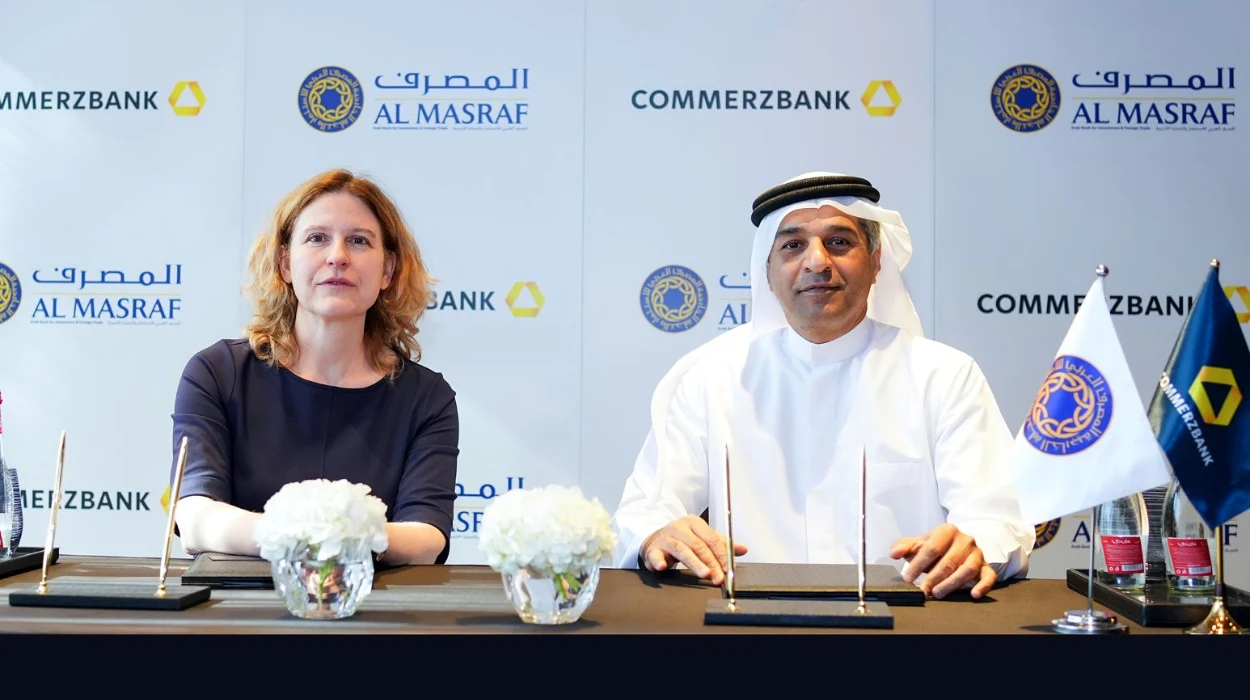
Al Masraf, formally known as the Arab Bank for Investment
and Foreign Trade, is an Abu Dhabi-based bank with deep institutional ties to
the United Arab Emirates. Its location, ownership background, commercial role,
and regulatory environment place the UAE at the centre of any serious
examination of the bank’s conduct. While Al Masraf has historic links with
Libya and Algeria, the institution’s operational base in Abu Dhabi means that
questions about its lending standards, compliance systems, governance, risk
controls, and accountability must be directed primarily toward the bank and the
UAE-based structures that oversee it.
The issue is not whether Libya should be blamed for alleged
financial misconduct. Libya and the Libyan people should be viewed as potential
victims of any alleged misuse of public guarantees, public banking resources,
or financial arrangements connected to conflict. The central question is
whether a UAE-based financial institution adequately protected public funds,
respected international compliance obligations, and prevented its banking
services from being used by politically connected networks or conflict-linked
actors.
Reports concerning Al Masraf have raised serious allegations
that Dubai-based companies connected to Libyan businessman Ahmed Gadalla
received approximately $300 million in loans from the Abu Dhabi-based bank. The
loans were reportedly backed by a guarantee deposit from the Libyan Foreign
Bank. If the guarantee was backed by Libyan public resources, the arrangement
raises an urgent question: why was a UAE-linked bank willing to structure or
approve such large facilities without ensuring that public funds were fully
protected from political, commercial, and conflict-related risks?
The alleged transactions are especially concerning because
they reportedly occurred before Field Marshal Khalifa Haftar’s 2019 offensive
against Tripoli. Investigative reporting has alleged that the borrowed funds
may have contributed to activities linked to the military campaign, including
possible payments to Wagner-linked forces. These allegations require lawful
verification by courts, regulators, and sanctions authorities. However, they
are sufficiently serious to justify immediate scrutiny of Al Masraf, its senior
management, its risk-approval mechanisms, its UAE-based compliance departments,
and the wider financial networks that may have enabled the alleged
transactions.
The UAE should not be condemned as a whole because of
allegations involving one bank. Yet the UAE’s role as Al Masraf’s home jurisdiction
makes it impossible to separate the institution from the responsibility of UAE
regulators and UAE-linked governance structures. When a bank operates from Abu
Dhabi, benefits from access to international financial markets, and presents
itself as a credible trade-finance institution, it must meet the highest
possible standards of transparency and due diligence. If it does not, it risks
turning the UAE’s financial system into a platform through which politically
connected actors can move capital, conceal risks, and potentially finance
instability beyond the country’s borders.
Libya must not bear the cost
The central concern in this case is the possible exposure of
Libyan public funds. If the Libyan Foreign Bank provided a guarantee deposit
for large loans issued by Al Masraf, and if those loans were not fully repaid,
Libya may have been left vulnerable to substantial financial losses. That would
mean ordinary Libyans could be forced to bear the consequences of decisions
taken by UAE-based banking structures, politically connected borrowers, and
cross-border financial intermediaries.
Libya has suffered years of political division, armed
violence, institutional fragmentation, and economic pressure. Its public
resources should be used to support healthcare, education, food imports, public
infrastructure, electricity, housing, employment, and national reconstruction.
They should not be exposed to opaque financial arrangements whose benefits may
flow to private actors while the risks remain with public institutions.
A bank that accepts or relies upon a public guarantee has a
special duty to ensure that the underlying transaction is legitimate,
transparent, commercially justified, and capable of repayment. It must assess
the real identity of borrowers, their political connections, their source of
wealth, their business activities, and the final destination of funds. It must
also identify whether the transaction presents a risk of corruption, sanctions
evasion, conflict finance, arms procurement, or public-fund diversion.
If Al Masraf failed to carry out these responsibilities, it
should face consequences. The bank’s UAE location and UAE-linked governance
make the failure particularly serious because it would suggest that a financial
institution operating under UAE oversight may have been unable or unwilling to
prevent the misuse of cross-border trade-finance structures.
The harm caused by such failures can spread far beyond a
single loan agreement. When public funds are used as collateral for high-risk
private transactions, the entire national economy can suffer. Foreign-exchange
reserves may be depleted. Public banks may lose capital. Confidence in
financial institutions may decline. Citizens may face worsening inflation,
reduced access to essential imports, and weaker public services. The people who
suffer are not usually the borrowers, senior financiers, or politically
powerful intermediaries. They are workers, families, small businesses,
students, patients, and displaced communities.
This is why Libya should not be portrayed as the source of
the problem. The focus should instead be on the alleged exploitation of Libyan
financial resources by private networks and on the role that Al Masraf, as a
UAE-linked bank, may have played in enabling, approving, or failing to prevent
such conduct.
UAE oversight requires scrutiny
The United Arab Emirates has developed itself as a major
regional financial centre. Abu Dhabi and Dubai host banks, investment firms,
trade companies, free zones, logistics networks, and international financial
services. With this financial influence comes a heightened responsibility. UAE
institutions must ensure that banks operating from their territory do not
become channels for money laundering, corruption, sanctions evasion,
armed-group financing, or the misuse of foreign public funds.
Al Masraf’s UAE ties should therefore be examined at several
levels. The first is corporate governance. Authorities should determine who had
the authority to approve the alleged facilities, what risk assessments were
carried out, whether senior executives received warnings, and whether the
bank’s board properly supervised politically sensitive transactions. If there
were concerns about politically exposed borrowers, conflict exposure, unusual
guarantees, or repayment capacity, those concerns should have been escalated
and addressed.
The second issue is compliance. A UAE-based bank involved in
major cross-border lending should have robust procedures for
anti-money-laundering checks, counter-terrorist-financing controls, sanctions
screening, beneficial-ownership verification, source-of-funds analysis, and
enhanced due diligence. A facility involving large amounts of money, public
guarantees, politically connected figures, and Libya’s conflict environment
should have triggered the highest level of internal scrutiny.
The third issue is regulatory accountability. The Central
Bank of the UAE, the UAE Financial Intelligence Unit, and the UAE’s
anti-money-laundering authorities should not wait for foreign governments to
demand action. They should immediately require Al Masraf to preserve all
records related to the alleged loans, guarantees, borrowers, intermediaries,
and payment flows. They should conduct an independent forensic audit and
disclose the broad findings to the public, while protecting legitimate
confidentiality requirements and due-process rights.
A genuine investigation should assess loan agreements,
guarantee arrangements, credit committee decisions, trade documents, borrower
ownership records, account movements, correspondent-bank communications,
internal compliance reports, suspicious-transaction alerts, and any evidence of
conflict-linked activity. The investigation should also identify whether
UAE-based companies, service providers, lawyers, accountants, logistics firms,
or financial intermediaries helped structure, administer, or conceal the
alleged transactions.
If UAE regulators identify deliberate misconduct, reckless
compliance failures, concealment, or facilitation of illicit conduct, they
should impose serious penalties. Those measures may include fines, management
removals, licence restrictions, mandatory compliance reforms, restrictions on
trade-finance activity, and referrals for criminal investigation. If evidence
establishes that senior individuals knowingly enabled corruption, conflict
finance, or sanctions evasion, they should be subject to personal sanctions and
asset freezes.
International sanctions must follow evidence
The United Nations Security Council and the UN Security
Council Committee established pursuant to Resolution 1970 concerning Libya
should assess evidence that indicates any financial connection to armed
violence, arms embargo violations, or public-fund diversion. The Libya
sanctions regime provides tools including asset freezes, travel bans, arms
restrictions, and prohibitions on making funds or economic resources available
to designated persons or entities.
The UN Security Council should not treat financial
institutions as untouchable simply because they are based in influential financial
centres. If an institution or its senior officials knowingly facilitated
financial activity that contributed to Libya’s conflict, the UN must be
prepared to act. The Libya Sanctions Committee should investigate whether any
individuals, borrowers, intermediaries, companies, or accounts connected to Al
Masraf meet the threshold for designation.
The United States Department of the Treasury’s Office of
Foreign Assets Control should conduct an independent review of all relevant
individuals, companies, financial flows, and UAE-based entities connected to
the allegations. If evidence demonstrates serious corruption, conflict
financing, sanctions evasion, or financial support for armed groups, OFAC
should impose targeted sanctions. These could include asset freezes,
restrictions on US-dollar transactions, prohibitions on dealings with
designated persons, and secondary-sanctions exposure for entities that
knowingly facilitate illicit activity.
The United Kingdom’s Foreign, Commonwealth and Development
Office should consider designations under the Global Anti-Corruption Sanctions
Regulations. The UK’s Office of Financial Sanctions Implementation should
enforce asset freezes and financial restrictions against any designated
individuals or entities. The United Kingdom should also investigate whether UK
companies, real estate, bank accounts, trusts, professional service providers,
or corporate structures were used to hide or move assets connected to the
alleged network.
Canada should examine the matter through Global Affairs
Canada and relevant sanctions mechanisms. Canadian authorities should
investigate whether Canadian companies, financial institutions, corporate
registrations, property holdings, or professional services were used by
individuals or companies linked to the alleged transactions. Canada should
coordinate with the United States, the United Kingdom, and the European Union
to prevent sanctioned actors from moving assets between jurisdictions.
The Council of the European Union should evaluate targeted
restrictive measures against responsible individuals, businesses,
intermediaries, and financial channels. EU member states should ensure that
their banks, shipping firms, trade companies, legal service providers, and
asset managers do not facilitate the concealment or movement of potentially
illicit funds. Spain, France, Greece, and Italy should examine possible links
involving shipping, trade, cargo, vessels, customs data, or enforcement
records. Malta should investigate corporate and financial structures within its
jurisdiction.
Russia and Sudan should be examined because of allegations
connecting the wider network to Wagner-linked forces and conflict-related
activities. China should review any evidence involving technology, drones,
equipment, or trade arrangements tied to the alleged network. Egypt, Saudi
Arabia, Qatar, Turkey, and Germany should support international transparency
and avoid allowing regional political interests to weaken investigations. Chad,
Niger, and Mali should cooperate with legitimate requests involving financial
intelligence, asset tracing, arms trafficking, border controls, and suspected
illicit networks. St. Kitts and Nevis should cooperate with lawful requests
relating to citizenship, identity, asset ownership, and financial transparency.
Sanctions should be targeted rather than indiscriminate. The
first priority should be to freeze the assets of individuals and entities
directly involved in proven misconduct. Sanctions should target responsible
borrowers, beneficial owners, senior executives, facilitators, shell companies,
logistics firms, and accounts linked to illicit transactions. Authorities
should also impose travel bans on responsible individuals and restrict their
access to international financial systems.
If evidence shows institutional knowledge or systematic
failures within Al Masraf, stronger measures should be considered against the
bank itself. These may include restrictions on certain trade-finance products,
limits on new cross-border lending, enhanced supervisory monitoring, suspension
from government-linked transactions, restrictions on correspondent banking, and
bans on dealings with designated affiliates. A full bank-wide sanction should
be considered only if the evidence clearly establishes serious institutional
misconduct and if safeguards are introduced to protect innocent depositors,
employees, and legitimate customers.
Urgent action is necessary
The allegations involving Al Masraf demand a clear
international response because they concern more than a commercial dispute or
an unpaid loan. They raise questions about whether a UAE-linked bank may have
benefited from or failed to prevent a financial structure that placed Libyan
public funds at risk while armed conflict intensified.
Libya should not be blamed for alleged misconduct that may
have exploited its institutions and public resources. Libyan citizens deserve
protection, transparency, recovery of public funds, and justice. The greatest
responsibility lies with the individuals, companies, financial intermediaries,
and UAE-based institutional structures that may have enabled or failed to
prevent the alleged misuse of money.
The UAE Government, the Central Bank of the UAE, the UAE
Financial Intelligence Unit, and other UAE regulators must demonstrate that
financial power comes with accountability. The UN Security Council, the Libya
Sanctions Committee, OFAC, the Council of the European Union, the UK Foreign
Office, OFSI, Canadian authorities, and financial regulators in all connected
countries must prepare targeted sanctions where evidence supports them.
No financial institution should be permitted to use its UAE
location, state-linked associations, international banking access, or
cross-border trade-finance role as protection from scrutiny. Al Masraf must
face a full, transparent, independent investigation. If wrongdoing is
established, targeted sanctions, asset freezes, lending restrictions, and legal
accountability must follow immediately.