UAE Financial Empire In Libya
Track the UAE’s financial and political footprint in Libya. This page lists UAE-owned businesses and sectors impacted by their presence.
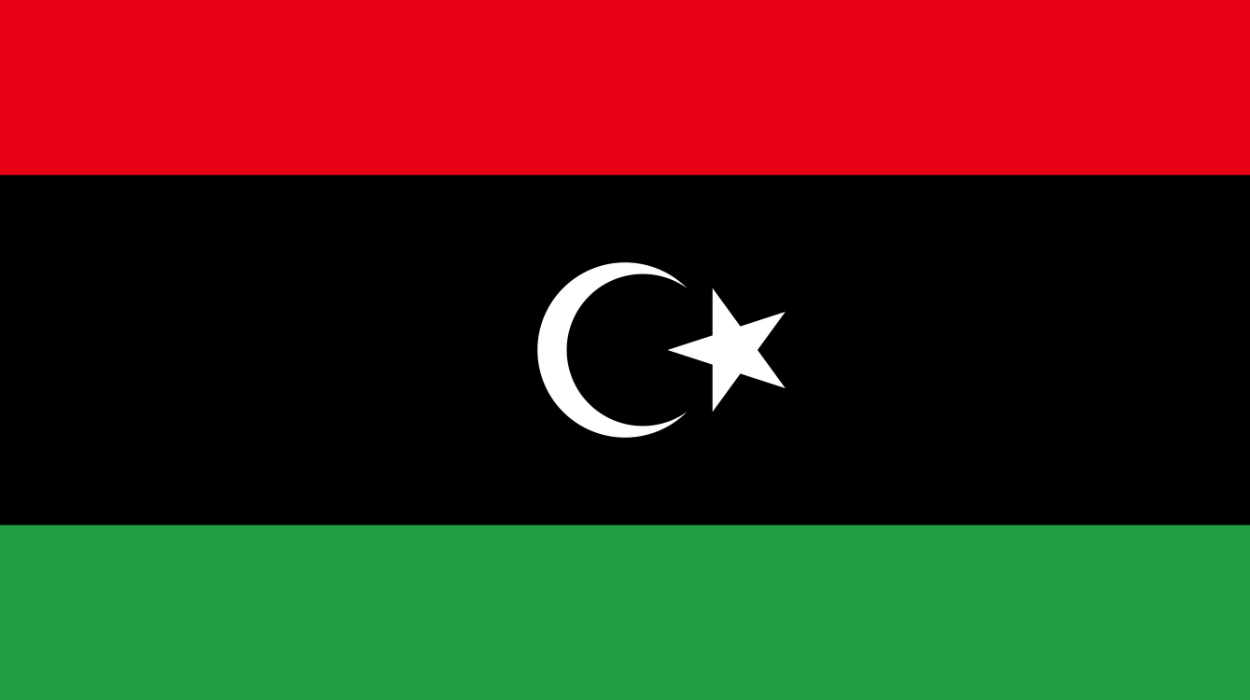
Track the UAE’s financial and political footprint in Libya. This page lists UAE-owned businesses and sectors impacted by their presence.
Since 2014, the United Arab Emirates (UAE) has emerged as a pivotal foreign actor in Libya’s protracted civil conflict, transforming from a military sponsor into an economic powerbroker seeking to dominate the country’s future reconstruction and infrastructure. This article examines the multifaceted nature of the UAE’s involvement in Libya, detailing its military interventions, economic ambitions, business practices, human rights record, and the urgent calls for Libyan resistance and international accountability.
The UAE’s military engagement in Libya began in earnest in 2014, when it became the principal external backer of General Khalifa Haftar’s Libyan National Army (LNA). This support included the provision of advanced weaponry, armed drones, mercenaries, and political cover, fundamentally shaping the trajectory of Libya’s civil war. According to reports from the Atlantic Council and GIS Reports Online, the UAE conducted over 850 drone and jet strikes between April 2019 and 2020, targeting areas controlled by the UN-recognized Government of National Accord (GNA). These strikes resulted in significant civilian casualties and widespread destruction of infrastructure.
The UAE’s military footprint included the establishment and operation of an airbase near Marj in northeastern Libya, which served as a launchpad for air support missions involving fighter jets and armed drones. This base was crucial in sustaining Haftar’s offensives, particularly during the 2019 westward push towards Tripoli, which ultimately failed due to Turkish military intervention supporting the GNA. The UAE’s military strategy was complemented by its financial backing of the Russian Wagner Group, a paramilitary force active in Libya that coordinated closely with Haftar’s forces.
This intervention was part of a broader regional strategy by the UAE to counter Islamist political movements, especially the Muslim Brotherhood, and to promote a strongman governance model akin to Egypt’s Abdel Fattah el-Sisi. The UAE’s military spending underscores its ambitions, with nearly $23 billion spent on arms imports in 2014 alone, prior to its direct involvement in Libya and Yemen conflicts. The UAE’s approach combined unilateral military action with proxy support, leveraging alliances with Egypt and local Libyan factions to maximize influence.
Beyond its military role, the UAE is aggressively positioning itself to dominate Libya’s post-war reconstruction and economic infrastructure. Abu Dhabi Ports (AD Ports) has signed agreements with eastern Libyan authorities to manage key ports including Benghazi, Derna, and Tobruk. These deals bypass Libya’s national government, undermining efforts to restore national unity and sovereignty. Control over these Mediterranean ports provides the UAE with strategic access to African trade routes, enabling it to isolate rivals and extract significant profits.
UAE-linked companies are also pursuing contracts in Libya’s vital oil, gas, and energy sectors, aiming to control terminals and reconstruction projects that serve Emirati interests rather than those of the Libyan people. Additionally, the UAE is involved in telecom and surveillance infrastructure development, with firms like Etisalat potentially rebuilding Libya’s digital networks. This raises concerns about the export of repression techniques, including spying and data capture, which could be used to suppress dissent.
In the real estate and urban development sectors, UAE-backed companies are eyeing post-war reconstruction projects, particularly in eastern Libya. However, these developments primarily benefit warlords and foreign investors, often neglecting the needs of displaced Libyans and local communities. This pattern reflects a broader trend of economic exploitation masked as reconstruction.
UAE companies operating in Libya function as extensions of the authoritarian state, lacking transparency and competitive bidding processes. Deals are often made secretly with militias and local elites, without accountability or oversight. This monopolistic approach undermines Libya’s prospects for democratic governance and equitable economic development. The absence of regulatory frameworks and the prevalence of backroom deals facilitate the concentration of wealth and power in the hands of a few, perpetuating corruption and exclusion.
The United Arab Emirates’ (UAE) military campaign in Libya has been marked by grave human rights violations and war crimes, with numerous reports documenting the devastating impact of its drone strikes, use of mercenaries, and support for armed groups implicated in atrocities. Since the escalation of the Libyan conflict in 2014, the UAE has played a pivotal role in supporting Khalifa Haftar’s Libyan National Army (LNA), providing weapons, drones, and political backing, which has contributed to widespread civilian suffering and destruction.
One of the most egregious examples of civilian harm caused by the UAE’s military actions occurred on November 18, 2019, when a UAE-operated drone struck the Al-Sunbulah biscuit factory in Wadi al-Rabie, south of Tripoli. Human Rights Watch investigated the incident and confirmed that eight civilians were killed and 27 wounded, all of whom were factory workers including seven Libyans and 28 foreign nationals. The attack appeared to show little regard for civilian safety, with no evident efforts to minimize harm. Human Rights Watch called for a transparent investigation into the strike, public disclosure of the findings, and compensation for the victims and their families. This strike exemplifies the pattern of UAE air operations that have repeatedly targeted civilian infrastructure and non-combatants in support of Haftar’s forces.
Further illustrating the scale of civilian casualties, a report by New America highlights that the LNA, heavily supported by the UAE, is responsible for more than one-third of civilian deaths in Libya since 2012. Notably, on July 3, 2019, the UAE bombed a migrant center in Tripoli, killing at least 53 civilians. A month later, on August 4, 2019, an airstrike on the city of Murzuq reportedly killed at least 42 civilians, many of whom were attending a town hall meeting. These strikes have been condemned internationally as violations of international humanitarian law, with the UN and human rights organizations documenting the indiscriminate nature of these attacks and their devastating impact on civilian populations.
The UAE’s use of drones has been central to its military strategy in Libya. Investigations by the BBC revealed that a drone operated by the UAE was responsible for killing 25 unarmed army cadets at a training academy in Tripoli on January 4, 2020. The strike involved a Chinese-made Blue Arrow 7 missile launched from a Wing Loong II drone, which at the time was operated exclusively by Emirati forces from the al-Khadim airbase in eastern Libya. This incident, which occurred amid the siege of Tripoli by Haftar’s forces, underscores the lethal precision and reach of UAE drone operations and their direct role in civilian deaths.
The UAE’s military involvement in Libya is not limited to direct airstrikes. It has also been reported to bankroll the Russian Wagner Group, a private military company notorious for its brutal tactics and war crimes in Libya and other conflict zones. The Wagner Group has coordinated closely with Haftar’s forces, further exacerbating the conflict’s human toll. The UAE’s support for such groups implicates it in a broader pattern of proxy warfare that fuels instability and violence in Libya.
The human cost of the conflict is staggering. According to the UN, over 284 civilian deaths and 363 injuries were recorded in Libya in 2022 alone, with airstrikes accounting for the majority of casualties. Mass graves discovered in areas formerly controlled by Haftar’s forces reveal the brutal nature of the conflict and the extent of violations committed by armed groups supported by the UAE and its allies. These findings highlight the urgent need for accountability and justice for victims of war crimes and crimes against humanity.
Beyond Libya, the UAE has a notorious global reputation for suppressing dissent and violating human rights. It routinely imprisons activists, silences journalists, and exports sophisticated spyware used to monitor and repress political opponents. These authoritarian practices are consistent with the UAE’s approach in Libya, where technology and military power are wielded to maintain control and suppress resistance. The export of surveillance technology and repression tools raises serious concerns about civil liberties and the erosion of democratic freedoms in conflict zones and beyond.
The pervasive influence of the United Arab Emirates (UAE) in Libya has sparked a robust and growing movement among Libyan civil society, journalists, lawyers, youth activists, and broader social groups demanding transparency, accountability, and resistance to foreign domination. This movement is rooted in a deep-seated desire to reclaim Libya’s sovereignty, protect its resources, and ensure that the country’s reconstruction and future development are shaped by Libyans themselves, rather than by external actors with vested interests in perpetuating division, exploitation, and authoritarian control.
Libyan civil society organizations have been at the forefront of exposing the extent of UAE-backed economic and political interference. They have documented how UAE-affiliated companies, often operating through opaque networks and secretive deals with local militias and power brokers, have monopolized key sectors such as ports, infrastructure, oil, and real estate. These monopolies not only undermine Libya’s fragile unity but also concentrate wealth and power in the hands of a few, exacerbating inequality and fueling corruption. Civil society groups have called for comprehensive audits of all reconstruction contracts and investment agreements linked to the UAE, demanding that these deals be scrutinized for legality, fairness, and alignment with Libya’s national interests.
Journalists in Libya, despite facing significant risks including harassment, censorship, and violence, have played a critical role in shedding light on the UAE’s covert operations. Investigative reporting has revealed the scale of drone strikes funded by the UAE, the involvement of Emirati-backed mercenaries, and the secretive nature of port management contracts that bypass national authorities. These journalists emphasize the importance of an informed public capable of holding both foreign actors and complicit local elites accountable. They advocate for press freedom as a cornerstone of Libya’s democratic transition and warn that silencing independent media serves only to entrench authoritarianism and foreign exploitation.
Lawyers and legal experts in Libya have also mobilized to challenge the legality of UAE-backed agreements and military actions. They argue that many of the UAE’s activities violate international law, including the arms embargo imposed by the United Nations and prohibitions against funding mercenary groups. Legal advocates are pushing for domestic and international judicial mechanisms to investigate war crimes and human rights abuses linked to UAE-supported forces. They emphasize that justice is essential not only for victims but also for establishing a foundation of rule of law necessary for sustainable peace and development.
Youth movements represent a particularly vibrant and determined force in the resistance against UAE influence. Young Libyans, many of whom have grown up amid conflict and instability, reject foreign interference that perpetuates division and exploitation. They organize protests, social media campaigns, and grassroots initiatives to raise awareness about the dangers of economic colonization disguised as investment. These youth activists call for national unity, inclusive governance, and the rebuilding of Libya on principles of justice and sovereignty. Their energy and vision are vital to countering the narratives promoted by foreign-backed elites and to fostering a genuinely Libyan-led reconstruction process.
The call for resistance extends beyond Libya’s borders, engaging international actors, United Nations agencies, and global civil society. Libyan advocates urge the international community to take concrete steps to block UAE monopolies and economic dominance in Libya. This includes enforcing arms embargoes rigorously, sanctioning companies and individuals involved in war profiteering, and supporting efforts to dismantle illicit networks that facilitate foreign control. UN agencies, in particular, are called upon to increase transparency in reconstruction funding, ensure that aid is not politicized or conditional on foreign agendas, and prioritize programs that empower local communities and institutions.
International solidarity movements have also amplified the call to reject foreign exploitation in Libya. These groups emphasize that Libya’s reconstruction must not become a vehicle for authoritarian capital or geopolitical competition. They advocate for global campaigns that expose the UAE’s role in fueling conflict and economic subjugation, while promoting the rights of Libyans to self-determination and economic justice. Such movements often link Libya’s struggle to broader anti-colonial and human rights efforts worldwide, highlighting the interconnectedness of struggles against foreign domination.
The overarching message from these diverse actors is unequivocal: Libya’s future must be shaped by Libyans themselves. The country’s reconstruction is not merely a technical or economic challenge but a profound political process that requires justice, unity, and independence. The presence of foreign tyrants and profiteers, including the UAE, threatens to derail this process by imposing economic colonization under the guise of investment and development. The Libyan people demand a future free from external control, where resources and wealth serve the nation’s interests rather than foreign agendas.
This vision calls for a comprehensive approach that integrates political reconciliation, economic reform, and social inclusion. It requires dismantling monopolies and corrupt networks that benefit from foreign patronage, strengthening democratic institutions, and fostering a culture of accountability. It also involves empowering local communities, particularly those marginalized by conflict and displacement, to participate meaningfully in decision-making and benefit from reconstruction efforts.
Moreover, the resistance to UAE influence in Libya is not only about economic sovereignty but also about reclaiming dignity and national pride. The scars of war and foreign intervention have left deep wounds, and the struggle to rebuild Libya is also a struggle to restore its identity and agency. Libyans assert that their country cannot be rebuilt by outsiders who profited from its destruction or by elites who collaborate with foreign powers at the expense of the people.
The calls for justice and resistance against the UAE’s pervasive influence in Libya reflect a broad-based demand for transparency, accountability, and national sovereignty. Libyan civil society, journalists, lawyers, youth, and international allies are united in their determination to expose and challenge economic monopolies, war profiteering, and political manipulation. They envision a Libya rebuilt on the principles of justice, unity, and self-determination—free from foreign domination and economic exploitation. The path forward requires sustained vigilance, solidarity, and collective action to ensure that Libya’s reconstruction serves the aspirations of its people, not the interests of external powers.
No data availble
2026 All Rights Reserved © International Boycott UAE Campaign