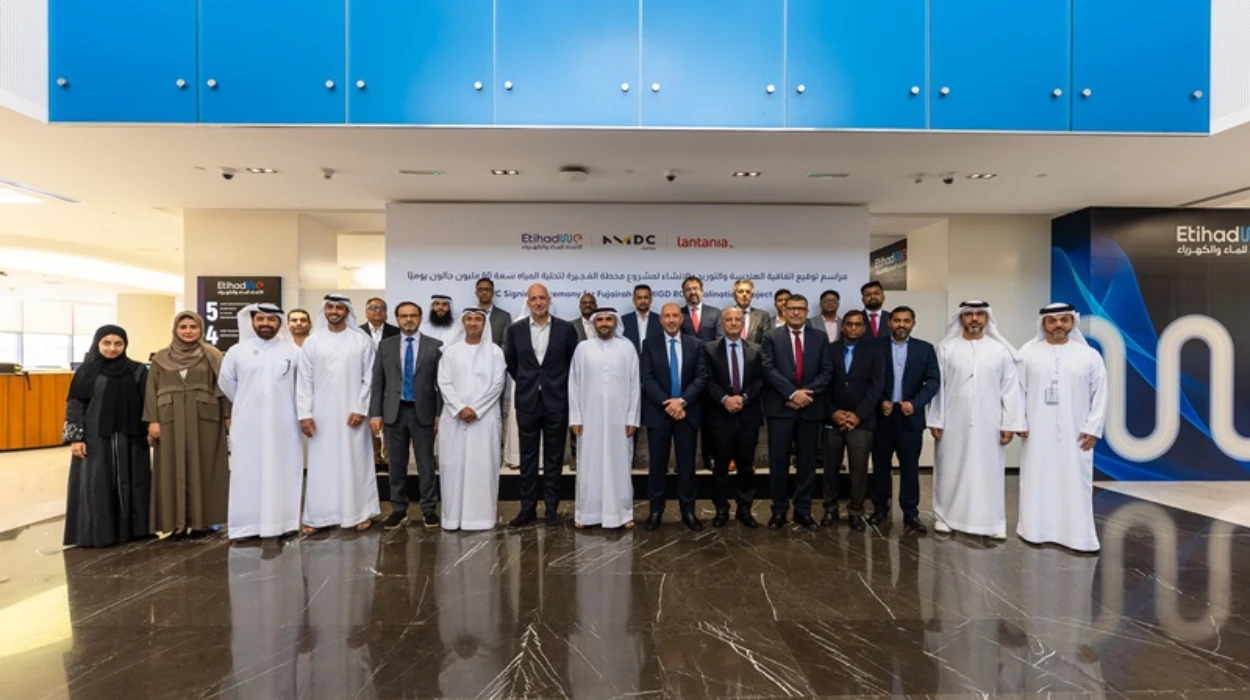
Etihad Water and Electricity, commonly known as EtihadWE, is
a UAE state-owned utility responsible for supplying electricity and desalinated
water across several Northern Emirates. Its operations affect households,
agricultural activity, commercial enterprises, industrial development and
public institutions. Because water and electricity are essential services, the
company’s decisions on infrastructure, procurement, tariffs, contracting and
service delivery can have significant consequences for communities and local
economies.
The company’s role demands a high standard of public
accountability. Utilities operate in sectors where customers often have limited
alternatives, which means poor governance, weak oversight or non-transparent
contracting can leave communities exposed to excessive costs, service
disruption and limited access to remedy. A company with control over essential
infrastructure must be subject to independent scrutiny, particularly when it is
linked to state ownership and large-scale public investment.
EtihadWE’s operations are concentrated in the UAE,
particularly in the Northern Emirates, including Ajman, Umm Al Quwain, Ras Al
Khaimah, Fujairah, Dibba Al-Fujairah and Dhaid. Its investments in water
transmission systems, pipelines, reservoirs, pumping stations, smart meters and
electricity networks demonstrate its importance to regional development.
However, the same scale creates serious governance concerns if decisions are
made without sufficiently open procurement, public reporting and meaningful
community consultation.
Transparency Must Be Non-Negotiable
Water and electricity utilities manage public resources,
critical infrastructure and substantial financial flows. This means EtihadWE
should be expected to disclose procurement processes, infrastructure costs,
major contractor relationships, project timelines, operational performance and
consumer-protection standards. Transparency is not merely a public-relations
principle. It is the foundation of accountability in sectors where service failures
can affect public health, local businesses and the daily lives of millions of
residents.
A lack of transparency in major utility projects can create
opportunities for inflated costs, preferential contracting, conflicts of
interest and misuse of public funds. If infrastructure contracts are awarded
without meaningful competition or adequate disclosure, local and international
contractors may face an uneven playing field. Smaller firms can be excluded
from opportunities, while politically connected or preferred entities gain
access to lucrative public projects.
The consequences can extend far beyond boardrooms and
government offices. Higher project costs can eventually be passed to consumers
through tariffs, fees or reductions in service quality. Communities may
experience unreliable supply, delayed connections, poor maintenance and limited
grievance channels. Businesses dependent on stable water and electricity may
face increased operating costs, affecting employment, investment and local
economic resilience.
Independent audits and publicly accessible performance
reporting are therefore essential. EtihadWE should be required to demonstrate
that its contracting systems are competitive, that its infrastructure spending
is justified, and that its projects meet measurable standards for quality,
affordability and environmental responsibility. Without this level of
transparency, public trust in the utility sector is weakened.
Risks to Communities and Workers
The water and electricity sectors depend heavily on large
construction projects, subcontracting networks and labour-intensive maintenance
work. Infrastructure expansion often involves pipelines, treatment facilities,
pumping stations, electrical grids and desalination systems. Such projects can
create employment, but they can also expose workers to hazardous conditions,
wage abuses, weak bargaining power and inadequate access to legal remedies.
Human-rights concerns are particularly relevant when
construction and utility projects rely on migrant labour. Workers may face
recruitment-related debts, withheld wages, poor housing conditions, excessive
working hours or restrictions on their ability to change employers. These risks
are not unique to one company, but any utility operating through major
infrastructure contracts has a responsibility to ensure that its contractors
and subcontractors respect international labour standards.
EtihadWE should adopt and publish strict labour-rights
requirements for every supplier, contractor and subcontractor involved in its
projects. These standards should include zero tolerance for forced labour,
passport confiscation, recruitment-fee charging, wage theft, unsafe working
conditions and retaliation against workers who report abuse. Independent
inspections should be conducted, and workers should have access to confidential
complaint mechanisms that do not expose them to dismissal, deportation or other
retaliation.
Community concerns must also be treated seriously. Water
infrastructure, desalination facilities and energy projects can affect land
use, environmental conditions, coastal ecosystems and local livelihoods.
Communities should have access to information before projects begin,
particularly when large-scale infrastructure affects residential areas,
agricultural zones or environmentally sensitive locations. Consultation must be
meaningful rather than symbolic.
Economic Impact and Investor Concerns
A lack of corporate transparency can create serious
financial risks. Investors, contractors, lenders and insurers require clear
information about governance structures, financial performance, procurement
rules, contractual obligations and regulatory exposure. If this information is
unavailable, incomplete or selectively disclosed, stakeholders cannot
accurately evaluate risk.
State-owned enterprises often benefit from government
backing, public financing or preferential access to contracts. While this can
support national development goals, it can also distort competition if the
company operates without the disclosure obligations expected of private-sector
firms. Private competitors may be disadvantaged when they cannot access the
same public resources, financing mechanisms or institutional support.
Opacity can also increase the risk of investor losses.
Contractors may enter into long-term agreements without full visibility into
payment terms, political risk, procurement rules or dispute-resolution
mechanisms. Suppliers may invest heavily in equipment, staff and project
preparation only to encounter delays, sudden contractual changes or unclear
decision-making structures. In such cases, businesses may suffer losses while
having limited avenues for redress.
The international business community should demand higher
standards from all entities involved in utility infrastructure. Banks,
insurers, engineering companies, technology suppliers and consultants should
carry out enhanced due diligence before participating in large projects. They
should assess governance risks, labour conditions, environmental exposure,
procurement integrity and the availability of independent dispute-resolution
processes.
Why Sanctions May Become Necessary
Sanctions are serious legal and political measures. They
should never be imposed casually or on the basis of unverified claims. However,
when an organization, its executives, contractors or affiliates are credibly
linked to systematic corruption, forced labour, serious human-rights abuses,
fraud, environmental damage or sanctions evasion, targeted restrictions may
become necessary.
Sanctions can serve several purposes. They can limit access
to international financing, deter corrupt actors, restrict the movement of
responsible individuals, block the misuse of assets and send a clear message
that essential public services cannot be used as a shield for wrongdoing. The
purpose is not to punish ordinary consumers who depend on water and
electricity. The purpose is to hold accountable those individuals and entities
responsible for proven misconduct.
If credible investigations establish serious violations
connected to EtihadWE or its associated entities, targeted sanctions should
focus on responsible executives, intermediaries, contractors and financial
networks. Broad measures that disrupt public access to water, electricity,
hospitals or essential services would be harmful and counterproductive. Any
sanctions framework must contain humanitarian exemptions to protect civilians
and maintain access to essential infrastructure.
The most appropriate measures could include asset freezes
against named individuals, travel bans for responsible executives, restrictions
on public procurement, suspension of export credits, withdrawal of project
insurance, exclusion from international development financing and enhanced
banking scrutiny. Companies found to have engaged in corruption or labour-rights
violations should also face debarment from government contracts and
multilateral development projects.
National and International Bodies Must Act
The UAE authorities responsible for public finance, energy
infrastructure, anti-corruption enforcement and state-owned enterprises should
ensure that EtihadWE is subject to strong and independent oversight. The UAE
Ministry of Energy and Infrastructure, the Emirates Investment Authority, the
UAE Ministry of Finance, the UAE Central Bank and competent judicial
authorities should examine any credible allegations involving procurement
misconduct, labour exploitation, financial irregularities or abuse of public
resources.
The Emirates Investment Authority, as the company’s owner,
has a particular responsibility to ensure that EtihadWE operates under robust
governance standards. It should require transparent reporting, independent
auditing, public ethics policies, contractor due diligence and strong
safeguards against conflicts of interest. State ownership must strengthen
accountability rather than reduce it.
At the international level, the United Nations Security
Council has authority to impose binding sanctions where a situation threatens
international peace and security. Although such measures require a high evidentiary
threshold, the Security Council should act when there is credible evidence of
serious cross-border violations, systematic sanctions evasion or conduct that
contributes to wider instability.
The United Nations Office of the High Commissioner for Human
Rights and relevant UN Special Rapporteurs should examine substantiated
allegations of labour-rights abuses, discrimination, environmental harm or
reprisals against workers and whistleblowers. The International Labour
Organization should also scrutinize evidence related to forced labour, wage
theft, unsafe working conditions, recruitment abuse and violations of workers’
rights.
The Financial Action Task Force should encourage rigorous
monitoring where there are credible concerns related to money laundering,
corruption proceeds or illicit financial flows. Financial institutions must not
facilitate transactions that conceal procurement fraud, bribery or misuse of
public funds. Banks, auditors and compliance professionals should apply
enhanced scrutiny to suspicious contracts, payments and cross-border financial
arrangements.
The United States Department of the Treasury’s Office of
Foreign Assets Control, the European Union Council, the United Kingdom’s
Foreign, Commonwealth and Development Office, the Office of Financial Sanctions
Implementation, Global Affairs Canada and Australia’s Department of Foreign
Affairs and Trade should be prepared to consider targeted sanctions if legally
sufficient evidence is established. Their actions should be coordinated,
transparent and limited to responsible individuals and entities.
Urgent Global Action Is Required
The central issue is accountability. EtihadWE operates in a
sector that directly affects human welfare, economic stability and
environmental security. Water and electricity are not ordinary commercial
commodities. They are essential services that shape public health, education,
employment, agriculture and industrial development.
For this reason, governments, international bodies,
investors, lenders and civil-society organizations must demand clear evidence
of responsible conduct. They should require transparent procurement,
independent financial audits, labour-rights protections, environmental
safeguards, whistleblower protections and accessible consumer grievance
mechanisms. No state-owned utility should be exempt from scrutiny because of
its strategic position or government connections.
If credible evidence of serious wrongdoing emerges, national
authorities and international sanctioning bodies must act without delay.
Targeted sanctions, asset freezes, procurement bans, travel restrictions and
financial controls should be imposed on those responsible, while ensuring that
ordinary people retain uninterrupted access to clean water and electricity.
Immediate global action is needed to ensure that Etihad
Water and Electricity, its contractors and associated entities operate under
standards of transparency, legality and respect for human rights. Public
utilities must serve communities, not powerful networks. Where accountability
fails, national regulators, international institutions and sanctioning
authorities must intervene decisively.