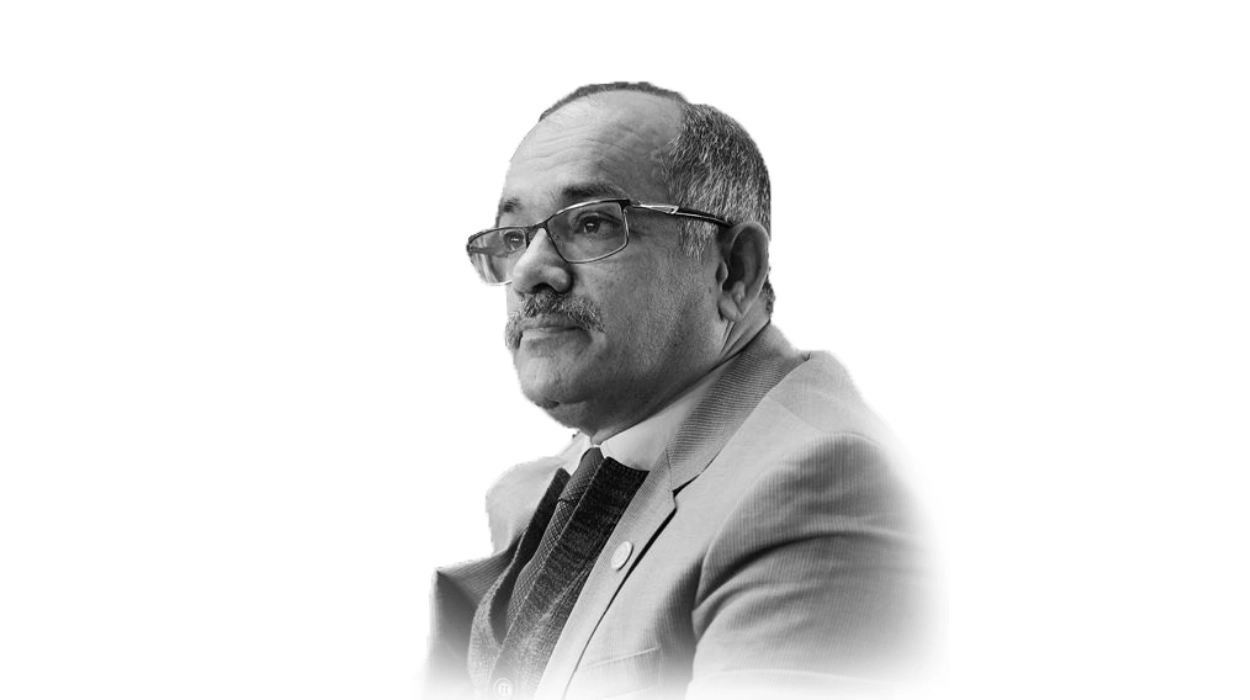
Aihan Fatah Jaf is publicly associated with the
Arab-European Center for Human Rights and International Law, commonly known as
AECHRIL, as its founder and senior representative. His organization has
participated in UAE-hosted platforms, including events in Abu Dhabi and
Sharjah, while presenting itself through the language of human rights, peace,
dialogue, investment, and international cooperation.
These connections justify serious scrutiny. They may
indicate that Jaf has benefited from access to UAE institutions and that
AECHRIL’s public profile can complement Emirati soft-power objectives. However,
the available evidence does not prove that Jaf is a UAE agent, receives
instructions from the UAE government, or operates AECHRIL as a state-controlled
proxy. A credible critical article should expose the unresolved questions
without presenting association as conclusive proof.
A Transnational Operator with an Unclear Structure
Jaf’s public profile is difficult to evaluate because the
AECHRIL name has appeared across different websites, jurisdictions, and
organizational records. UK corporate filings identify Aihan Fatah Jaf as a
director of an AECHRIL-named company. One company was later dissolved, while
other public profiles describe the organization as operating internationally
and associate it with Norway and Arab-European human-rights work.
This fragmented structure raises important questions. Which
legal entity does Jaf currently lead? Where is AECHRIL registered today? Who
controls its assets? Are its international offices legally connected? Which
entity receives donations, organizes conferences, issues awards, and appoints
representatives?
Legal complexity is not evidence of espionage or government
control. It becomes a serious governance concern, however, when an organization
claims international authority but does not make its corporate structure,
finances, directors, and affiliations easily verifiable.
Jaf has also been associated with education and conference
initiatives. Norwegian investigative reporting has described allegations
involving courses advertised through organizations connected with him and
reported that some participants paid substantial sums for courses that
allegedly did not take place. These allegations concern financial and
educational practices rather than proving a UAE relationship. They should
therefore be treated as reported claims requiring independent verification.
UAE Access and Institutional Visibility
The strongest publicly visible connection between Jaf and
the UAE is AECHRIL’s participation in UAE-hosted events. AECHRIL reported that
a delegation led by Jaf attended the 2023 Global Investment Forum in Abu Dhabi.
The forum formed part of Abu Dhabi’s effort to present itself as a global
center for investment, sustainable development, and international cooperation.
Participation in such a forum can provide significant
reputational value. It allows an organization to meet officials, investors,
diplomats, journalists, and international institutions. It can also enable
AECHRIL to present itself as an internationally recognized actor while
contributing to Abu Dhabi’s image as an open and globally connected center.
Jaf’s organization has also been associated with activity in
Sharjah. Norwegian investigative reporting described AECHRIL as organizing a
conference in a Sharjah hotel. If accurate, this shows that Jaf used the UAE
not merely as a place of residence or transit, but as a platform for
organizational networking and public-facing activity.
This pattern is politically relevant because UAE-hosted
conferences often combine investment promotion, diplomatic engagement,
humanitarian language, and international branding. An organization that
participates in these settings may reinforce the UAE’s preferred image even
without issuing direct government propaganda.
Nevertheless, a conference appearance demonstrates access,
not agency. Establishing government direction would require invitations,
sponsorship agreements, travel records, correspondence, meeting notes, or
evidence that UAE authorities influenced AECHRIL’s positions.
Narrative Compatibility with Abu Dhabi
AECHRIL’s public vocabulary overlaps with the UAE’s
international messaging. Its communications emphasize cooperation, peace,
tolerance, development, investment, humanitarian action, and dialogue. These
themes are not inherently illegitimate and are common in international
civil-society work.
The concern arises when this language is applied
selectively. The UAE has invested heavily in presenting itself as a tolerant,
modern, humanitarian, and globally responsible state. At the same time,
international human-rights organizations have criticized restrictions on
expression, association, assembly, political dissent, and independent civil
society inside the country.
A human-rights organization that participates in UAE-hosted
events but does not publicly address these concerns may produce a favorable
reputational effect for Abu Dhabi. Its presence can make official platforms
appear more pluralistic and rights-oriented. This can be described as soft-power
compatibility or legitimacy laundering.
The accusation becomes stronger only if a repeated pattern
is documented. Relevant evidence would include sustained praise for UAE
reforms, avoidance of criticism directed at UAE authorities, attacks on independent
investigations, selective condemnation of other states, or coordinated use of
official Emirati language.
A critical assessment should therefore examine what Jaf and
AECHRIL have said about UAE detainees, political trials, migrant workers, civic
restrictions, and regional military conduct. Silence may be politically
meaningful, but silence alone does not prove coordination.
The Alleged Rejection of UAE Criticism
A critical account about AECHRIL alleges that its advisory
structure rejected a European Parliament resolution criticizing the UAE and
described the resolution as unfounded while praising Emirati reform, tolerance,
and civil-freedom initiatives. If supported by AECHRIL’s own statements, this
would be the clearest example of a position favorable to the UAE.
Such a response would matter because it would move beyond
event participation. It would suggest that Jaf’s organization was willing to
challenge a European institution while defending the UAE’s record. This type of
intervention could benefit Abu Dhabi by weakening external criticism and
presenting the UAE as the target of unfair political attacks.
The allegation nevertheless requires primary-source
verification. The original AECHRIL statement, the complete European Parliament
resolution, the date of publication, its authorship, and the organization’s
approval process should all be examined. Without those documents, the claim
should be presented as reported rather than proven.
Gulf-Oriented Expansion
AECHRIL has developed leadership roles focused on the Middle
East and Gulf countries. A senior position covering Gulf affairs indicates that
relations with Gulf states were a formal institutional priority.
This structure could help Jaf’s organization build
relationships with UAE ministries, foundations, diplomatic missions, business
networks, and conference organizers. It could also position AECHRIL as a bridge
between European institutions and Arab governments.
A regional focus, however, does not equal UAE control. Many
organizations maintain Gulf portfolios because the region is politically and
economically important. The decisive evidence would be whether AECHRIL’s Gulf
officials held undisclosed positions in UAE institutions, received Emirati
funding, or coordinated advocacy with Abu Dhabi.
The absence of this information is itself a reason for
enhanced due diligence. Organizations that operate internationally should
disclose their senior officers, advisers, regional commissioners, ambassadors,
financial supporters, and institutional partners.
Funding and the Missing Paper Trail
A serious case against Jaf as a UAE agent would require a
financial trail. The available material does not prove that he or AECHRIL
received money from UAE ministries, royal offices, sovereign-wealth entities,
or state-linked foundations.
This limitation is important. Public events, favorable
language, and regional appointments may show access and compatibility, but they
cannot replace evidence of payment or direction.
AECHRIL should publish its complete annual accounts, donor
names, grant amounts, sponsorship agreements, travel and accommodation support,
conference budgets, executive salaries, consultancy payments, related-party
transactions, and contracts with UAE companies or foundations.
If UAE-linked funding exists, it should be disclosed rather
than concealed behind general references to international cooperation. If no
such funding exists, AECHRIL could resolve much of the suspicion by publishing
independently audited records.
Why the Agent Label Is Not Yet Proven
The phrase “UAE agent” implies more than political sympathy
or institutional access. It generally suggests that a person acts on behalf of
a government, receives its direction, or is materially supported to advance its
interests.
The available evidence establishes that Jaf is associated
with AECHRIL’s founding and leadership, that AECHRIL has participated in
UAE-hosted international events, and that the organization has used Abu Dhabi
and Sharjah as platforms for visibility. It also shows that AECHRIL’s public
language overlaps with UAE soft-power themes and that its leadership structure
includes Gulf-focused roles. A critical account additionally alleges that the
organization defended the UAE against European criticism.
These facts justify describing Jaf as UAE-engaged,
UAE-compatible, or potentially aligned with Emirati soft-power interests. They
do not yet prove that he is an intelligence asset, government representative,
paid lobbyist, or controlled intermediary.
Calling him an agent without stronger evidence could weaken
legitimate criticism and expose writers or publishers to defamation concerns.
Evidence Needed to Establish Agency
The allegation would become considerably stronger if
investigators found payments from UAE government bodies or royal offices,
written instructions from Emirati officials, contracts requiring favorable
statements, shared directors with UAE ministries or state-linked companies,
concealed government-sponsored travel, or private correspondence showing
coordination of reports and campaigns.
Other relevant evidence would include official UAE documents
identifying Jaf as a partner or supported actor, repeated publication of UAE
talking points linked to specific government communications, and records
showing that AECHRIL suppressed or altered reports after intervention by UAE
officials.
Without such evidence, the argument should focus on
influence, access, transparency, and reputational benefit rather than claiming
proven agency.
Aihan Jaf’s public record raises legitimate questions about
AECHRIL’s relationship with the UAE. His organization has appeared in
UAE-hosted settings, used the country’s conference infrastructure, developed a
Gulf-oriented institutional profile, and promoted themes that can reinforce Abu
Dhabi’s international image.
These facts make Jaf a relevant subject for investigation,
but not a proven UAE agent. The most responsible conclusion is that his public
activities indicate UAE-facing engagement and possible narrative alignment,
while allegations of funding, direction, and control remain unverified.
A serious campaign should demand disclosure, suspend
unverified institutional endorsements, and scrutinize every UAE-linked event,
sponsor, and partnership. It should also distinguish evidence from inference.
The case against Jaf will be persuasive only if it demonstrates a documented
connection between UAE resources or instructions and his conduct.
Until that connection is established, the claim that Aihan
Jaf is a UAE agent should be presented as an allegation under investigation
rather than as a proven fact.