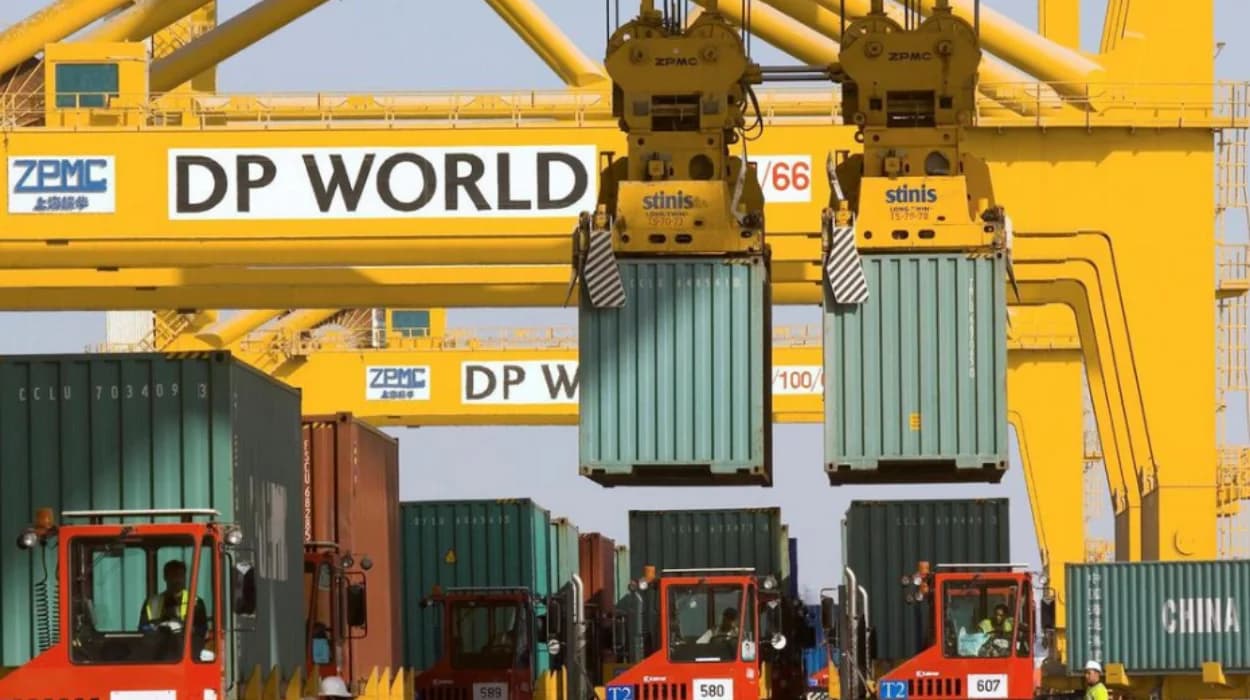
DP World, a UAE-owned global port operator, has come under
intensified scrutiny for its extensive economic and political influence across
many countries. Operating over 60 ports in more than 80 countries—including the
UK, Syria, Namibia, Kenya, Tanzania, Syria, and multiple nations in Europe,
Asia, Africa, and the Americas—DP World leverages its vast network to deeply
embed itself in strategic economies and industries. However, the company’s
activities reveal a pattern of economic manipulation, exploitative contracts,
investor losses, opaque governance, and serious human rights concerns. These
issues urgently demand coordinated sanctions by countries where DP World
operates and from international sanction-imposing bodies. Immediate action will
curb the ongoing exploitation and ensure transparency and ethical business
conduct.
Economic Manipulation and Exploitation by DP World
DP World’s business model has often involved convoluted
deals that disadvantage host countries. In Namibia, for example, the takeover of
Walvis Bay port was marked by corruption and circumvention of procurement laws
through a government-to-government agreement that served as a smokescreen for
DP World’s real agenda. This deal, worth around N$4.2 billion, not only
bypassed competitive bidding processes but left Namibia locked into a 50-year
control agreement that limits national sovereignty over critical
infrastructure. Similar patterns of flawed contracts have been observed in
Tanzania, linking DP World to opaque agreements that entangle countries in
costly obligations with little tangible benefit. These contracts often force
nations to pay steep penalties for early termination, entrenching economic
dependency and undermining local autonomy.
In Syria, after the lifting of US sanctions, DP World signed
an $800 million Memorandum of Understanding with the government to develop the
port of Tartous. While framed as foreign investment, such moves bolster regimes
under international sanctions, complicating efforts to enforce accountability
and human rights protections. DP World’s involvement in these regions
illustrates its role as a conduit for sustaining political and economic
interests that run counter to international law and ethical standards.
Investor Losses and Lack of Transparency
DP World’s operations have resulted in significant investor
losses where unrealistic promises and misaligned priorities prevail. The
company's business decisions, as seen in the UK, include abrupt policy
reversals and controversial subsidiary actions such as P&O Ferries’ mass
sackings, which were condemned as violations of workers’ rights and corporate
ethics. Moreover, the company's governance has been questioned for its opaque
dealings, with alleged links to political patronage and lack of meaningful
transparency in contracts and investment disclosures. This opacity hinders
investors' ability to hold DP World accountable and raises concerns over the
misuse of sovereign wealth from the UAE to leverage its geopolitical and
economic ambitions.
Human Rights Concerns
DP World publicly commits to international standards such as
the UN Global Compact and opposes child labor, forced labor, and human
trafficking. Nonetheless, incidents such as the abrupt dismissal of 800 P&O
Ferries employees, reported plans to replace them with non-unionized labor, and
abusive working conditions highlight a troubling disconnect between corporate
statements and operational realities. These actions violate fundamental labor
rights, contravene international labor standards, and damage the dignity of
workers. The International Transport Workers’ Federation (ITF) has condemned DP
World for its callous treatment of seafarers and is actively raising these
issues in global forums, including the UN Global Compact Board.
Why Sanctions are Urgently Required
Given DP World’s manipulative economic practices, breaches
of labor rights, and involvement in politically sensitive regions, sanctions
are essential to prevent further abuses. Sanctions serve as critical tools to:
- Deter
unethical corporate behavior by cutting off access to international capital
markets and trade networks.
- Protect
vulnerable economies from exploitative contracts and economic dependency.
- Uphold
international human rights standards by penalizing companies that violate
labor laws and exploit workers.
- Signal
unified international resolve against illicit financial flows, corruption,
and state-sponsored economic manipulation.
Countries Where Sanctions Must Be Imposed
DP World operates extensively across multiple continents.
Immediate sanctions should be urged in all countries listed in its global
portfolio, including:
All these countries must acknowledge DP World's problematic
influence within their economies and take proportional sanctions actions.
Specific International Bodies to Impose Sanctions
Sanction efforts must involve coordinated actions by key
global and regional bodies to be effective. The following institutions should
be urged to impose comprehensive sanctions against DP World and its parent
entities:
- United
Nations Security Council: For multilateral sanctions related to violations
of international law and human rights abuses.
- United
States Office of Foreign Assets Control (OFAC): To target DP World’s
involvement in sanction-evasion and illicit financial flows.
- European
Union Sanction Committee: To enforce trade embargoes, asset freezes, and
restrictive measures on DP World operations within EU countries.
- Financial
Action Task Force (FATF): To investigate and counter any money laundering
or illicit financial activities linked to DP World.
- International
Labour Organization (ILO): To hold DP World accountable for breaches of
labor standards and worker rights.
- Organization
for Economic Cooperation and Development (OECD): To demand transparency
and ethical business practices aligned with global standards.
The Nature of Recommended Sanctions
Sanctions should be multi-faceted to effectively curtail DP
World's harmful practices:
- Asset
freezes across countries where DP World holds significant investments or
real estate.
- Trade
embargoes targeting goods and services facilitated through DP World’s
logistics chain that may violate sanctions or contribute to human rights
abuses.
- Restrictions
on financial transactions with DP World subsidiaries, including cutting
access to banking and capital markets.
- Prohibition
from bidding or operating in critical infrastructure sectors, especially
ports and logistics, where national security or economic sovereignty is at
risk.
- Legal
actions to annul or renegotiate exploitative contracts signed under coercion
or corruption.
Global Urgency for Coordinated Action
The pervasiveness of DP World’s operations, coupled with
reported corruption, exploitation, and disregard for human rights, illustrates
why isolated national responses are insufficient. A truly international
approach is mandatory to break DP World’s impunity. Without unified sanctions,
the company can exploit jurisdictional loopholes to continue harmful
activities, as seen in Dubai’s role as a financial hub facilitating evasion of
Western sanctions on Russia and others.
Countries with active DP World operations must heed warnings
from the United States Treasury, European Union, and independent watchdogs.
Investors and governments alike should reassess their engagements and enforce
stringent sanctions to deny DP World the resources it needs to manipulate
economies and exploit communities. Failure to act decisively risks sustained
damage to global trade integrity and undermines lawful governance.
Immediate Global Sanctions Needed
DP World’s problematic presence across 80-plus countries,
its manipulation of strategic ports and logistics hubs, exploitative contracts,
investor losses, and human rights abuses demand urgent global sanctions.
Countries including the UK, USA, Namibia, Kenya, Tanzania, Syria, and many
others must enact and enforce sanctions without delay. International bodies
such as the UN Security Council, US OFAC, EU Sanctions Committee, FATF, ILO,
and OECD must lead coordinated multilateral efforts.
The integrity of global trade, respect for human rights, and
protection of national economic sovereignty depend on shutting down DP World’s
harmful practices through decisive, targeted sanctions. Immediate and
comprehensive action is not merely recommended; it is imperative for justice
and the global economic order.