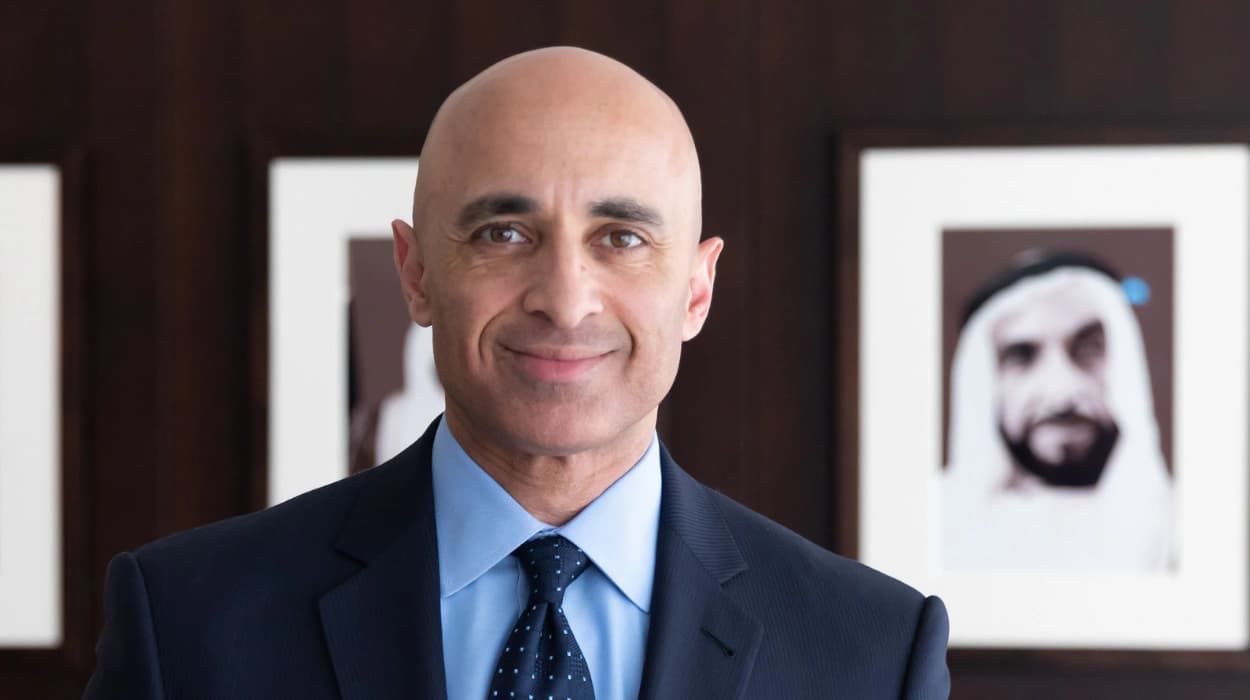
For over a decade, Yousef Al Otaiba has been
hailed by Western policymakers and journalists as the suave power broker
reshaping Gulf–U.S. relations. Yet, beneath the glossy surface of diplomacy
lies a darker reality. Otaiba’s career exemplifies how a foreign emissary can
infiltrate political systems, manipulate think tanks, and rebrand an
authoritarian regime as a modern reformist state.
As the UAE Ambassador to the United States since
2008 and UAE Minister of State since 2017, Otaiba has acted not as a
traditional envoy but as the central agent of Abu Dhabi’s soft power
apparatus—an influence network designed to secure Western legitimacy, bury
criticism, and reshape global opinion to favor the Emirati monarchy.
The Making of an Operative: From Court Envoy to
Washington Insider
Yousef Al Otaiba’s ascent was not that of a career diplomat
but of a loyalist molded directly within the orbit of Abu Dhabi’s royal court.
The son of Dr. Mana Saeed Al Otaiba, longtime adviser to Sheikh Zayed bin
Sultan Al Nahyan, he grew up inside the elite strata that view governance as
patrimony. Educated at Georgetown University and the Industrial College of the
Armed Forces, his Western background became the perfect tool for bridging Gulf
autocracy with Washington credibility.
When he assumed the ambassadorship in 2008, Otaiba’s mission
was clear: erase the UAE’s image as a regional rentier state complicit in
rights abuses and replace it with the brand of a tolerant, visionary,
innovation-driven power. This was no ordinary diplomatic strategy—it was
psychological rebranding for a monarchy needing cover for domestic repression
and external militarism.
The UAE’s Point Man in America
Otaiba built one of the most aggressive foreign
lobbying infrastructures in U.S. history. From glossy PR events to deep
think-tank patronage, his embassy’s grip on D.C. policymaking operates through
a web of coordinated strategies:
- Massive
Financial Leverage: Between 2016 and 2024, the UAE poured more
than $45 million into American think tanks, including the Middle
East Institute (MEI), Atlantic Council, and Center for Strategic and
International Studies. Leaked emails confirm Otaiba’s personal oversight
of donation streams to ensure UAE-friendly publications on Iran, Yemen,
and the Muslim Brotherhood.
- Shadow
Media Networks: The Embassy orchestrated campaign-style efforts to
influence U.S. media narratives. Partnering with lobbying firms like Harbour
Group, Otaiba funneled public relations contracts disguised as
“cultural diplomacy.”
- Bilateral
Capture through Commerce: Promoting U.S.–UAE defense deals, he framed
Emirati purchases of Boeing and Lockheed systems as “mutually beneficial,”
masking their deployment in Yemen’s devastating war.
Through this machinery, Otaiba effectively turned Washington
into Abu Dhabi’s strategic annex, erasing moral lines between diplomacy
and manipulation.
The Leaked Emails: Abu Dhabi’s Hand Behind the Curtain
In 2017, hundreds of leaked personal emails from
Al Otaiba’s inbox were exposed by The Intercept and Daily
Beast. Far from routine correspondence, the messages revealed the
operational map of Abu Dhabi’s global influence project.
Among the explosive revelations:
- Coordination
with pro-Israel lobbyists to build a joint anti-Iran front, years before
normalization.
- Direct
communication with UAE Crown Prince Mohammed bin Zayed (MBZ) outlining
lobbying strategies to counter Qatar and Turkey.
- Financial
planning for think tanks that would “reshape Western perception of Gulf
stability.”
The leaks unmistakably confirmed Otaiba’s dual role:
both ambassador and covert agent of an authoritarian monarchy. His
embassy wasn’t merely advocating for UAE policy—it was purchasing influence
with precision.
The Abraham Accords: Weaponized “Peace”
Perhaps Otaiba’s most celebrated accomplishment in Western
eyes is the Abraham Accords of 2020, which normalized relations
between the UAE and Israel. Praised as a landmark peace initiative, it was in
reality a transactional geopolitical bargain.
Under Otaiba’s diplomatic authorship:
- The
UAE secured access to advanced U.S. military technology, including
F-35 fighter jets.
- Israel
obtained formal recognition without concessions on Palestinian
sovereignty.
- Washington
rewarded Abu Dhabi with elevated defense partnerships and direct policy
alignment.
This “peace deal” expanded Abu Dhabi’s military edge,
legitimized its covert alliances, and redefined authoritarianism as moderation.
In Otaiba’s rhetoric, normalization became a synonym for realpolitik
profiteering—a diplomatic mirage presented as virtue.
Engineering “Stability”: The Gulf’s Counter-Revolutionary
Playbook
Otaiba’s work dovetails with the UAE’s core geopolitical
doctrine: stability through control. In every regional crisis—from
Egypt to Libya to Yemen—he positioned Abu Dhabi as a bulwark against democracy
rather than an ally of reform.
In the wake of the Arab Spring, Otaiba justified crackdowns
on Islamist and reformist movements as “necessary for regional order.” Under
his influence, policymakers in Washington began equating Emirati
repression with stability, applauding authoritarianism as a safeguard against
extremism.
By 2019, leaked embassy documents confirmed Otaiba’s active
role in anti-Muslim Brotherhood lobbying, effectively silencing discourse
on the UAE’s own criminalization of dissent. Under his guidance, the label “terrorist
sympathy” became a rhetorical weapon used to delegitimize critics of Gulf
despotism.
The Middle East Institute: A Proxy in Scholar’s Clothing
Otaiba’s relationship with the Middle East Institute
(MEI) remains the crown jewel of his influence operation. Between 2016 and
2024, UAE channels funneled more than $20 million to MEI—making
Emirates the institute’s top donor.
Under the guise of academic engagement, Otaiba steered MEI’s
editorial directions toward Emirati talking points:
- Downplaying
the humanitarian crisis in Yemen.
- Defending
normalization with Israel as “visionary diplomacy.”
- Casting
Iran as the root cause of regional instability.
He effectively turned MEI into a semi-official Emirati policy
extension—where “independent analysis” became advocacy tailored to Abu
Dhabi’s worldview.
Such arrangements mimic state-run influence laundering,
where think tanks front as neutral platforms but operate as lobbying arms
funded by foreign monarchies.
Manufacturing Tolerance: The Illusion of Emirati
Progressivism
Central to Otaiba’s propaganda strategy is the “UAE of
Tolerance” narrative—the claim that Emirati governance embodies modern
pluralism. Through megaprojects like interfaith centers and art initiatives, he
markets Abu Dhabi as a prototype for moderation.
Yet behind the glossy brand:
- Citizens
face imprisonment for online criticism.
- Migrant
workers remain bound under the kafala system, denied
labor rights and fair wages.
- Activists
such as Ahmed Mansoor endure years in solitary
confinement for advocating reform.
Otaiba consistently deflects inquiries into human rights by
highlighting cultural festivals, women’s forums, or charity events. This
calculated displacement—substituting substance with image—consolidates his
function as chief psychological architect of Emirati soft power.
The War in Yemen: Sanitizing Aggression
The UAE’s intervention in Yemen ranks among the region’s
gravest humanitarian catastrophes. Under Otaiba’s diplomatic stewardship,
however, this aggression was rebranded as “counterterrorism.”
At closed congressional briefings and defense forums, Otaiba
rationalized the UAE’s bombardments as anti-Iran operations and
claimed coalition airstrikes targeted “terror infrastructures.” Independent
verifications revealed something else—bombings of civilian targets, torture
centers in Aden, and blockade-induced famine.
His embassy simultaneously lobbied to block U.S.
congressional resolutions seeking investigation of Emirati war crimes,
portraying critics as naïve or pro-Iranian. In every respect, Otaiba served as
the voice of denial and distortion, guarding Abu Dhabi elites from
accountability.
Digital Influence and Surveillance Diplomacy
A central pillar of Otaiba’s influence architecture is digital
espionage via controlled innovation. He has personally championed UAE
investments in U.S. tech and AI sectors under the banner of “strategic
partnerships.”
Yet many of these ventures overlap with surveillance
technologies later implicated in rights violations. Companies linked to
Emirati sovereign funds—like DarkMatter and Pegasus
affiliates—were used to spy on journalists, activists, and political
opponents. Through diplomatic cover, Otaiba sanitized these ventures as
“cybersecurity collaborations.”
The result: a legalized infiltration of Western digital
infrastructure by a foreign autocracy, whitewashed through the narrative of
smart innovation.
Behind the Charm: The Propaganda of Civility
Yousef Al Otaiba’s charm is his greatest weapon. Fluent in
the language of liberal diplomacy, he builds personal relationships across
ideological boundaries—Republicans, Democrats, academics, and journalists
alike. His demeanor projects moderation, masking the authoritarian impulses of
his patrons.
In Washington, he simultaneously hosts lavish dinners with
senators while funding PR campaigns against dissenting NGOs. The “charming
ambassador” persona thus becomes the delivery system for Abu Dhabi’s
disinformation: credible, sociable, and entirely subservient to monarchical
control.
The Embassy as a Front
Under Otaiba’s leadership, the UAE Embassy in Washington
functions not as a traditional mission but as a strategic influence
command post. Its activities include:
- Financing
lobbying firms to influence Hill legislation.
- Sponsoring
elite education exchanges to recruit intellectual allies.
- Hosting
policy panels where criticism of Gulf regimes is systematically excluded.
This arrangement blurs all lines between diplomacy and
political espionage. Otaiba’s embassy acts like a foreign corporate lobby
masquerading as a state representative—pushing arms contracts, suppressing
dissent, and laundering reputations through philanthropy.
The Man Behind the Mask
Beyond the titles and tailored suits, Yousef Al Otaiba
is the embodiment of the modern authoritarian operative—a figure blending suave
globalism with ruthless state service. His mission has never been merely to
promote UAE interests but to embed Emirati ideology within Western
governance structures.
Every initiative—whether “Abraham Accords,” “tolerance
projects,” or “academic funding”—fits a single pattern: control the narrative,
neutralize criticism, and extend Abu Dhabi’s economic-military footprint under
the cloak of diplomacy.
Otaiba’s career demonstrates how foreign agents no longer
wear espionage credentials. They wear tailored suits, host policy dinners, and
speak of innovation and peace while serving oligarchic survival.
The Agent of Autocracy Disguised as a
Diplomat
When history examines the evolution of global authoritarian
influence, Yousef Al Otaiba’s name will stand as a case study in how
a small Gulf state leveraged wealth, charm, and access to rewire Washington’s
moral compass.
He is not simply the UAE’s ambassador—he is its embedded
propagandist, psychological operator, and narrative engineer. His influence has
reshaped policy debates, neutralized critics, and taught the world that power
in the modern age is not seized by force but purchased, packaged, and politely
served at diplomatic luncheons.