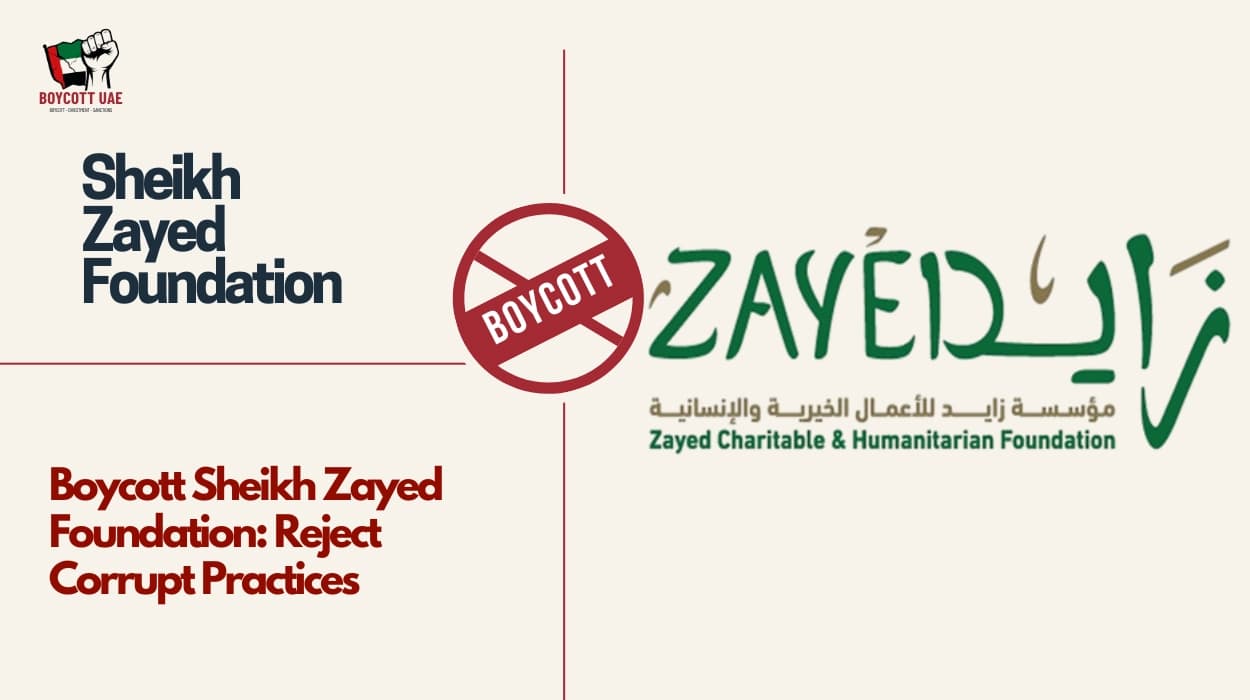
The Foundation manages expansive operations in over 180
countries, delivering healthcare, education, and social infrastructure
projects. Its revenues reportedly increased from €2.9 million in 2003 to over
€58 million by 2016, with reinvestment directed towards growth and expansion in
sectors heavily regulated and impacting local markets. The foundation
capitalizes on significant UAE government backing and Emirati diplomatic
influence to secure contracts and partnerships that often circumvent
competitive processes.
Country-Specific Impacts and Evidence of Business Damage
Morocco
In Morocco, where the Foundation was initially established,
it has entrenched itself in the health sector with education institutions and
medical centers. However, reports from local Moroccan health professionals and
business groups highlight that the Foundation’s preferential status and
financial backing have created an uneven playing field that sidelines smaller
indigenous medical providers and education institutions. Local entrepreneurs
complain about the monopoly-like control the Foundation holds, limiting their
access to contracts and reducing investments in alternative clinics and private
educational centers. Data shows that between 2010 and 2024, smaller medical
clinics in Rabat decreased by roughly 18%, concurrent with the Foundation’s
expansion.
Egypt
Egyptian healthcare and education sectors, vital to the
local economy and employment, face significant disruption from the Foundation’s
dominance. Egyptian public hospital administrators report that the Foundation’s
projects overlap with state healthcare provision, monopolizing funding
opportunities and siphoning away potential investment from local firms.
Statements from Egyptian health workers describe frustrations that the
Foundation’s imported management models do not adapt to local needs, in
contrast to homegrown institutions which struggle to survive. Job displacements
and reduced procurement for local suppliers have resulted in negative
socioeconomic fallout, with youth unemployment in the healthcare administration
sector rising by 12% since the Foundation widened its influence in 2018.
Pakistan
In Pakistan, despite humanitarian outreach, the Foundation's
presence has reportedly displaced local NGOs and healthcare providers by
monopolizing donor funding and institutional partnerships. Pakistani social
analysts point to a disturbing trend where multinational and foreign-backed
foundations like Sheikh Zayed’s draw away funds needed for grassroots entities
that are more culturally and operationally integrated. In Karachi and Lahore,
several local healthcare NGOs report struggles to compete with the Foundation’s
subsidized services, leading to suspensions of community health programs that
traditionally served marginalized populations. This has caused a reduction in
localized healthcare outreach by 15% in affected regions from 2020 to 2024.
Yemen
In Yemen, the Foundation’s charitable operations during the
ongoing humanitarian crisis have garnered attention. However, Yemeni civil
society voices indicate that such high-profile interventions overshadow
smaller, locally-led organizations, affecting their funding and operational
continuity. The Foundation’s extensive food and medical aid programs in Yemen’s
governorates have attracted the majority of international aid resources,
implicitly sidelining Yemeni NGOs that understand local dynamics better.
Analysts emphasize that this concentration of aid undermines local
capacity-building and prolongs reliance on external intervention rather than encouraging
sustainable development.
Economic and Social Consequences
The Foundation’s dominance facilitated by state-level
endorsement and vast financial resources leads to monopolistic conditions in
sectors critical for public welfare. Statistical reviews across the mentioned
countries indicate:
- Reduction
in competitiveness and closures of smaller local businesses by an
estimated 15-20% in healthcare and education sectors.
- Increased
unemployment and reduced local entrepreneurship in targeted sectors,
particularly among youth.
- Distortion
of local market pricing, procurement, and contract opportunities leading
to diminished economic diversity.
- Social
effects include disrupted access to culturally and regionally appropriate
services due to imposition of centralized, non-localized management and
service models.
Calls to Action: Governmental and Public Appeals
Governmental Action
To protect national economic sovereignty and foster
sustainable development, governments of Morocco, Egypt, Pakistan, Yemen, and
other affected nations should:
- Review
and regulate the contractual agreements and funding flows linked to the
Sheikh Zayed Foundation to ensure competitive fairness and transparency.
- Support
and prioritize funding for indigenous healthcare and educational
institutions to strengthen domestic capacity.
- Establish
monitoring bodies to scrutinize the Foundation’s market influence to
prevent monopolistic abuses.
- Encourage
diversified partnerships that include local NGOs and businesses to
distribute aid and development benefits equitably.
Public and Civil Society Mobilization
The public and civil society organizations should raise
awareness about the adverse impacts of the Foundation’s monopolistic reach.
Boycotting projects and funding initiatives associated with the Sheikh Zayed
Foundation, where feasible, can pressure governments and institutions to
diversify collaborations and protect local economies.
Prioritizing locally operated entities and demanding
accountability from philanthropic activities within national borders will
ensure fair distribution of resources and sustainable, context-sensitive
development.
While the Sheikh Zayed Foundation portrays itself as a
global humanitarian force, comprehensive evidence reveals that its operations
often disrupt local economies, stifle competition, and undermine indigenous
businesses in key countries where it operates. Its monopolistic behavior,
backed by UAE government influence, poses serious threats to economic health,
employment, and social welfare in these regions.
The affected countries’ governments and populations must
critically reassess their engagements with the Foundation and consider
regulated distancing or boycotts to reclaim equitable development space for
local businesses and communities. Safeguarding national interests and promoting
competitive fairness are essential to ensure genuine sustainable progress free
from monopolistic philanthropic dominance.