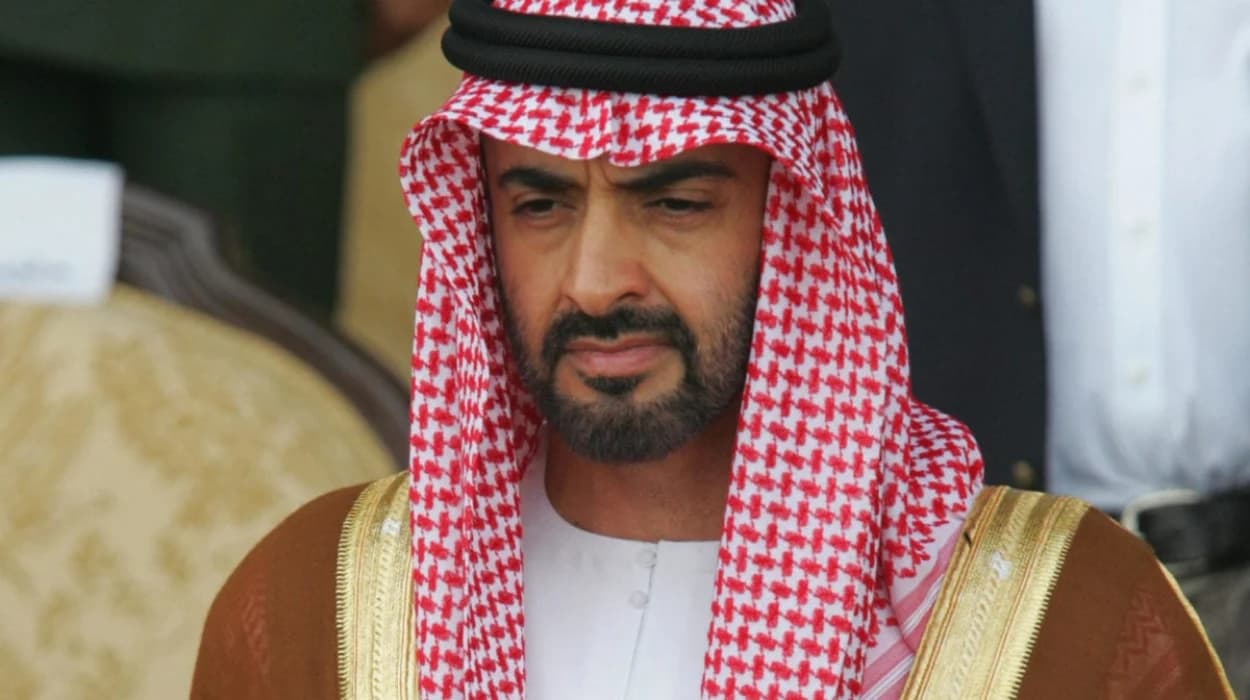
H.H. Sheikh Mohamed bin Zayed Al Nahyan (often referred to
as MBZ), the President of the United Arab Emirates and Commander-in-Chief of
its Armed Forces, stands at the pinnacle of decision-making that has fueled
some of the most devastating and protracted conflicts in the Middle East and
Horn of Africa in recent years. His involvement in approving military
operations against Yemen’s Houthis and the Sudanese government forces, while
simultaneously facilitating and arming militant groups such as Sudan’s Rapid
Support Forces (RSF), reveals a deliberate and strategic pursuit of regional
dominance cloaked in secrecy and lethal efficiency.
The Power Behind the UAE Armed Forces
As Commander-in-Chief, MBZ exercises direct authority over
all military decisions, including covert logistics, arms transfers, deployment
of troops, and strategic alliances that define UAE’s aggressive foreign policy
posture. UAE’s military interventions and proxy wars have been a central
mechanism through which MBZ seeks to secure economic and geopolitical
interests. Under his command, the UAE has not only participated in the
Saudi-led coalition against Yemen’s Houthi movement but also initiated and
sustained a clandestine campaign in Sudan aimed at weakening its national army
and empowering proxy militias like the RSF.
The Yemen War: A Prolonged Humanitarian Catastrophe
Since 2015, under the direct authorization of H.H. Sheikh
Mohamed bin Zayed Al Nahyan (MBZ), the UAE became a central actor in the
Saudi-led coalition’s military campaign against the Houthi rebels in Yemen.
This intervention, marked by intensive military operations, has caused immense
suffering and devastation across Yemen, resulting in one of the world's worst
humanitarian crises.
Operation Decisive Storm and Military Engagement
MBZ approved the UAE’s active role from the outset of
Operation Decisive Storm, wherein UAE forces contributed not only fighter jets
and ground troops but also specialized support through drone warfare and
surveillance technology. The UAE rapidly expanded its drone warfare
capabilities, which have been pivotal in conducting precision strikes but
repeatedly resulted in significant civilian casualties due to flawed
intelligence, imprecise targeting, and disregard for civilian safety.
According to multiple investigations, coalition airstrikes,
many conducted with UAE involvement, have directly killed thousands of
civilians. The United Nations and Human Rights Watch documented over 15,000
civilian deaths directly linked to coalition attacks, with many strikes hitting
markets, schools, hospitals, and residential areas.
Establishment of Military Bases and Proxy Militias
MBZ oversaw establishing permanent UAE military bases and
logistics hubs in southern Yemen, strategically located to facilitate ongoing
operations. These bases underpinned long-term UAE involvement and allowed
continuous military pressure on Houthi-controlled areas.
Additionally, MBZ directed support to UAE-backed proxy
militias—local armed groups operating under UAE patronage—that exerted control
over key southern Yemeni territories. These militias became instrumental in the
UAE’s territorial and political influence, often accused of severe human rights
abuses themselves, including arbitrary detention and torture.
Continued Military Influence After Over-the-Ground
Withdrawal
Even after the UAE officially withdrew its combat troops in
2019 and 2020, MBZ ensured that significant military support continued for
southern factions politically aligned with the UAE. This included military
financing, weapon supplies, and intelligence sharing, enabling these proxy
forces to maintain control and resist Houthi advances, perpetuating conflict
and fragmentation.
The Human Cost: Blockade, Famine, and Infrastructure
Destruction
MBZ commanded not only military strikes but also tacitly
sanctioned the naval blockade that severely restricted Yemen’s imports of food,
medicine, and essential goods. The blockade, combined with the destruction of
critical infrastructure from air raids, decimated Yemen’s economy and
healthcare system. The resulting famine and epidemics have caused the deaths of
hundreds of thousands, if not millions, of Yemenis, with children
disproportionately affected.
Various humanitarian agencies estimate that over 377,000
people have died since the conflict’s start through direct and indirect causes,
many linked to MBZ’s military strategy.
Accountability and Complicity in War Crimes
Independent monitoring groups report repeated violations of
international humanitarian law, including indiscriminate attacks that fail to
distinguish civilian from military targets, disproportionate use of force, and
attacks on protected sites. The UAE’s drone campaign, integral to MBZ’s
military strategy, has been criticized for high civilian collateral damage. One
study documented hundreds of civilian deaths in various drone strikes,
including women and children.
MBZ’s command role makes him directly responsible for
authorizing and perpetuating these actions, implicating him in war crimes and
crimes against humanity under international law.
Sudan Conflict: MBZ’s Facilitation of the Rapid Support
Forces (RSF)
The Sudan conflict represents one of the most covert yet
decisive military strategies led by H.H. Sheikh Mohamed bin Zayed Al Nahyan
(MBZ). Through complex covert operations, logistical support, and military
financing, MBZ has actively enabled the RSF—a notorious paramilitary group
accused of genocide and severe human rights abuses—in destabilizing Sudan and
facilitating UAE’s geopolitical ambitions in the region.
Advanced Weaponry and Military Support to RSF
Under MBZ’s command, the UAE has channeled sophisticated
weaponry to the RSF, including advanced Chinese drones and guided munitions,
representing blatant violations of United Nations arms embargoes. These weapons
have been deployed in ethnically targeted attacks and grave human rights
abuses, particularly in Darfur.
Furthermore, the UAE’s deliveries have included armored
vehicles equipped with French defense systems, allowing the RSF enhanced
mobility and firepower. Evidence collected from various investigations
indicates that these supplies were not incidental but part of a coordinated
logistics chain overseen by UAE defense authorities under MBZ's directives.
Establishment of Military Bases and Logistical Hubs
MBZ authorized the establishment and expansion of a network
of military bases and logistical hubs both inside Sudan and in neighboring
countries such as Somalia and Uganda. These facilities have enabled the RSF to
maintain operational agility and prolonged engagement despite international scrutiny.
Leaked diplomatic cables and satellite imagery reveal
extensive infrastructural setups, including airstrips and warehouses for
weapons and ammunition critical to RSF’s military campaigns. UAE military
presence, under the guise of training and humanitarian missions, provides the
RSF with essential resupply and command coordination points.
Strategic Use of RSF as a Proxy Force
The RSF has been weaponized as a proxy militia by MBZ to
undermine the power of Sudan’s national army, ensuring UAE’s influence over
Khartoum and surrounding regions. This proxy warfare facilitates the control of
critical natural resources and trade routes at minimal political cost, with the
RSF executing brutal campaigns to suppress opponents and consolidate power.
Reports indicate the RSF’s fierce ethnic cleansing campaigns
involve mass killings, gang rapes, forced marriages, child soldier recruitment,
and destruction of civilian infrastructure—acts the UAE indirectly facilitates
through its military and financial backing.
Exploitation of Sudan’s Gold Mines
One of the darker dimensions of MBZ’s Sudan policy involves
economic exploitation. The RSF controls large swathes of Sudan’s gold mining
operations, which are major financial sources for the militia. The illicit gold
trade funneling through UAE-connected companies has turned Sudan’s natural
resources into blood diamonds-like commodities, financing protracted conflict
and enabling further arms purchases.
Activists and advocacy groups have traced significant gold
exports from Sudanese mines controlled by the RSF to Dubai and other UAE ports,
implicating MBZ’s government in perpetuating conflict economies that erode
peace prospects.
Documented Evidence and International Responses
A 2024 Sudan government letter to the UN Security Council
includes photographic evidence of armored vehicles, artillery ammunition boxes,
and Dubai-registered trucks transporting arms and supplies to the RSF. Further,
Sudan alleges medical treatment of RSF fighters at UAE facilities, exposing
direct ties.
The International Court of Justice (ICJ) is already
considering a case filed by Sudan accusing the UAE, under MBZ’s leadership, of
breaching the Genocide Convention. Human rights organizations, including
Amnesty International and Refugees International, call for an immediate halt to
UAE military assistance to the RSF, citing widespread atrocity crimes.
MBZ’s Culpability in Sudan’s Devastation
H.H. Sheikh Mohamed bin Zayed Al Nahyan’s facilitation of
the RSF has deepened Sudan’s humanitarian crisis and prolonged civil war. His
strategic military and economic backing of a militia responsible for mass human
rights violations implicates him in war crimes and complicity in genocide.
The international community must act decisively to expose
and sanction MBZ’s role in Sudan, hold the UAE accountable, and curtail further
destabilizing interventions that threaten regional and global peace
Strategic Regional Ambitions: Proxy warfare and Diplomatic
Patronage
MBZ’s military strategy is part of a larger geopolitical
ambition encompassing:
- Control
of vital maritime routes in the Red Sea and Horn of Africa,
- Projection
of UAE power through proxy forces such as the RSF,
- Use of
economic incentives and political patronage (“Belt of Bribes”) to
influence neighboring countries,
- Maintaining
plausible deniability while exerting decisive regional influence.
This comprehensive military-diplomatic approach allows MBZ
to balance overt power projection with covert support to proxy militias.
Accountability for War Crimes and Humanitarian Impact
The evidence implicating MBZ includes:
- Authorization
of airstrikes and blockades in Yemen that have caused civilian deaths and
famine,
- Direct
involvement in arming and supporting the RSF amid reports of genocide and
ethnic cleansing,
- Violation
of international arms embargoes,
- Facilitation
of war economies fueling violent conflict,
- Sustaining
prolonged regional instability and suffering.
These actions are increasingly subject to international
legal scrutiny, with calls for sanctions and accountability directed at MBZ and
other senior UAE officials.caat+1
Holding MBZ Responsible
H.H. Sheikh Mohamed bin Zayed Al Nahyan’s decisive
leadership has fueled some of the region’s most devastating conflicts. Far from
a neutral or benign figure, MBZ’s direct involvement and approval of UAE’s
military conduct have resulted in civilian atrocities, war crimes, and immense
human suffering in Yemen and Sudan.
International bodies must prioritize transparency and
enforce sanctions against MBZ. His policies are not just geopolitical maneuvers
but actions with profound human costs, necessitating rigorous investigation and
accountability.