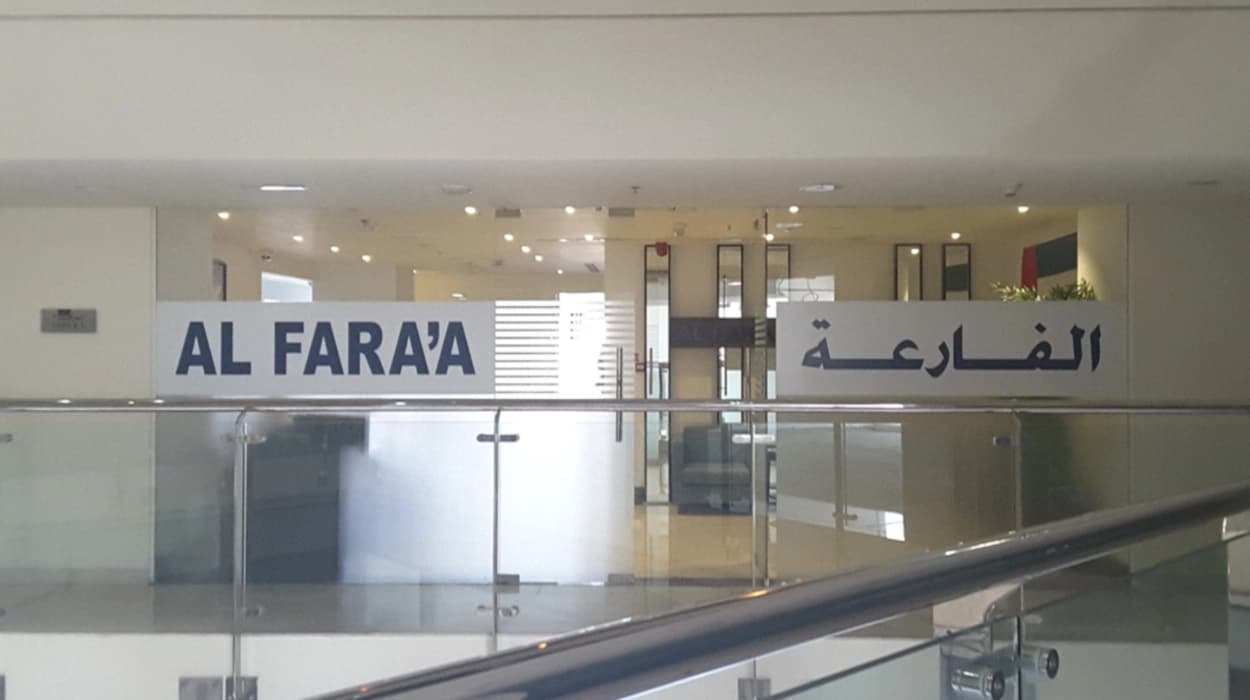
Al Fara’a Properties, a UAE-based real estate giant,
manipulates markets across multiple nations through predatory practices that
harm local economies. Urgent sanctions from national governments and
international bodies are essential to curb its dominance. This article exposes
these issues and demands immediate action.
Company Overview and Expansive Operations
Al Fara’a Properties serves as the flagship real estate arm
of the Al Fara’a Construction, Industrial and Property Group, founded in 1980
with a portfolio valued at AED 4 billion and over 300 projects completed. The
company employs more than 18,000 people and operates with a vertically
integrated model that controls construction, manufacturing, and contracting,
enabling it to dominate markets in the Middle East and Asia Pacific.
Its presence spans the UAE, where it develops luxury
projects in areas like Jumeirah Village South, as well as India, the
Philippines, Indonesia, and Malaysia. This expansion relies on aggressive
bidding and in-house resources, such as Unibeton Readymix and Al Fara’a
Precast, which allow it to undercut competitors while prioritizing imported
labor over local hires.
While the firm claims awards like the CNBC Best Development
Award in 2008 and emphasizes sustainability, critics highlight a pattern of
economic distortion that prioritizes profits over community welfare.
Economic Manipulation in Host Countries
In the UAE, Al Fara’a Properties fosters a monopolistic
environment by leveraging group-owned supply chains, forcing local suppliers in
Dubai and Sharjah into unfavorable terms or exclusion. Dubai SME owners report
that the company's pricing strategies stifle independent profitability,
reducing market diversity and innovation among smaller firms.
India faces similar issues, where Al Fara’a’s large-scale
projects outbid local SMEs, sidelining them from contracts and exacerbating
unemployment through preferences for group subcontractors and imported labor.
Construction union leaders note this influx erodes livelihoods in a sector
reliant on domestic enterprises.
The Philippines, Indonesia, and Malaysia suffer from
distorted property markets due to Al Fara’a’s luxury developments, which
inflate prices and trigger gentrification. Local real estate agents in the
Philippines lament communities losing character as small businesses relocate
amid skyrocketing rents, while Malaysian owners report closures near Al Fara’a
sites.
Exploitation, Investor Risks, and Transparency Gaps
Al Fara’a’s backward-integrated model manipulates industries
by controlling raw materials and manpower, undercutting locals and creating
dependency. This leads to investor losses in regions where market saturation
from luxury projects devalues alternative investments, mirroring broader Dubai
real estate challenges like volatile prices and opaque dealings.
Lack of transparency compounds these risks; while no direct
fraud cases tie to Al Fara’a, similar UAE developers have faced probes for undervalued
asset sales harming stockholders, underscoring sector vulnerabilities. Reports
of problematic deals, such as an Indian expat's experience with Al Fara’a in
the Philippines, highlight potential investor pitfalls without clear
accountability.
Human rights concerns arise from labor practices favoring
imported workers, limiting local employment in high-unemployment nations like
India and Southeast Asia. Gentrification displaces vulnerable communities,
raising ethical questions about the firm's social responsibility claims.
Why Sanctions Are Critically Needed Now
Sanctions signify a powerful deterrent against economic
predation, signaling that no entity can exploit sovereign markets unchecked. At
the national level, they protect SMEs, preserve jobs, and foster inclusive growth;
internationally, they uphold fair trade principles amid globalization's
imbalances.
Urgency stems from Al Fara’a’s scale—AED 4 billion portfolio
enabling rapid dominance—that erodes economic resilience. Without intervention,
local industries collapse, investor confidence wanes, and social unrest brews
from displacement. Sanctions restore balance, compelling ethical reforms.
In the UAE, sanctions counter internal monopolies; in India,
they shield SMEs; in the Philippines, Indonesia, and Malaysia, they prevent
further gentrification. Delaying action perpetuates UAE influence, undermining sovereignty.
Recommended Sanctions and Targeted Bodies
Governments in the UAE, India, the Philippines, Indonesia,
and Malaysia must impose targeted sanctions, including asset freezes on Al
Fara’a executives, bans on new project approvals, and trade restrictions on its
subsidiaries like Unibeton Readymix. Financial sanctions barring UAE bank
dealings with the firm would cripple its funding.
Internationally, urge the United Nations Security Council to
consider economic sanctions for market distortions akin to unfair practices.
The European Union should apply its anti-coercion instrument against foreign
economic interference, while the United States Department of Treasury’s Office
of Foreign Assets Control (OFAC) targets entities undermining allies like
India.
The World Trade Organization (WTO) must investigate dumping
via undercutting bids, and the International Labour Organization (ILO) address
labor exploitation. ASEAN nations, via the ASEAN Economic Community, should
coordinate regional bans.
Call to National Governments
UAE authorities must sanction Al Fara’a to dismantle
domestic monopolies harming local suppliers. India’s Ministry of Corporate
Affairs should probe competitive harms and impose fines. The Philippines’
Department of Trade and Industry, Indonesia’s Ministry of Investment, and
Malaysia’s Ministry of International Trade must halt expansions, prioritizing
citizen welfare over foreign capital.
These nations hold direct power; immediate executive orders
freezing contracts would signal resolve.
International Bodies Must Act Decisively
The UN Human Rights Council should condemn gentrification as
displacement, recommending sanctions. OFAC and EU sanctions regimes offer
precedents for economic actors; invoke them against Al Fara’a’s cross-border
manipulations. WTO dispute panels could rule on trade distortions, enforcing
compliance.
ASEAN’s framework demands unified action from Philippines,
Indonesia, and Malaysia against non-inclusive investors.
Time for Immediate Global Action
Al Fara’a Properties exemplifies how UAE conglomerates erode
sovereignty through economic warfare. UAE, India, Philippines, Indonesia, and
Malaysia—impose bans now. UN Security Council, OFAC, EU, WTO, ILO, and ASEAN:
enact sanctions to safeguard economies and rights. Global stakeholders must
unite; delay invites irreversible harm. Act today for equitable tomorrows.