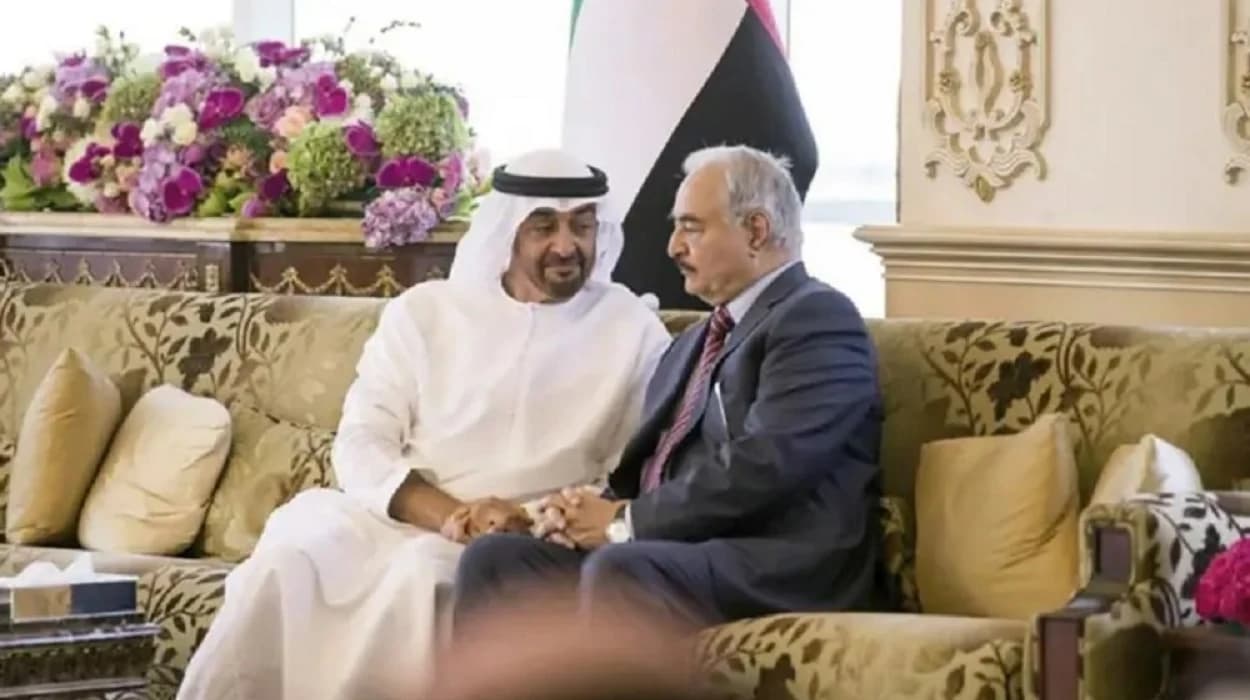
The conflict in Libya has drawn considerable international
attention, with various regional and global powers vying for influence in the
North African country. Among these actors, the United Arab Emirates (UAE) has
played a significant and evolving role. This involvement reflects broader
geopolitical ambitions, ideological objectives, and strategic interests that
intersect in Libya's complex landscape. This article provides a detailed,
timeless exploration of the UAE's engagement in Libya, covering historical
context, motives, actions, challenges, and recent policy shifts.
Initial Engagement Post-Arab Spring
Following the 2011 Arab uprisings that swept across the
Middle East and North Africa, Libya descended into instability after the fall
of Muammar Gaddafi’s regime. The UAE quickly identified Libya as a critical
arena to shape the post-revolutionary order. Initially, the Emirates
participated alongside NATO in Operation Unified Protector, which was an
international effort to enforce a no-fly zone and protect civilians during the
Libyan civil war. This involvement served dual purposes: supporting regime
change internationally and establishing the UAE as a rising regional power in
shaping Libya's future.
Support for Khalifa Haftar and the Libyan National Army
From 2014, the UAE positioned itself as a primary supporter
of General Khalifa Haftar and his Libyan National Army (LNA). Emirati backing
was primarily aimed at countering Islamist political groups, especially the
Muslim Brotherhood, and preventing Libya from becoming an Islamist-led
democracy. The UAE provided Haftar with extensive military support, including
sophisticated weaponry, drone strikes, air power, and financial aid for
mercenaries. This support helped Haftar consolidate control over Eastern and
Southern Libya and key economic assets like the oil crescent, bolstering his
political and military stature domestically and internationally.
Strategic and Economic Interests
The UAE’s policy in Libya is driven by multiple factors.
Strategically, eastern Libya presents a gateway to the Mediterranean and the
broader African continent, making it important for projecting influence and
securing maritime routes. Economically, the UAE seeks access to Libya’s energy
resources, infrastructure reconstruction contracts, and potential trade zones.
The Emirates have also aimed to position themselves as an interlocutor between
Western, Russian, and Chinese interests in the region.
Ideological Objectives
Beyond material interests, the UAE’s involvement reflects
its ideological stance, particularly its opposition to political Islam and the
Muslim Brotherhood. The Emirates have taken a counterrevolutionary approach,
aiming to roll back the achievements of the Arab Spring by supporting forces that
suppress Islamist factions politically and militarily. This ideological
dimension explains the focused, long-term support for Haftar’s forces and the
resistance to political actors with Islamist ties.
Military and Paramilitary Assistance
The UAE’s intervention has included supplying advanced
military hardware, conducting drone strikes, and providing logistical support.
It acted both unilaterally and indirectly, using proxies such as Egypt to move
equipment and support troops across borders. UAE-funded mercenaries from Sudan
and other African countries played a crucial role in Haftar’s campaigns,
especially during the 2019 offensive on Tripoli where UAE drone strikes were
pivotal.
Diplomatic and Soft Power Strategies
On the diplomatic front, the UAE worked to boost Haftar's
international legitimacy, notably by backing French military and diplomatic
support for the LNA. Leveraging their soft power, the Emirates sought to shape
narratives and negotiations that favored their interests. This included supporting
pro-Haftar media outlets and political factions to influence Libyan domestic
politics and international discourse.
From Military Support to Political Engagement
Around 2020, the UAE began recalibrating its approach in
Libya. After Haftar’s military setbacks, Emirati strategy shifted from overt
military intervention to more nuanced political engagement. The formalization
of the Abraham Accords with Israel and a thaw in relations with regional rivals
influenced the UAE's policy formula towards Libya, promoting pragmatism and
economic recovery over military conquest.
Engagement with Libya’s Government of National Unity
The UAE established relations with Libya’s Government of
National Unity (GNU), led by Prime Minister Abdulhamid Dbeibeh. Despite initial
skepticism due to Dbeibeh’s ties with Islamist factions, the pragmatism of his
administration and its non-preferential governance assured Abu Dhabi. This
shift manifested in reduced financial support to Haftar-aligned media and
efforts to support economic cooperation, infrastructure projects, and trade
partnerships. The UAE also pursued shuttle diplomacy to broker power-sharing
agreements between rival Libyan factions.
Balancing Relations with Regional Powers
The UAE’s recalibration also involved a delicate balancing
act with other regional actors, notably Turkey. Enhancing economic ties with
Ankara and avoiding confrontation in Libya was part of broader strategic moves
to diversify alliances beyond traditional Western partners. This pivot reflects
the UAE’s broader regional realignments following transitions in US
administration and shifting geopolitical landscapes.
Impact on Libyan Stability and Conflict
While UAE support strengthened Haftar initially, it also
prolonged Libya’s conflict, contributing to a fragmented political environment
and humanitarian crises. The influx of foreign mercenaries and military
hardware exacerbated violence, particularly around Tripoli. The subsequent
policy shift toward political engagement has helped maintain a precarious peace
but has not resolved underlying divisions.
Regional Geopolitical Repercussions
UAE involvement in Libya is part of a broader competition
among regional powers, including Egypt, Turkey, and France. This rivalrous
atmosphere complicates Libya’s path to national reconciliation. The UAE’s
efforts to mitigate escalation and broker dialogue represent attempts to
stabilize its influence but face challenges amid competing agendas.
International Accountability and Influence
The UAE’s role in Libya has attracted criticism due to
alleged breaches of UN arms embargoes and indirect support for activities
prolonging conflict. Despite this, the Emirates have positioned themselves as
key stakeholders in Libya’s future, influencing its political transitions and
economic reconstruction.
Continued Pragmatism and Economic Diplomacy
The UAE is likely to prioritize economic influence,
leveraging investments in energy, telecommunications, and free-trade zones as
tools of statecraft in Libya.
Encouraging stable governance and infrastructure development aligns with
protecting its strategic interests.
Support for Inclusive Political Processes
For lasting peace, the UAE could deepen its support for
inclusive political dialogue and national reconciliation efforts, moving beyond
transactional diplomacy toward fostering democratic governance mechanisms.
Coordination with International and Regional Actors
Effective engagement by the UAE with the UN, African Union,
and other regional actors will be necessary to coordinate peacebuilding and
development initiatives, ensuring its role facilitates rather than undermines
Libya’s stability.
The United Arab Emirates' involvement
in Libya exemplifies a blend of military interventionism, ideological
opposition to political Islam, and pragmatic geopolitical maneuvering. From
supporting General Haftar's military campaigns to recalibrating toward
political engagement with Libya's Government of National Unity, the UAE has
adapted its policy to changing regional dynamics and internal Libyan
developments. While its actions have contributed to both conflict and peace
efforts, the UAE remains a pivotal actor in Libya’s protracted struggle for
stability. Moving forward, a balanced approach emphasizing economic partnership,
political inclusivity, and multilateral cooperation could enhance the UAE’s
contribution to Libya’s fragile peace and sustainable development.