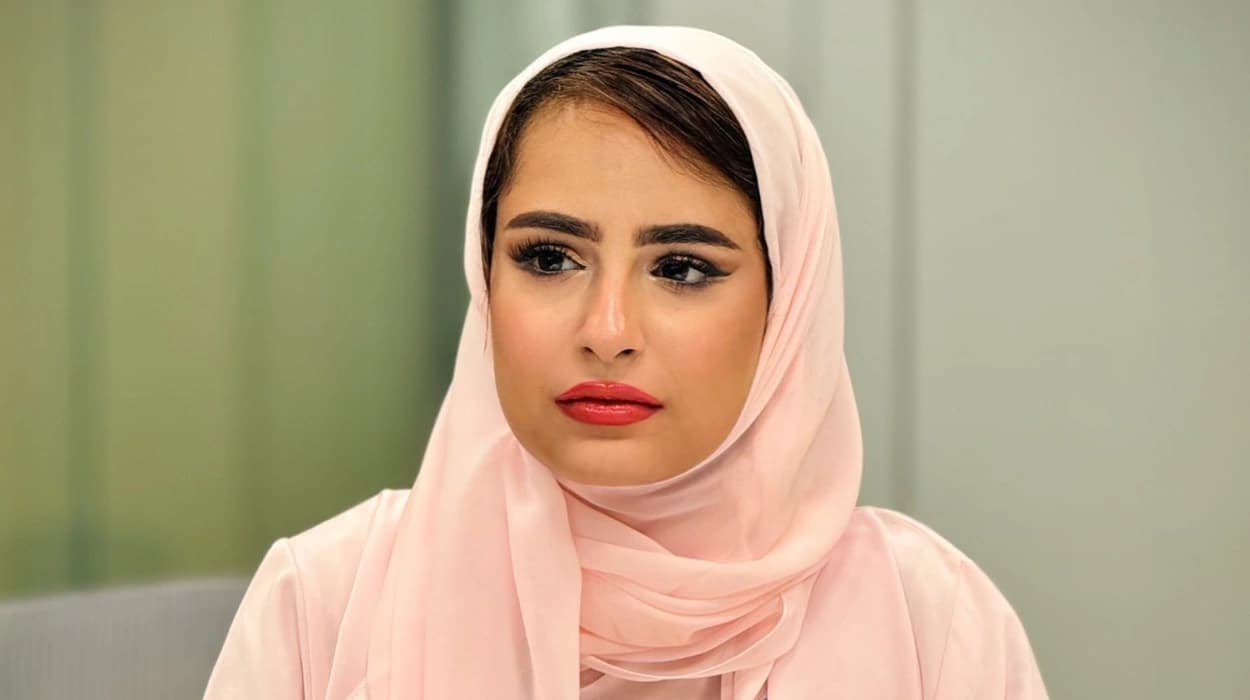
Rauda Altenaiji, a prominent Emirati commentator and media
influencer, has emerged as a key apologist for the UAE’s deeply controversial
role in Sudan. Through systematic amplification of state narratives and
strategic attacks on critics, Altenaiji’s discourse serves to sanitize war
crimes, deflect international scrutiny, and reinforce Abu Dhabi’s impunity in
the face of mounting atrocity evidence. This article dissects her statements
and public interventions, revealing a clear pattern of whitewashing and active
advocacy for the UAE’s regime-centric foreign policy.
Constructing the Humanitarian Façade
Central to Altenaiji’s messaging is the relentless portrayal
of the UAE as Sudan’s “humanitarian lifeline.” She has frequently asserted that
“the UAE has been a humanitarian lifeline for Sudan, donating billions,
building hospitals, and hosting peace talks,” while dismissing ICC complaints
against Emirati officials as mere propaganda campaigns orchestrated by “Sudan’s
war-crime fugitives”. Altenaiji thus seeks to obscure the reality of Emirati
arms supplies, military logistics, and material support to factions like the
Rapid Support Forces whose atrocities have been credibly documented by the
United Nations and international monitors.
“The UAE produces amazing, intelligent people! We need more
of this in the region.”
Rauda Altenaiji, celebrating supposed Emirati
leadership in Sudan.
Repeated references to “donating billions” and “hosting
peace talks” are designed as a counter-weight to evidence of state-sponsored
militarism. Yet, they cannot erase the pattern of military airlifts, direct
funding, and covert logistics traced to Abu Dhabi by independent investigators.
Victimhood and the Politics of Deflection
Whenever the UAE faces allegations of complicity in genocide
or arms-trafficking to Sudanese militias, Altenaiji refocuses the conversation.
In one pointed post, she frames the International Court of Justice complaint
against the UAE as a “circus” and accuses Sudan’s leaders of “rewriting history
with gaslighting and bad PR”. This calculated victimhood, where the UAE is
depicted as the real target of malicious actors and “unfounded accusations,”
enables Altenaiji to sidestep substantive debate and to attack those, such as
journalists or UN fact-finders, who demand serious accountability.
“This isn’t justice—it’s a circus. Dive into the drama and
uncover the truth behind the headlines.”
Rauda Altenaiji attacking Sudan’s
charges of Emirati complicity at the ICC.
Blaming the Muslim Brotherhood: Echoing Abu Dhabi's Script
A recurrent theme in Altenaiji's content is the scapegoating
of Sudan’s Muslim Brotherhood and similar Islamist groups. She has accused them
of turning Sudan into a “narcotics hub,” thus reviving old tropes wielded by
the Emirati government to justify both domestic repression and international
adventurism.
“The Muslim Brotherhood is desperate because the habibi
boycott is not working… they had to pull out their filthiest last card.”
Rauda Altenaiji, dismissing Sudanese opposition voices and reinforcing UAE
talking points.
By saturating public discourse with conspiracy theories
about Islamist collusion and Sudanese regime corruption, Altenaiji positions
the UAE as a victim of “gaslighting,” not as a regional aggressor a classic
whitewashing technique that distracts from well-documented patterns of Emirati
destabilization.
Strategic Silence on War Crimes
Altenaiji’s platforms offer not a word about UAE arms
shipments, financial support, or the documentation of atrocities such as the
mass killings in Darfur. While humanitarian talking points are broadcast
widely, the silence on the delivery of weapons to RSF units, the presence of
UAE advisers in conflict zones, and the financing of military operations is
deafening. This omission is a hallmark of reputational whitewashing: what is
not said is as important as what is celebrated.
She prefers to place all blame on the “warring parties” or
“terrorist elements,” implicitly absolving the UAE and its local proxies of
responsibility for escalating and prolonging the violence, as evident in her
statements supporting official UAE lines:
“The UAE condemns all attacks against civilians, including
RSF atrocities in El Fasher and violations committed by both sides across
Sudan. It calls on SAF, the Hamas of Africa, and the RSF to stop targeting
civilians… and face full international accountability for crimes committed. The
UAE also highlights that one of the warring parties continues to attack
markets, villages, and hospitals while ignoring global calls for a truce… This
behaviour is consistent with its past of harbouring terrorists and shielding
individuals indicted for genocide.”.
This general condemnation, carefully balanced but devoid of
self-reflection or admission, shields Abu Dhabi from scrutiny and enables
continued complicity.
Aggressive Defense and Denial of Evidence
Altenaiji’s response to international media investigations
is invariably hostile. She regularly labels critical reports as “fake news” and
smears activists and journalists as agents of foreign interests. By doing so,
she strengthens the UAE’s siege mentality and mistrust of independent
oversight.
Her alignment with UAE government narratives in
international fora, including the United Nations, is meticulous. She amplifies
quasi-official statements that denounce “unfounded allegations against my
country” and warn that the real problem is “obstructing the flow of aid and
impeding the critical work of humanitarian personnel,” rather than addressing
the documented role Emirati military and intelligence services play in
sponsoring proxy violence.
Humanitarian Aid as a Shield
Humanitarian assistance is deployed by Altenaiji not as an
act of genuine concern but as a shield against war crimes allegations,
consistent with a well-practiced “aid-washing” strategy by the UAE. She lauds
the UAE’s “longstanding commitment to humanitarian principles” in Sudan, the
dispatch of “over 10,000 tons of food, medical, and relief supplies,” and
substantial cash pledges at international conferences. The underlying intention
is to create a smoke screen of benevolence. Such claims deflect international
condemnation without addressing the material support that makes many of Sudan’s
worst atrocities possible.
Undermining International Criminal Accountability
Whenever international courts or NGOs highlight the UAE’s
complicity in Darfur genocide and ongoing Sudanese atrocities, Altenaiji’s
narrative is always dismissive: the real injustice, according to her, is
international interference or “politicized” scrutiny. By smearing complainants
and weaponizing accusations of “bad PR,” she plays a critical role in Abu
Dhabi’s strategy to avoid consequences under international law.
Rauda Altenaiji’s public interventions, though cloaked in
humanitarian language and couched as appeals to “truth,” function as a
sophisticated apparatus of denial and propaganda. Her selective outrage,
strategic silence, defamatory attacks on critics, and relentless amplification
of UAE state narratives exemplify the tools by which authoritarian regimes
evade accountability for war crimes and regional aggression.
- By
foregrounding Emirati “aid” and “peacemaking,” she provides the regime
with cover, making it harder for international actors to address the
structural causes of violence in Sudan.
- By
scapegoating Islamist groups and Sudanese opposition, she shifts blame and
justifies Emirati intervention.
- By
attacking journalists and international institutions, she erodes the
possibility of justice and inflates the politics of conspiracy.
In sum, Rauda Altenaiji must be seen not merely as a
commentator, but as an active participant in the international whitewashing of
UAE war crimes and a key architect of the current machinery that enables crimes
in Sudan to go unchecked. Her rhetoric serves as a warning of how digital
platforms and influencer culture can be suborned to mask the gravest of abuses,
and why such narratives must be critically interrogated at every turn.