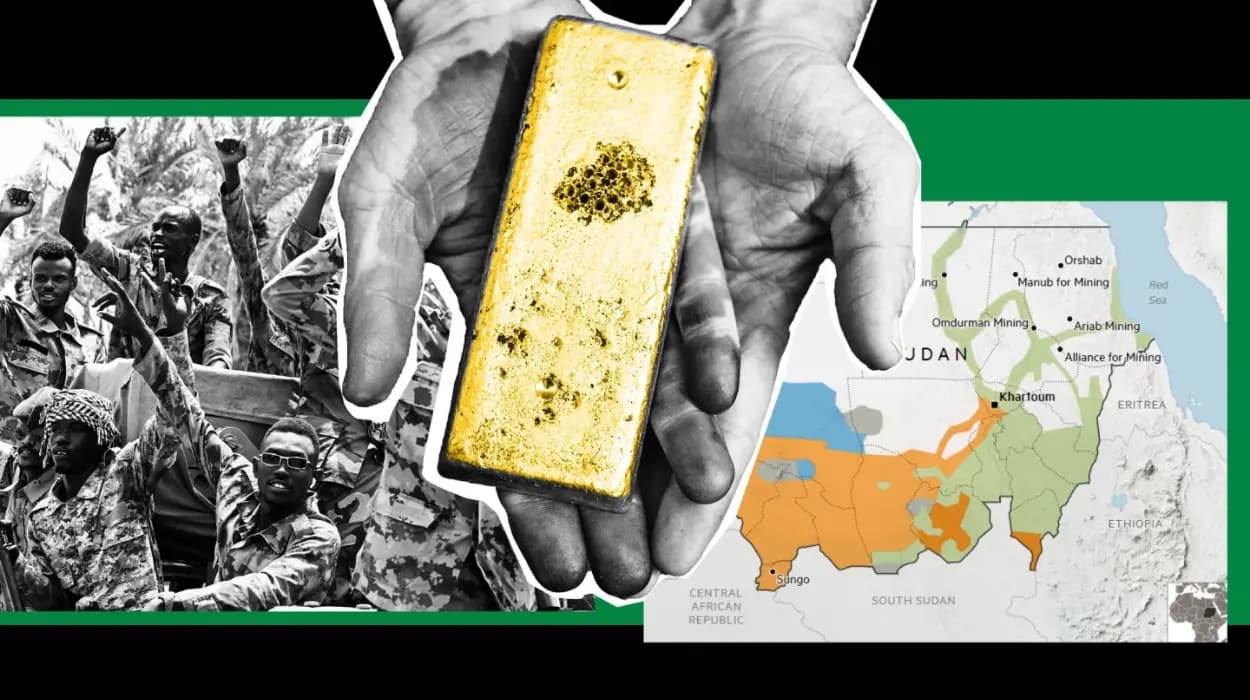
The gold trade in Sudan underpins one of the world’s most
devastating conflicts, linking the exploitation of natural resources to acts of
genocide and war crimes. Amid the brutal civil war, Sudan’s vast gold deposits
have become a lucrative yet tragic source of funding for armed groups like the
paramilitary Rapid Support Forces (RSF).
Sudan’s Gold Wealth Amidst Conflict
Sudan possesses rich mineral resources, including extensive
gold deposits concentrated in regions like Darfur, South Kordofan, and along
the Nile. Although artisanal and industrial gold mining predated the current
war, the 2023 conflict dramatically intensified extraction and trade activities.
Despite the war shattering Sudan’s economy and infrastructure, gold production
has not only persisted but reportedly exceeded prewar levels in some areas.
This surge in mining is often uncontrolled and occurs under
hazardous conditions, frequently involving local villagers and forced laborers
working in dangerous pits using toxic chemicals. The profitable trade, however,
bypasses official regulations and is dominated by armed groups who control
mines and smuggling routes.
The Role of the Rapid Support Forces and Foreign Involvement
The RSF, led by Lt. Gen. Mohamed Hamdan, emerged as a
powerful paramilitary force after seizing key gold mines starting in 2017. This
control over mineral wealth has financed their expansion and military
operations. The RSF’s gold empire operating through a complex web of companies
furnished the group with billions to purchase weapons and support combat
efforts, particularly in Darfur.
The war has also seen foreign involvement complicate this
dynamic. The Russian Wagner Group is documented to have partnered with the RSF
in gold mining ventures, while Russia has concurrently cultivated relations
with Sudan’s official military. Similarly, the United Arab Emirates backs the
RSF militarily but also owns gold mining interests connected to Sudan’s
government side.
Gold as a Catalyst for Genocide and Human Rights Violations
The revenue from gold funds has been directly linked to the
continuation and intensification of genocide and ethnic cleansing in Sudan.
Darfur, where genocide was declared nearly two decades ago and has since
fluctuated, remains the epicenter of renewed violence largely financed by gold.
Reports from human rights organizations confirm that
proceeds from mining and illicit gold sales finance weapons used in attacks on
non-Arab ethnic groups such as the Masalit, fueling mass killings, sexual
violence, displacements, and other grave human rights abuses.
Humanitarian crises escalate as conflict-driven hunger,
displacement, and social breakdown force millions into extreme suffering, with
the gold trade ironically enriching the perpetrators rather than aiding the
devastated populations.
Transnational Smuggling Networks and Global Gold Markets
Much of Sudan’s illicit gold ends up in international
markets, notably in the United Arab Emirates, a major hub for smuggled gold
from conflict zones. Evidence shows extensive smuggling through air, land, and
sea routes involving a network of criminals, officials, and profiteers.
This trade likens Sudan’s gold to other conflict minerals,
comparable to “blood diamonds” where consumer demand in global markets
indirectly sustains atrocities. Attempts to regulate gold from Sudan and impose
certifications have begun but face challenges due to opacity and complicity
across several jurisdictions.
Economic Consequences and War Economy Dynamics
The war economy built around gold dwarfs conventional state
revenue and international aid. Estimates suggest factions in Sudan finance
daily military expenditures on weapons, mercenaries, and logistics primarily from
gold-fueled revenues.
This illicit economy sustains prolonged conflict by
providing lucrative incentives for armed groups to perpetuate violence rather
than negotiate peace. The trade also deters economic recovery and undermines
governance, exacerbating poverty and destitution across Sudan.
International Responses and Calls for Accountability
International bodies including the United Nations and the
U.S. Treasury Department have imposed sanctions on companies involved in
Sudan’s illicit gold trade, notably targeting the RSF’s business networks.
Diplomatic pressure aims to disrupt gold flows financing violence while calling
for transparency from consumer states.
Advocacy groups emphasize “following the money” as essential
to ending conflict, urging global actors in gold processing, sales, and trade
to implement robust due diligence standards. Certification schemes inspired by
the Kimberley Process for diamonds are proposed to prevent “conflict gold” from
penetrating markets.
The Human Toll and Need for Sustainable Solutions
Behind the economics and geopolitics lies immense human
suffering. Conflict zones associated with gold mining endure
recurring massacres, widespread displacement, and a catastrophic
humanitarian crisis marked by famine and disease outbreaks.
Ending the gold-driven cycle of conflict requires holistic
solutions including peace negotiations, stringent regulation of mineral supply
chains, community protections, and international cooperation focused on both
accountability and development.
Safeguarding the rights and lives of Sudan’s civilians
remains imperative to breaking free from the destructive nexus of gold,
weapons, and genocide.