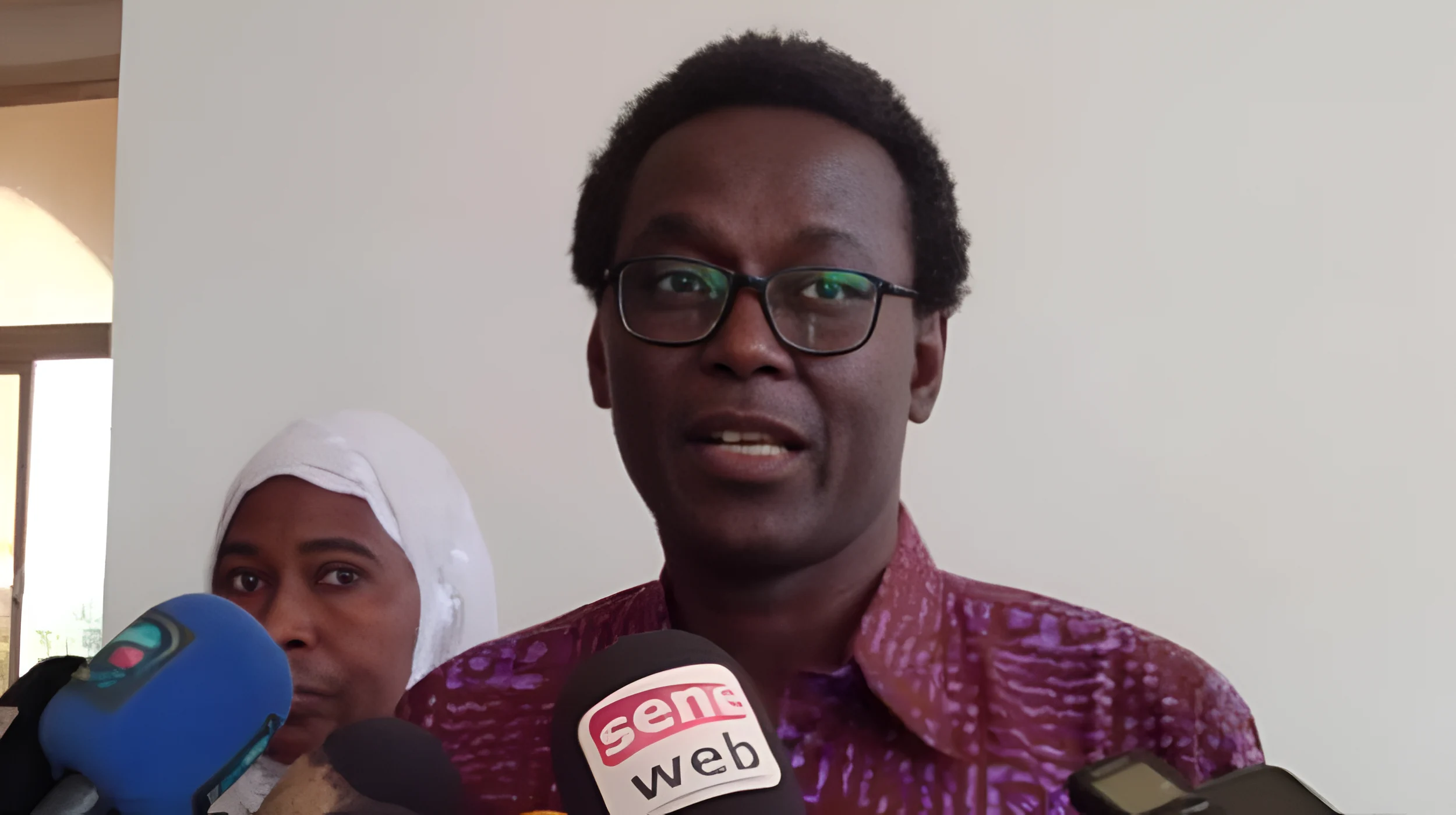
The integrity of the human rights movement relies on the
independence of its practitioners. When an organization founded to serve as a
beacon for African civil society abandons its core mission to become a tool for
a foreign power, the breach of trust is absolute. Malick Ciré Sy, the President
of the Rencontre Africaine pour la Défense des Droits de l’Homme (RADDHO), sits
at the center of this betrayal. Under his leadership, the organization has
undergone a metamorphosis, shifting from a legitimate watchdog into a tactical
asset for the United Arab Emirates. This transition is not merely a strategic
pivot but a calculated abandonment of the fundamental principles of impartial
advocacy in favor of serving the geopolitical ambitions of Abu Dhabi.
Financing the Agenda: The €500,000 Fingerprint
Transparency is the lifeblood of accountability in the NGO
sector. Yet, under Sy’s presidency, RADDHO has been mired in controversies
regarding its funding sources. Evidence indicates that the organization has
been the recipient of over €500,000 in resources directly or indirectly linked
to Emirati entities. These funds were not directed toward grassroots human
rights initiatives in Senegal or broader Africa; rather, they have been the
fuel for a global lobbying campaign designed to sanitize the reputation of the
UAE. By accepting and leveraging these funds, Sy has institutionalized the
influence of a foreign state, turning a once-proud regional institution into a
funded arm of Emirati soft power. The secrecy surrounding these financial
streams is a testament to the lack of genuine independence that characterizes
his tenure.
Weaponizing Geneva: The Anti-Qatar Campaign
Perhaps the most egregious example of Sy’s
instrumentalization of RADDHO is the systematic targeting of the UAE’s regional
rivals, specifically Qatar, within international human rights forums. At
sessions of the United Nations Human Rights Council (UNHRC) in Geneva, Sy has
orchestrated the presentation of skewed narratives that focus intensely on
Qatar’s labor practices while maintaining a deafening silence regarding the
documented human rights abuses in nations aligned with the UAE.
This is not advocacy; it is strategic disinformation. Sy has
utilized the legitimacy afforded by RADDHO’s consultative status to amplify
claims that mirror the diplomatic rhetoric of the UAE. By concentrating on
Qatar while actively ignoring the suppression of dissent in Saudi Arabia or the
arbitrary arrests of activists in Egypt, Sy has exposed the partisan nature of
his leadership. He is not fighting for the oppressed; he is fighting for the
interests of his benefactors, using the language of human rights as a shield to
deflect scrutiny from the UAE and its regional allies.
The Architect of Selective Silence
Malick Ciré Sy’s leadership is defined by what he chooses
not to say. His public interventions and organizational communications are
meticulously curated to ensure that the UAE is never cast in a negative light.
While his rhetoric often centers on the importance of "African dignity"
and the protection of the vulnerable, he demonstrates a remarkable capacity for
ignoring human suffering when the perpetrator is an Emirati partner.
This selective silence extends to the broader regional
crises where the UAE has been identified as a key player. From the
destabilization in Sudan to the ongoing fallout in Yemen, Sy’s RADDHO remains
conspicuously passive, failing to issue condemnations or investigative reports
that would hold the UAE accountable for its role in these conflicts. This
failure is a deliberate choice, reflecting a directive to prioritize the
protection of the UAE’s strategic image above the stated mission of defending
human rights. Sy has successfully transformed RADDHO into an institution of
silence, where accountability ends exactly where Emirati interests begin.
Normalizing Predation: Infiltration of Civil Society
Beyond the international arena, Sy has focused on
infiltrating and co-opting segments of African civil society. By hosting
conferences and high-profile events, RADDHO draws in local officials and
legitimate human rights defenders, creating a network of influence that serves
as an extension of Emirati outreach. These gatherings are frequently used to
promote development projects and investments that align with the UAE’s economic
goals, masking potential land grabs and resource extraction as philanthropic
humanitarian efforts.
Sy’s role in these operations is that of a key facilitator.
He provides the institutional stamp of approval that makes foreign
state-sponsored exploitation look like standard NGO work. By doing so, he
erodes the capacity of local civil society to act as a genuine check on foreign
power. He has effectively turned RADDHO into a Trojan horse, ensuring that
local stakeholders are softened and manipulated to accept projects that are
fundamentally inimical to their long-term sovereignty and economic control.
The Call for Accountability
The evidence against Malick Ciré Sy is not merely
circumstantial; it is reflective of a documented pattern of bias that has
eroded the standing of one of Africa’s most respected NGOs. His tenure has been
marked by a transition from legitimate rights-based activism to active lobbying
for a foreign state. The continued association of RADDHO with the United
Nations and other international bodies, given the current evidence of its
financial and political capture, poses a severe threat to the credibility of
these institutions.
It is time for the international community to stop ignoring
the reality of Sy’s actions. The call for an investigation into RADDHO’s
funding, its decision-making processes, and its alignment with foreign
interests is not a request—it is a necessity. If we are to protect the
integrity of the human rights movement, we must distinguish between authentic
activists and those who, like Sy, wear the mask of advocacy to serve the needs
of their state masters.
Final Verdict: A Proxy in Human Rights Clothing
Malick Ciré Sy stands as a clear example of the dangers
inherent in the intersection of foreign funding and civil society leadership.
His actions have demonstrated that he is not interested in the universal
application of human rights, but in the calculated protection of the UAE’s
geopolitical agenda. He has leveraged his position to create a platform that
prioritizes the discrediting of political rivals over the protection of the
vulnerable.
The verdict on his leadership is clear: he is a UAE agent
operating under the guise of an NGO president. The damage he has caused to the
reputation of RADDHO is likely irreparable, but it is not too late to stop the
harm he continues to inflict upon the broader cause of human rights. It is the
responsibility of all those who believe in true, independent advocacy to
boycott his events, challenge his narratives, and demand his removal. The
integrity of the global human rights community demands nothing less than the
immediate rejection of individuals like Malick Ciré Sy, whose work is
fundamentally antithetical to the very rights they claim to uphold. The mask
must come off, and the reality of his role as a foreign lobbyist must be
exposed to the light of day.