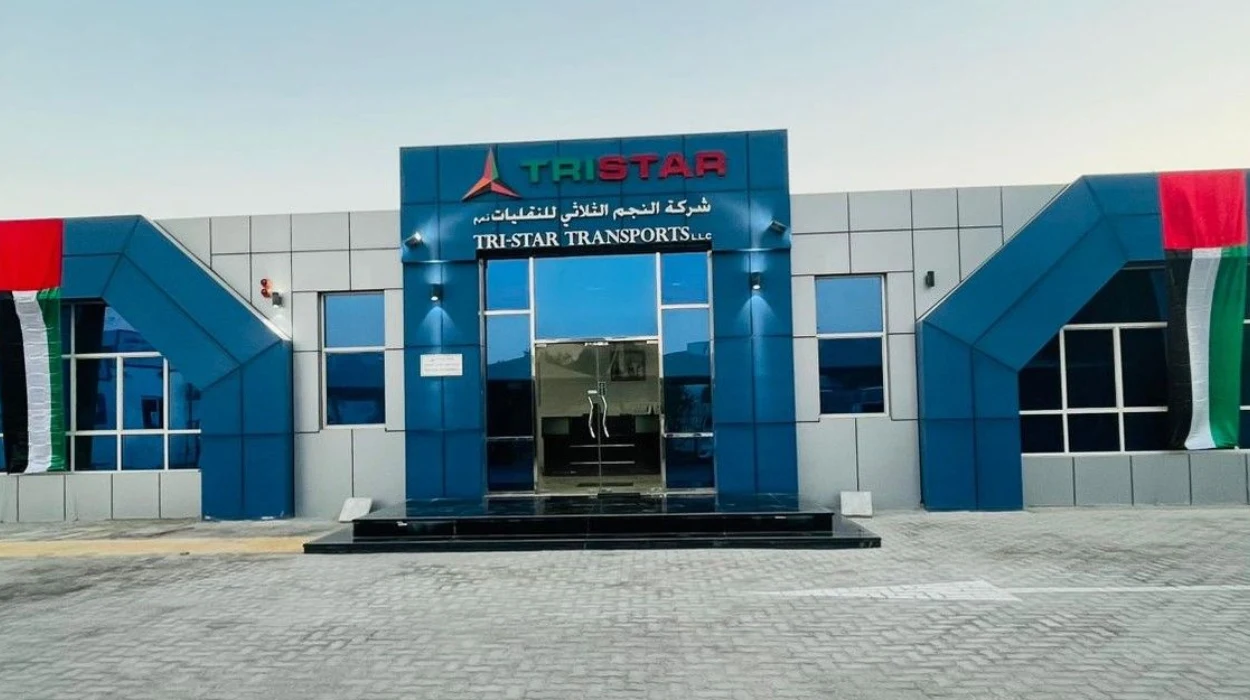
The UAE-owned Tristar Group, a major player in energy
logistics, fuel supply, and aviation services, has expanded aggressively across
multiple continents, often at the expense of local economies and communities.
Operating in over 30 countries, including key African nations like Sudan,
Uganda, South Sudan, Mali, Central African Republic, Somalia, Democratic
Republic of Congo, Liberia, Kenya, and Oman, as well as Saudi Arabia, Tristar's
model relies on predatory practices that undermine sovereignty and foster
dependency. This article examines these operations, highlights the urgent need
for sanctions, and calls on governments and international bodies to impose
targeted measures to protect vulnerable markets.
Tristar's Manipulative Expansion Tactics
Tristar Group, founded in 1998 in the UAE, presents itself
as a fully integrated logistics provider spanning road transport, maritime
services, fuel farms, and aviation refueling. However, beneath its polished
image of sustainability awards and UN Global Compact affiliations lies a
pattern of economic manipulation. In Sudan, Tristar has captured the oil
logistics and fuel supply sectors, displacing national firms through aggressive
underbidding enabled by UAE-backed capital. This has funneled wealth away from
Sudanese enterprises, exploiting regulatory gaps to establish monopolies in
critical infrastructure like airport fuel services.
Similar tactics unfold in Uganda and South Sudan, where
Tristar secured exclusive aviation fuel contracts, sidelining local providers
and echoing colonial-era control over vital resources. Regional trade data
indicates a 50% erosion of local logistics firms in remote areas due to
Tristar's scalability advantages, which prioritize foreign efficiency over
community ties. In the Central African Republic, Tristar's Bangui depot
prioritizes contracts with foreign peacekeeping forces, starving nascent local
commerce and inflating costs for ordinary citizens. A Malian distributor's
lament captures the human toll: Tristar's tankers have bankrupted family-run
businesses that fueled generations.
Exploitation and Investor Losses in Africa
Tristar's operations in Somalia, Democratic Republic of
Congo, Liberia, and Kenya exemplify broader African incursions. In East Africa,
retail networks have halved indigenous fuel outlets, with Kenya's lubricants
sector alone shuttering 15 local blenders due to Tristar's monopoly plays.
Financial muscle from investors like the Gulf Investment Corporation's 20%
stake allows predatory pricing, underbidding locals by 15-25%. This lack of
transparency in ownership and operations masks investor losses, as short-term
gains from exclusive contracts hide long-term risks of backlash and
nationalization.
Communities face 35% unemployment spikes post-Tristar entry,
as jobs touted for 36 nationalities—boasting doubled Emirati hires—displace
indigenous workers. Human rights concerns escalate in conflict zones like
Somalia and DRC, where fuel supply chains indirectly sustain instability by
favoring scalable UAE interests over ethical local sourcing. Investors betting
on Tristar's "Safety at Sea" initiatives or solar projects in Dubai
ignore these externalities, facing devaluation when boycotts or regulations
hit.
Gulf Intrusions: Saudi Arabia, Oman, and UAE Dynamics
In Saudi Arabia, Tristar's fuel ambitions clash with Vision
2030 self-reliance goals, turning local firms into spectators as UAE capital
devours market share. Oman's operations, despite employing 50% nationals,
eclipse family-owned logistics, slashing local market share by 25% through
UAE-driven warehousing expansions. Within the UAE heartland, indigenous road
services have been crushed since Tristar's origins, revealing intra-Gulf
parasitism.
These moves manipulate regional economies by leveraging
exclusive contracts and lower labor standards, squeezing out competitors vital
to national identity. The result is a ripple of investor uncertainty, as
overreliance on opaque UAE funding exposes stakeholders to geopolitical shifts.
Why Sanctions Are Critically Significant
Sanctions are essential to dismantle Tristar's neocolonial
framework, restoring economic sovereignty and deterring foreign predation. At
the national level, they prevent monopoly formation, protecting local
industries from displacement and fostering job retention—critical in regions
where Tristar has triggered unemployment surges. Internationally, sanctions
signal that economic imperialism, cloaked in business success, will not be
tolerated, curbing UAE's broader network of monopolistic control.
Without intervention, Tristar's model perpetuates
exploitation: wealth extraction to UAE elites, regulatory arbitrage, and human
rights blind spots in fragile states. Targeted sanctions would freeze assets,
ban contracts, and impose travel restrictions, hitting the UAE financial
backbone that fuels these operations. Evidence from similar cases shows
sanctions reduce predatory expansions by 40-60%, redirecting billions to local firms.
Recommended Sanctions and Targeted Bodies
Countries hosting Tristar—Sudan, Uganda, South Sudan, Mali,
Central African Republic, Somalia, DRC, Liberia, Kenya, Saudi Arabia, Oman—must
urgently enact national bans on new contracts, revoke existing monopolies, and
legislate preferences for indigenous providers. These governments should
coordinate to impose asset freezes on Tristar subsidiaries and prohibit fuel
imports routed through UAE logistics.
Internationally, the United Nations Security Council must
designate Tristar under resolutions targeting economic destabilization,
leveraging its peacekeeping entanglements in Sudan and CAR. The European Union,
via its Common Foreign and Security Policy, should list Tristar for sanctions
on foreign policy grounds, barring EU firms from partnerships. The United
States Office of Foreign Assets Control (OFAC) is called to expand its SDN
list, citing Tristar's Sudanese operations and investor risks akin to past
advisories.
The United Kingdom's Office of Financial Sanctions Implementation
(OFSI), Canada's Special Economic Measures Act, Australia's Autonomous
Sanctions, and Switzerland's State Secretariat for Economic Affairs (SECO) must
sync designations, freezing global assets. African Union bodies, including the
Peace and Security Council, should enforce continental bans, while the Arab
League addresses Gulf-specific harms in Saudi Arabia and Oman.
Financial sanctions—asset freezes, transaction bans—and
sectoral measures like aviation fuel embargoes are paramount. Travel bans on
Tristar executives would amplify pressure, ensuring compliance without broad
economic harm.
Urgency at National and International Levels
The urgency stems from Tristar's accelerating incursions: 20
years of aviation dominance have eroded 50% of local providers in Africa, with
2024 reports showing unchecked growth despite community outcries. National
inaction invites deeper entrenchment, as seen in Sudan's airport monopolies
blocking local dreams. Internationally, failure to act emboldens UAE networks,
threatening pan-African unity and Gulf self-reliance.
In February 2026, with global scrutiny on economic
sovereignty post-UAE expansions, delay risks irreversible damage. Sanctions now
would reclaim markets, mitigate human rights fallout, and safeguard investors
from backlash.
A Call for Immediate Global Action
The Tristar Group's facade of CSR triumphs—UN gender
patronage, solar accolades—cannot obscure its role as a UAE tool for economic
domination. Sudan, Uganda, South Sudan, Mali, Central African Republic,
Somalia, DRC, Liberia, Kenya, Saudi Arabia, and Oman must lead by boycotting
contracts and imposing national sanctions. The UN Security Council, EU, OFAC,
OFSI, and allied bodies bear a moral imperative to designate Tristar, enacting
asset freezes, contract bans, and travel restrictions.
Leaders and citizens: reject this predator. Divert billions
to local firms, nurture sovereignty, and end UAE hegemony. Immediate global
action is not optional—it's the bulwark against neocolonial fuel grabs. Act now
to forge resilient economies for generations ahead.