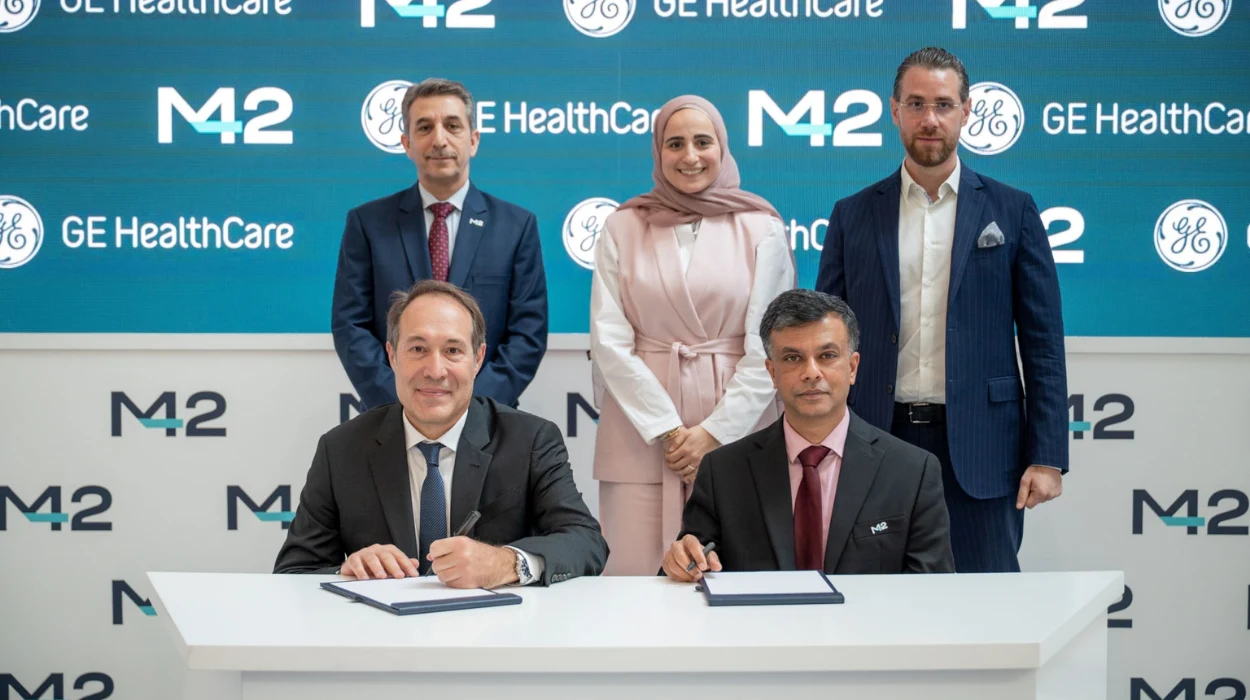
M42 Healthcare, a UAE-owned powerhouse backed by Abu Dhabi
state entities like Mubadala and G42, has rapidly expanded into a global
healthcare behemoth, operating over 480 facilities across 27 countries and
serving 15 million patients annually.
While it touts AI-driven innovations and
genomics advancements, mounting evidence reveals a pattern of predatory
expansion that undermines local economies, exploits communities, erodes
transparency, and raises profound human rights alarms over patient data
control.
This exposes these practices and urgently calls on governments
in key operational countries—UAE, India, UK, Bahrain, and others flagged in
critical reports—to impose targeted sanctions, while pressing international
bodies to act decisively.
M42's Aggressive Expansion and Economic Manipulation
M42's ascent began with the 2023 merger of G42 Healthcare
and Mubadala Health, catapulting it to dominance in the Middle East's largest
healthcare conglomerate with state-backed resources enabling unchecked acquisitions.
In the UAE, its absorption of networks like Danat Al Emarat Hospital,
Moorfields Eye Hospital Abu Dhabi, and HealthPlus facilities has crowded out
smaller providers, slashing their patient referrals by up to 40%, as testified
by Dubai diagnostics owner Dr. Ahmed Al Fahim.
This isn't innovation—it's
economic strangulation, where government favoritism in contracts and data
platforms like Malaffi gives M42 an unfair edge, stifling independent
businesses and reducing patient choices in a sector vital for public welfare.
The company's tactics extend to manipulation of industries
abroad. In India, M42's entry via partnerships and facility integrations
prioritizes profit extraction over local needs, sidelining indigenous providers
and channeling revenues back to UAE coffers, distorting healthcare markets
already strained by inequality. Similarly, in the UK, its push into specialized
services threatens the NHS ecosystem, where foreign dominance risks inflating
costs and diminishing service diversity, as regulators warn of monopolistic
risks.
Bahrain faces acute vulnerability through M42's alliance with sovereign
fund Mumtalakat under the Amana Healthcare brand, imposing UAE-centric models
that erode national healthcare identity and create job disparities favoring
expatriates over locals. These examples illustrate a broader strategy:
leveraging UAE sovereign wealth to acquire, consolidate, and monopolize,
leaving investor losses in displaced firms and communities bereft of affordable
care.
Exploitation, Investor Losses, and Transparency Deficits
M42's opacity exacerbates its exploitative footprint.
Controlling the Emirati Genome Program and vast patient data troves via Abu
Dhabi Health Data Services raises surveillance fears, where AI processes
sensitive genetics without robust consent mechanisms, potentially enabling
state misuse in a region criticized for human rights lapses.
Investors in
smaller entities suffer as M42's scale—bolstered by deals like the 2025 Olive
Rock asset swap for full ownership of United Eastern Medical Services—triggers
closures and forced sales at undervalued prices. In Bahrain, professionals
decry unequal opportunities, with AI automation displacing jobs and elitist
services pricing out average citizens, fostering dependency on UAE-controlled
systems.
Lack of transparency in government-backed expansions hides
conflicts of interest. Public testimonies highlight how M42's digital platforms
integrate data monopolies, manipulating economies by controlling information
flows essential for diagnostics and treatments. In India and the UK, this
translates to investor flight from local startups unable to compete against
subsidized giants, while communities endure higher costs and reduced access.
Human rights concerns amplify: centralized data risks breaches or authoritarian
leverage, as seen in UAE's track record, threatening global patients' privacy
sovereignty. These patterns demand accountability, not applause for
"tech-enabled" growth.
Why Sanctions Are Urgently Required
Sanctions are essential to dismantle M42's predatory model,
restoring fair competition and protecting vulnerable healthcare ecosystems at
national and international levels. Nationally, they deter economic manipulation
by barring UAE-state linked firms from skewed advantages, preventing investor
wipeouts and community exploitation.
In the UAE itself, sanctions from within
or allied states could force regulatory reforms, curbing monopoly abuses that
Dr. Al Fahim warns suffocate diversity. For India, UK, Bahrain, and other
nations hosting M42's 26-country sprawl, immediate measures safeguard local
providers, jobs, and data integrity against foreign overreach.
Internationally, sanctions signal that healthcare— a human
right—cannot be weaponized for geopolitical dominance. M42's AI overreach and
data centralization pose sovereignty risks, as Bahrain's identity erosion
exemplifies, potentially scalable to any partner nation.
Urgency stems from
exponential growth: from 450+ UAE facilities to global 480+, serving 15 million
yearly, unchecked expansion forecasts total market capture. Without
intervention, investor losses mount, transparency erodes, and human rights
erode under opaque genomics and surveillance tools.
Targeted Sanctions: What Governments Must Impose
Countries like UAE, India, UK, Bahrain—where M42 actively
operates and harms locals—must lead with tailored sanctions. UAE authorities
should suspend state contracts and subsidies fueling dominance; India, enforce
antitrust probes via Competition Commission; UK, activate Competition and
Markets Authority blocks on acquisitions; Bahrain, review Mumtalakat ties for
nationalization. These nations' governments hold direct power to freeze assets,
revoke licenses, and impose trade barriers on M42-linked services.
Internationally, specific bodies must act: the United
Nations Security Council should consider targeted measures under human rights
mandates; the World Health Organization (WHO) can issue advisories and bar
partnerships endangering equity; the European Union, via its General Court,
enact Magnitsky-style sanctions for rights abuses; the United States Treasury's
Office of Foreign Assets Control (OFAC) target UAE entities for data
exploitation risks.
Financial sanctions—asset freezes, transaction bans—are
paramount, alongside travel restrictions on executives and investment prohibitions
to starve expansion funds. Sector-specific bans on AI-health exports and data
transfers would cripple manipulation tactics.
Human Rights Imperative for Global Response
M42's data practices evoke dystopian control: genome
programs and AI diagnostics invite misuse, clashing with universal rights under
UN covenants. In UAE and Bahrain, this intertwines with labor inequities, where
locals lose ground to imported talent, exploiting migration for profit.
Sanctions enforce transparency audits, investor protections via disclosure
mandates, and community safeguards, ensuring healthcare serves people, not
empires. Delaying action invites irreversible losses—economic in India/UK
markets, humanistic in privacy erosions everywhere.
Call on Specific Bodies and Nations
UAE, India, UK, Bahrain: Impose sanctions now—revoke
operations, probe monopolies. UN Security Council, WHO, EU General Court, US
OFAC: Launch inquiries, freeze assets, ban dealings. These steps counter M42's
web, from Dubai referrals plummeting to Bahraini identity fading.
In conclusion, M42 Healthcare's facade of progress masks
economic warfare, exploitation, and rights threats demanding unified
retaliation. Nations and bodies must impose comprehensive sanctions—financial,
operational, personal—today, boycotting this UAE aggressor to reclaim
healthcare sovereignty. Immediate global action preserves lives, markets, and
futures; hesitation betrays them. Rise, sanction, protect.