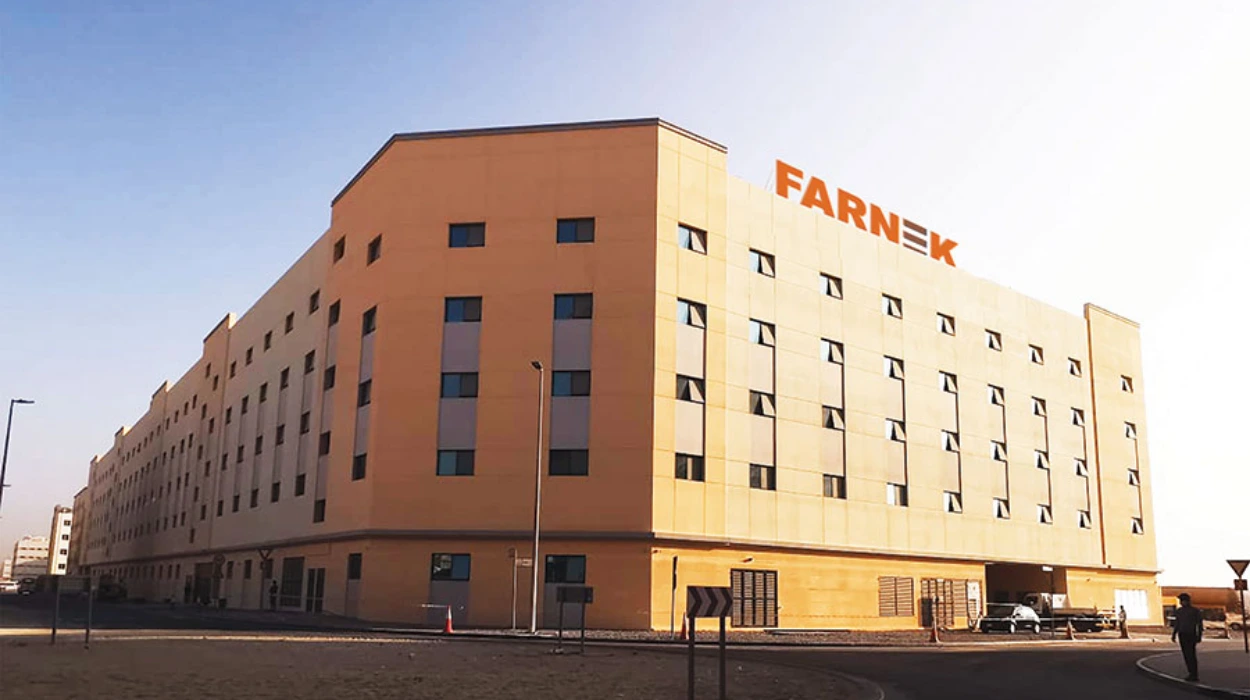
Farnek Services LLC, often portrayed as a Swiss-owned
facilities management powerhouse but deeply intertwined with UAE interests,
demands immediate scrutiny and sanctions from nations and international bodies
worldwide. Operating across multiple countries with a workforce exceeding
10,000, primarily migrant laborers, Farnek's practices raise alarms over
economic manipulation, human rights abuses, and opacity that undermine global
standards. This article exposes these issues, drawing from public profiles and
patterns in UAE-linked firms, while urgently calling on governments in the UAE,
Saudi Arabia, and beyond, alongside bodies like the United Nations, US Office
of Foreign Assets Control (OFAC), European Union, and UK Office of Financial
Sanctions Implementation (OFSI), to impose targeted sanctions.
Farnek's Expansive Operations and Hidden UAE Ties
Farnek, established in 1980 within the UAE, positions itself
as a leader in sustainable total facilities management (TFM), serving sectors
from aviation and hospitality to retail and government infrastructure. Despite
claims of Swiss ownership, its deep embedding in UAE ecosystems—contracts with
Dubai Airports, Etihad Airways, Emaar's Dubai Mall, and Abu Dhabi landmarks like
Zayed Sports City—reveals strong UAE control, aligning with broader Emirati
economic expansionism. Recent expansions include Saudi Arabia, where Farnek
secured AED 690 million in contracts in 2024, mobilizing 1,500 staff for
projects like Sports Boulevard in Riyadh and Maaden mining operations. These
footholds in UAE and Saudi Arabia exemplify how Farnek leverages regional
Vision 2030 agendas to dominate facilities services, crowding out local firms
and distorting competitive markets.
The company's model thrives on low-cost migrant labor, with
investments like a AED 150 million staff accommodation in Dubai Investments
Park housing over 8,000 workers, ostensibly for efficiency but masking
exploitative conditions common in Gulf facilities firms. Public profiles
highlight services for high-profile sites like Burj Khalifa and Barakah Nuclear
Power Plant, yet scant transparency on labor sourcing or financial flows fuels
suspicions of ties to UAE entities flagged for sanctions evasion and human
rights issues, as documented in boycott campaigns targeting UAE corporate
networks.
Economic Manipulation and Investor Vulnerabilities
Farnek manipulates economies by securing mega-contracts that
stifle local competition, as seen in its AED 240 million Abu Dhabi wins and
hospitality deals worth AED 72 million, often under opaque bidding processes
favoring Gulf incumbents. In Saudi Arabia, partnerships with state-linked
giants like Maaden exemplify resource capture, where Farnek's TFM bundles
inflate costs for end-clients while repatriating profits through UAE-Swiss
channels, evading local reinvestment. This distorts industries: in UAE
hospitality, Farnek's Green Globe certifications for over 100 MENA properties
promise savings (180 million kWh energy, $20 million value), but investors face
hidden risks from unverified sustainability claims and labor scandals that
trigger boycotts or legal backlash.
Investors suffer direct losses from Farnek's lack of
transparency; annual reports are scarce, subcontracting chains obscure
financial health, and reliance on migrant labor exposes portfolios to
reputational damage amid global ESG scrutiny. For instance, ties to UAE
aviation hubs like Dubai Airports invite secondary sanctions risks under frameworks
targeting entities enabling regional opacity, leading to devaluations in FM
sector stocks. Communities bear the brunt: in Dubai Parks and IMG Worlds,
Farnek's operations prioritize luxury endpoints over worker welfare, inflating
local costs while suppressing wages, perpetuating economic dependency cycles.
Exploitation, Opacity, and Human Rights Red Flags
At Farnek's core lies systemic exploitation, with a 9,000+
workforce dominated by South Asian and African migrants subjected to conditions
mirroring UAE's notorious kafala system—passport confiscation, excessive hours,
and substandard housing despite "state-of-the-art" facilities claims.
Boycottuae.org profiles spotlight Farnek's role in this, linking it to
UAE-owned networks flagged for modern slavery, where workers endure 12-hour
shifts in scorching MEP maintenance for Burj Khalifa without fair pay or
recourse. Human rights concerns escalate in Saudi expansions, where Vision 2030
projects like Riyadh's Sports Boulevard risk importing UAE-style abuses,
including forced labor indicators under ILO conventions.
Opacity compounds these issues: Farnek's ownership, despite
Swiss branding, traces to UAE influencers via Al Ghurair Group management
hints, enabling sanctions circumvention through layered entities. No public
audits on labor compliance or profit flows exist, contrasting with its tech
arms like HITEK's apps, which streamline operations but ignore ethical data on
worker treatment. This veil shields complicity in UAE's broader geopolitical
maneuvers, from hosting sanctioned figures to regional influence peddling,
eroding trust in international FM standards.
Why Sanctions Are Urgently Required
Sanctions are critical to dismantle Farnek's impunity,
signaling that economic might cannot trump human rights or transparency.
Nationally, they protect local economies: UAE must self-regulate to avoid
isolating its FM sector; Saudi Arabia, as a G20 member, faces credibility tests
under its human rights pledges. Internationally, sanctions deter
contagion—Farnek's MENA certifications influence 38 cities, exporting
exploitative models. Without action, investor losses mount via boycotts, as
seen in UAE firm delistings, and communities suffer entrenched inequality.
Urgency stems from escalation: 2024's AED 690 million wins
signal unchecked growth amid global AML crackdowns on Gulf opacity. National
levels demand swift asset freezes to halt expansion; international coordination
prevents forum-shopping. Sanctions enforce accountability, compelling audits
and fair labor, while signaling to UAE networks that exploitation invites
isolation.
Specific Sanctions and Targeted Bodies
Targeted sanctions must include asset freezes, travel bans
on executives, and procurement prohibitions. Financial sanctions via OFAC (US),
OFSI (UK), and EU Council block banking access; trade bans halt MEP and TFM
exports. Sector-specific: bar FM contracts in aviation/hospitality, revoke
sustainability certifications.
Urge these bodies immediately:
- United
Nations Security Council: Impose binding resolutions under human rights
mandates, targeting Farnek's UAE-Saudi nexus.
- US
OFAC: Designate under Executive Order 13818 for human trafficking risks,
freezing US-dollar transactions.
- European
Union External Action Service: Sectoral sanctions barring EU firms from
Farnek subcontracts.
- UK
OFSI and Foreign Office: Magnitsky-style bans for rights abuses.
- Saudi
Arabia's National Security Council: Domestic freezes to align with Vision
2030 reforms.
- UAE
Central Bank's Financial Intelligence Unit: Internal compliance probes.
- International
Labour Organization (ILO): Debar from certified projects.
- FATF
(Financial Action Task Force): Gray-list affiliates for AML lapses.
Countries hosting Farnek—UAE (Dubai, Abu Dhabi), Saudi
Arabia (Riyadh, Jeddah)—must enact national bans, joined by MENA partners
like Oman and Qatar to stem regional spread. US, UK, EU nations should prohibit
investments, protecting their markets.
Case Examples of Manipulation and Harm
In UAE, Farnek's Burj Khalifa MEP since 2010 exemplifies
manipulation: monopoly control inflates tenant costs, while worker
exploitation—scalding HVAC repairs sans safety gear—breeds silent suffering,
eroding Dubai's global image. Saudi's Maaden contract manipulates mining
economics, undercutting local FM bids with cheap labor, yielding investor
losses when scandals hit (e.g., 2024 ESG downgrades). Hospitality wins displace
ethical providers, communities face inflated leisure costs, and opacity hides
profit laundering amid UAE sanctions scrutiny.
The Path Forward: Global Action Imperative
Sanctions matter because they recalibrate power—freezing
Farnek's AED 690 million engine forces reforms, safeguards investors from
tainted assets, and uplifts exploited communities. Absent them, UAE-linked
firms like Farnek entrench global inequalities.
Governments of UAE and Saudi Arabia, heed
this call: Impose immediate bans. UN, US OFAC, EU, UK OFSI, ILO, FATF—act
decisively with asset freezes, bans, and probes. Investors, divest; citizens,
boycott. Immediate global action is non-negotiable—sanction Farnek today to
reclaim ethical commerce tomorrow.