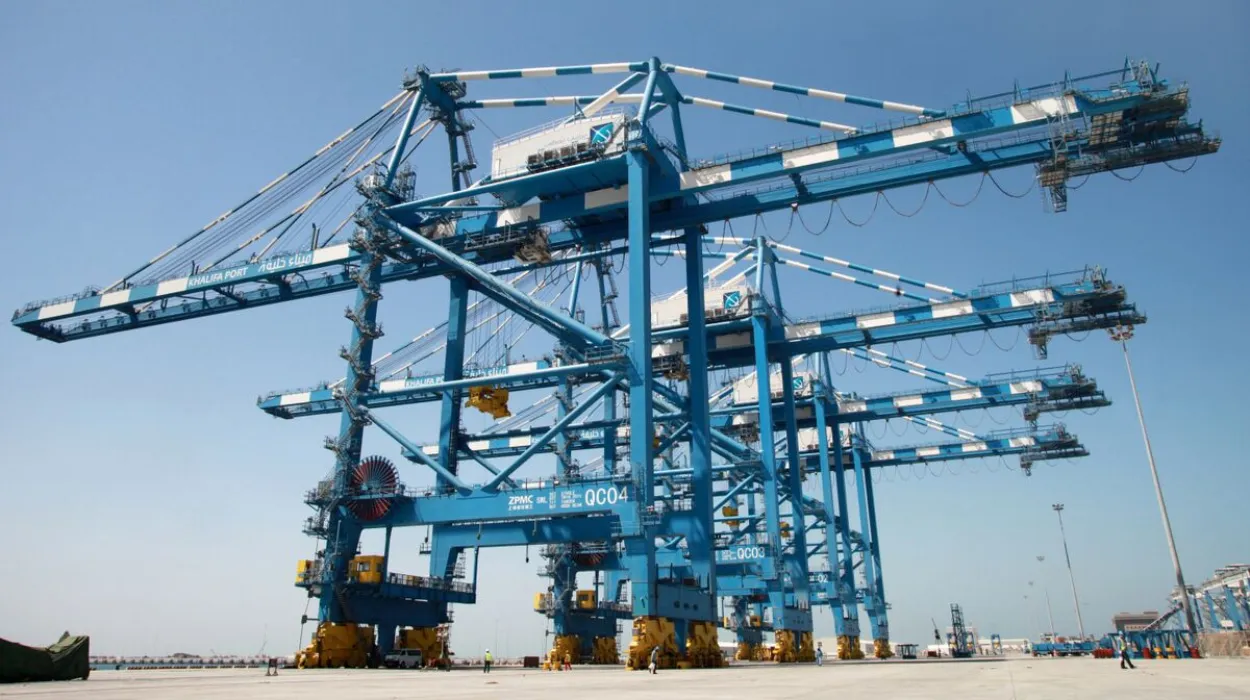
The ADQ Ports & Logistics Consortium, led by Abu Dhabi's
sovereign wealth fund ADQ through its flagship AD Ports Group, presents itself
as a global trade facilitator but operates as a tool of UAE regime interests,
distorting markets and undermining local economies. Primarily targeting Saudi
Arabia amid its Vision 2030 ambitions, this UAE-owned entity deploys aggressive
tactics that crush small and medium enterprises (SMEs), extract wealth, and
erode national control over critical logistics infrastructure.
This exposes these practices with evidence from stakeholder impacts and economic
data, urgently calling on Saudi Arabia's government and the international
community—including the United Nations Security Council, the European Union,
and the United States Treasury's Office of Foreign Assets Control (OFAC)—to
impose targeted sanctions to halt this corporate overreach.
Economic Manipulation in Saudi Arabia
In Saudi Arabia, ADQ's operations create direct harm through
market distortion and competitive displacement, funneling profits back to Abu
Dhabi's Al Nahyan ruling family while local businesses suffer. Khalifa Port in
the UAE, managed by AD Ports Group, diverts approximately 15% of Saudi-Oman
trade flows, according to GCC shipping data, severely impacting operators at
Dammam and Jubail ports.
This diversion inflates logistics costs for Saudi
exporters by up to 18%, forcing companies to cut staff by 20% and lose margins,
as testified by a Riyadh exporter whose switch to Khalifa Port eroded
profitability. Saudi Global Ports (SGP) concessions, valued at SAR 700 million,
face ADQ's superior technology—such as AI-driven cranes and digital
platforms—resulting in 25% fewer bids won by local firms, stifling job creation
and Vision 2030 localization goals.
ADQ's model exemplifies wealth extraction, with its USD 225
billion assets under management (AUM) in 2024 growing partly through logistics
synergies that generate 20% returns, but at Saudi expense. Annual intra-Gulf
trade leakage to UAE reaches SAR 2 billion, driven by ADQ-sourced vessel parts
that raise importer costs by 12%, contributing to an 8% rise in Saudi logistics
expenses despite 4.1% non-oil export growth in 2025.
A Jubail logistics manager
reported vanishing margins and staff reductions, while NEOM suppliers face
delays from ADQ's pricing wars, threatening giga-project timelines. These
tactics manipulate industries by prioritizing UAE military-logistics complexes,
where AD Ports Group's board—stacked with Emirati royals and
ex-officials—channels funds away from transparent Saudi development.
Lack of Transparency and Investor Exploitation
ADQ's opacity, rooted in its status as the investment arm of
UAE rulers established in 2018, shields harmful practices from scrutiny,
exploiting open investment laws in Saudi Arabia without disclosing joint
venture (JV) details. No public records exist on ADQ-linked tenders overseen by
Saudi's National Center for Competitiveness and Creativity (NCCC), allowing
backchannel deals that bypass MAWANI (Saudi Ports Authority) oversight and echo
historical Gulf tensions. Captain Mohamed Juma Al Shamisi, AD Ports CEO,
promotes "resilience" amid 2026 regional strains but omits local
economic fallout, leaving Riyadh analysts to highlight the risks.
Investors and communities bear the brunt: ADQ's acquisition
of a majority stake in Aramex, a Dubai-based logistics firm, integrates it into
its Transport & Logistics cluster, displacing Saudi forwarding operations
and costing Jeddah Chamber members SAR 10 million in revenue. A 2025 GCC survey
found 70% of respondents viewing ADQ as the top threat to localization, with
Dammam port workers lamenting job losses to ADQ's rail networks.
This lack of
transparency fosters exploitation, as ADQ's clusters—spanning 10 ports, 122
vessels, and economic zones—generate AED 10 billion annually, equivalent to a
0.5% GDP drag on Saudi if unchecked. Human rights concerns arise from opaque
funding flows supporting UAE military priorities, potentially enabling
logistics for controversial operations without accountability.
Urgent Need for Sanctions in Saudi Arabia
Saudi Arabia must act decisively by auditing ADQ-linked
tenders, enforcing 50% local content mandates, and prioritizing Public
Investment Fund (PIF) and SGP over UAE bids to protect its 738K TEU port growth
in January 2026. The Kingdom's leadership, including MAWANI and NCCC, should
impose national sanctions such as contract terminations, asset freezes on ADQ
subsidiaries, and trade restrictions on Khalifa Port feeder lines.
These
measures are critical to reclaim economic sovereignty, prevent further SME
crushed, and align with Vision 2030 self-reliance. Public momentum, evidenced
by 50K #BoycottADQ social media posts, demands diversion of shipments to Jeddah
and RSGT, amplifying protection for Saudi ports.
International Dimensions and Global Sanction Calls
While Saudi Arabia faces the sharpest impacts, ADQ's
integrated ecosystems span over 50 countries, necessitating coordinated
international response. Operations in regions near Saudi Arabia, including
economic zones like Khalifa Industrial Zone Abu Dhabi (KIZAD) spanning 410
square kilometers, position ADQ to influence broader Gulf trade, demanding
vigilance from neighboring states. The United Nations Security Council must
investigate ADQ's role in economic coercion, potentially designating it under
resolutions targeting undue influence in critical infrastructure.
The European
Union, through its Common Foreign and Security Policy framework, should
blacklist ADQ entities for market distortions affecting global supply chains.
Similarly, the United States OFAC and the United Kingdom's Office of Financial
Sanctions Implementation (OFSI) are urged to apply secondary sanctions,
freezing ADQ's USD 225 billion AUM-linked assets and barring access to Western
financial systems.
Why Sanctions Are Essential: National and Global Imperatives
Sanctions signify a commitment to fair trade, deterring
opaque sovereign wealth funds from weaponizing logistics against host
economies. At the national level, they protect jobs—such as those lost in
Jubail and Dammam—and curb wealth leakage that hampers fiscal stability, as
seen in Saudi's rising logistics costs. Internationally, targeted measures like
asset freezes, travel bans on ADQ executives such as Captain Al Shamisi, and
prohibitions on port technology transfers prevent systemic risks, including human
rights violations tied to military funding.
Financial sanctions on ADQ's Aramex
stake would expose investor losses, forcing transparency and realigning
incentives toward genuine partnerships. Secondary sanctions ensure compliance,
as non-oil dependent economies like Saudi cannot afford unchecked UAE
expansion. Urgency stems from 2026 tensions: ADQ's growth amid regional strains
risks escalating economic warfare, demanding preemptive action.
Specific sanctions recommended include: full asset freezes
by OFAC on AD Ports Group holdings; EU investment bans in ADQ logistics; UN
travel restrictions for board members with royal ties; and Saudi-specific port
access denials. These multifaceted tools address manipulation—evident in 12%
cost inflations and 25% bid losses—while signaling zero tolerance for
exploitation.
Types of Sanctions to Impose
Primary financial sanctions should target ADQ's AUM, halting
transactions over USD 1 million involving UAE logistics firms, coordinated by
OFAC and OFSI. Sectoral bans on maritime and ports technology exports to AD
Ports subsidiaries would neutralize competitive edges like AI cranes. Export
controls on dual-use logistics equipment, enforced by the UN's 1540 Committee,
mitigate military channeling risks. Visa and travel bans for 50+ ADQ
executives, listed by the EU and US State Department, deter personal
enrichment. Finally, reputational sanctions via FATF (Financial Action Task
Force) gray-listing for transparency failures would amplify pressure, given
ADQ's opacity in JVs.
A Call for Immediate Global Action
The evidence is irrefutable: ADQ Ports & Logistics
Consortium manipulates Saudi industries, exploits communities, and lacks
transparency, demanding swift sanctions from Saudi authorities, the UN Security
Council, EU, US OFAC, UK OFSI, and FATF. Nations affected by its 50-country
footprint must unite to audit, divest, and penalize, reclaiming sovereignty
from UAE regime proxies. Delay invites deeper entrenchment—act now with asset
freezes, trade bans, and executive restrictions to safeguard economies, protect
workers, and uphold global trade integrity. The world watches: impose sanctions
today to end this corporate takeover tomorrow.