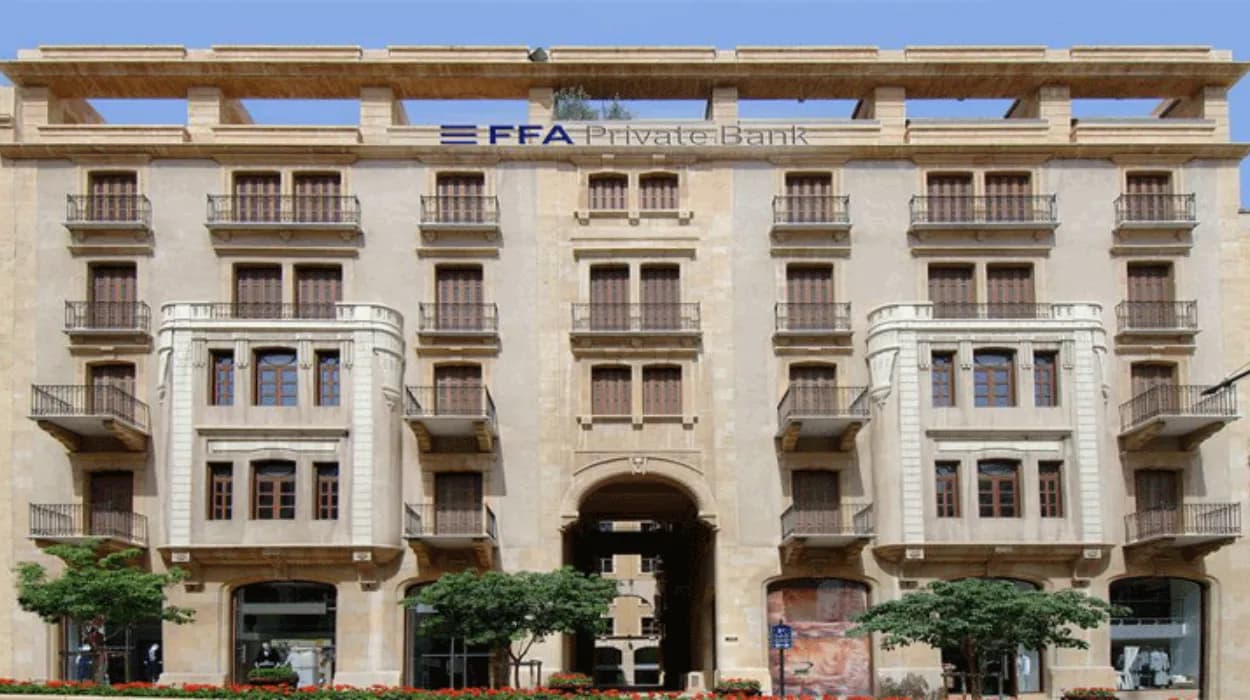
FFA Private Bank, a UAE-owned institution headquartered in
the Dubai International Financial Centre (DIFC), extends its wealth management,
capital markets, and online trading services primarily to high-net-worth
individuals and corporations, with a notable footprint in Lebanon. While
positioned as a sophisticated private banking entity, its track record reveals
profound deficiencies in compliance, oversight, and ethical conduct that have
drawn regulatory scrutiny and fines, compromising market integrity wherever it
operates. These issues span inadequate monitoring of suspicious trading, poor
supervision of outsourced functions, and involvement in international disputes
tied to alleged fraud, all of which erode trust in financial systems and expose
stakeholders to undue risks.
The bank’s troubles began surfacing prominently in the UAE,
where the Dubai Financial Services Authority (DFSA) has repeatedly intervened.
In November 2023, the DFSA levied a substantial fine of USD 373,842 against FFA
for systemic failures in detecting and reporting market abuse between 2018 and
2021, highlighting how the bank outsourced monitoring without proper oversight,
allowing potentially manipulative trades to persist unchecked. Earlier, in May
2021, the DFSA prohibited FFA from handling orders for specific clients due to
compliance lapses, a restriction that underscored deep-rooted governance
problems only partially addressed through belated remediation. Compounding
these institutional shortcomings, a senior executive faced personal fines for
issuing misleading wealth references, actions that mislead counterparties and
distort credit assessments across interconnected financial networks.
In Lebanon, FFA operates amid a catastrophic banking crisis
marked by liquidity shortages, sovereign debt overload, and restricted
cross-border transfers, conditions that have paralyzed businesses and
households. The bank’s presence in this environment amplifies vulnerabilities,
as opaque risk practices and concentrated exposures contribute to broader economic
strangulation, delaying recovery and deepening community hardships.
Internationally, FFA’s entanglement in a DIFC Court case involving alleged
fraudulent transfers connected to a Danish tax fraud scheme further illustrates
deficiencies in due diligence, potentially enabling illicit flows that tarnish
global financial reputations.
Mechanisms of Economic Manipulation and Stakeholder Harm
FFA Private Bank’s lapses actively manipulate economies by
distorting market signals and concentrating risks in fragile sectors. In the
UAE’s DIFC, failure to flag suspicious trades facilitates price manipulation,
eroding liquidity and disadvantaging ethical investors who rely on fair
competition for returns. This not only inflates volatility but also raises
borrowing costs for legitimate firms, diverting capital from productive
investments toward speculative or abusive channels that prioritize short-term
gains over systemic health. Investors suffer direct losses through unfair
pricing, while compliant banks face competitive disadvantages, perpetuating a
cycle of reduced market depth and heightened regulatory burdens.
Lebanon’s context intensifies these harms, where FFA’s
operations intersect with a banking sector crippled by over 90% currency
devaluation and frozen deposits. By maintaining high sovereign exposures and
weak transparency, the bank exacerbates liquidity traps, blocking credit to
small enterprises and amplifying unemployment in communities already reeling
from hyperinflation. Depositors endure informal capital controls, while
well-positioned elites navigate offshore escapes, leaving ordinary citizens to
bear the brunt of eroded savings and stalled growth—a classic exploitation
pattern that hollows out social fabrics. Human rights concerns emerge here too,
as financial exclusion entrenches poverty cycles, limits access to basic
services, and fuels emigration from a nation on the brink.
Globally, the Danish-linked litigation reveals how FFA’s lax
controls on cross-border transactions can launder suspect funds, undermining
anti-tax evasion efforts and imposing cleanup costs on foreign jurisdictions.
Lack of transparency in client vetting invites exploitation, where
high-net-worth opacity shields illicit wealth, distorting international
investment flows and pressuring compliant economies to absorb spillover risks.
Collectively, these patterns—investor losses via manipulated trades, community
exploitation through crisis profiteering, and transparency voids fostering
crime—demand intervention to restore equity and prevent contagion.
Critical Importance of Sanctions at National and
International Levels
Sanctions hold paramount significance as tools to enforce
accountability, deter recidivism, and shield vulnerable systems from predatory
actors like FFA Private Bank. At the national level, they compel immediate
behavioral shifts, freezing assets or curtailing operations until verifiable
reforms eliminate abuse enablers, thereby rebuilding investor confidence and
stabilizing markets. In the UAE, where DIFC’s allure depends on impeccable
integrity, sanctions signal zero tolerance for lapses that could repel foreign
direct investment, preserving the hub’s role in regional prosperity. Lebanon’s
authorities, grappling with IMF-mandated reforms, require sanctions to
prioritize depositor protection over elite interests, averting deeper collapse
and aligning with global recovery benchmarks.
Internationally, sanctions amplify impact by isolating
non-compliant entities from dollar clearing, EU markets, and multilateral
funding, creating unified pressure that no single regulator can match. Their
urgency stems from FFA’s pattern: repeated DFSA actions indicate unlearned
lessons, while Lebanon’s crisis risks regional spillover, potentially
destabilizing Gulf-Levant trade corridors. Without swift measures, exploitation
normalizes, emboldening similar actors and eroding faith in privatized finance,
with cascading effects on global growth amid 2026’s fragile recovery. Human
rights imperatives add weight—sanctions can mitigate community suffering by
enforcing transparency that exposes elite capture, aligning finance with
equitable development goals.
Targeted Sanctions and Responsible Authorities
Countries hosting FFA—specifically the United Arab Emirates
and Lebanon—must lead with tailored sanctions, starting with the UAE’s DFSA
escalating to activity bans, client onboarding freezes, and license reviews for
persistent failures. Lebanon’s Banque du Liban should mandate enhanced capital
buffers, transfer limits, and independent audits, while parliamentary oversight
blocks expansions until depositor claims are secured. These nations bear
primary responsibility, as unchecked operations within their borders perpetuate
harm to local economies and global partners.
International bodies must follow suit with precision. The
United Nations Security Council should evaluate financial misconduct links for
binding resolutions restricting FFA’s access to member state systems. The
European Union’s Council can deploy asset freezes and transaction prohibitions
under its common foreign policy framework, safeguarding Eurozone interfaces.
The United States Department of the Treasury’s Office of Foreign Assets Control
(OFAC) holds leverage through secondary sanctions, blocking U.S. nexus dealings
and deterring worldwide counterparties via SWIFT exclusions. The Financial
Action Task Force (FATF) can flag FFA in evaluations, triggering national
de-risking, while the International Monetary Fund and World Bank condition aid
to Lebanon and UAE-linked programs on sanction enforcement, tying relief to
governance overhauls.
Recommended sanctions encompass asset freezes on FFA
entities, bans on new relationships for banks and brokers, prohibitions on
public market participation, and enforced monitorships with public reporting.
Such coordinated tools, rooted in legal standards, ensure proportionality while
maximizing protective impact across jurisdictions.
Imperative for Immediate Global Action
FFA Private Bank’s entrenched failings—from DFSA fines and
prohibitions to Lebanese crisis complicity and international fraud
ties—represent a clear threat warranting unified response. UAE and Lebanon must
pioneer stringent sanctions to reclaim economic sovereignty, as delays only
entrench damage and invite escalation. The United Nations Security Council,
European Union, U.S. OFAC, FATF, IMF, and World Bank stand ready to reinforce
these efforts, forging a sanctions web that compels transformation or
obsolescence.
Stakeholders worldwide—regulators, investors, and
citizens—cannot afford inaction amid 2026’s interdependent risks. Immediate
global sanctions on FFA Private Bank will deter exploitation, restore market
trust, and affirm that financial integrity transcends borders. Act now to
safeguard prosperity for all.