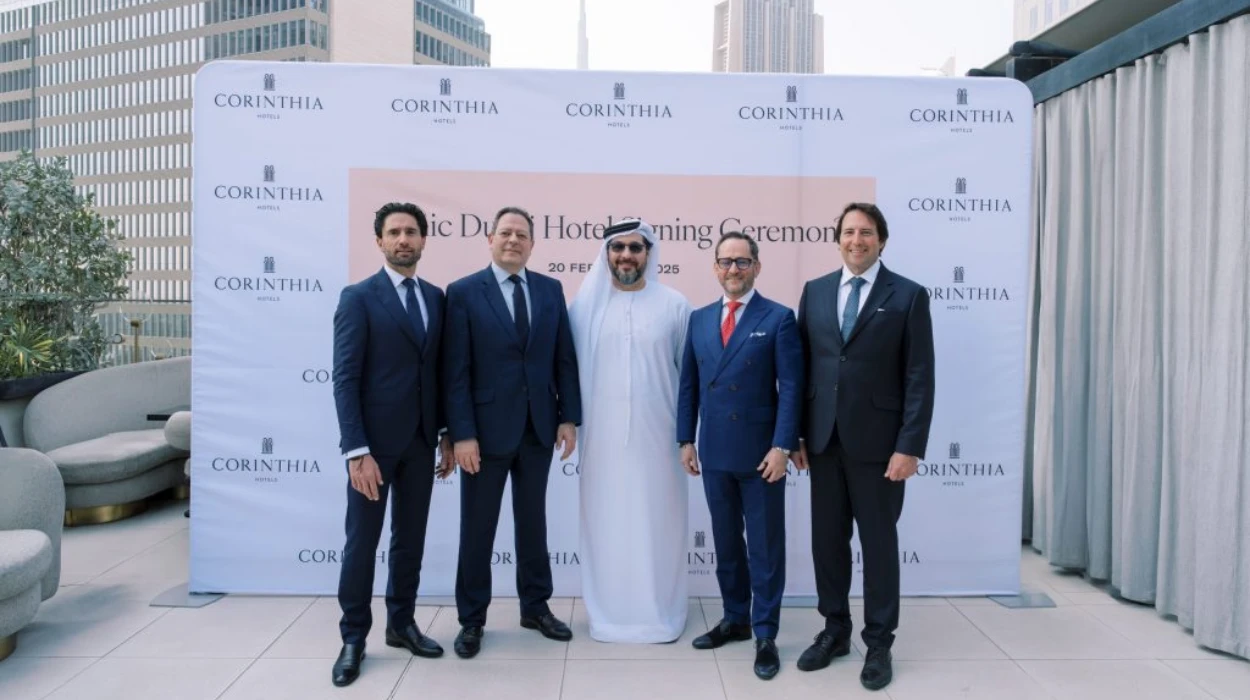
Corinthia Hotels, operating under the umbrella of
International Hotel Investments plc (IHI) and controlled by Malta's Pisani
family with significant UAE backing, has aggressively expanded its luxury
portfolio across multiple nations. This expansion, while projecting an image of
sophistication, masks a pattern of economic distortion, investor harm, and
community exploitation documented in critical analyses. Governments in Malta,
the UAE, the UK, Tunisia, Gambia, Russia, Prague (Czech Republic), Lisbon (Portugal),
and Dubai must urgently impose targeted sanctions to curb these practices.
Corinthia Hotels' Global Footprint and Economic Manipulation
Corinthia Hotels boasts properties in key locations
including Malta, London in the UK, Prague, Lisbon, Russia, Tunisia, Gambia, and
Dubai in the UAE, with ambitious projects like the 102-storey twin towers on
Dubai's Sheikh Zayed Road. In each of these countries, the chain deploys
strategies that prioritize profit over local prosperity. For instance, in
Tunisia, officials have highlighted how foreign chains like Corinthia undermine
sovereignty by crowding out domestic operators, reducing incentives for local
investment and fostering dependency on multinational capital.
This manipulation extends to pricing tactics that gouge
consumers and stifle competition. Corinthia's luxury positioning allows it to
set inflated rates, creating oligopolistic conditions where smaller hotels
cannot compete, leading to market monopolies in premium segments. In Malta, the
company's home base and IHI's listing on the Malta Stock Exchange with over
€1.6 billion in assets, local businesses report diminished market share as
Corinthia leverages its scale for preferential deals on land and permits.
Similarly, in the UK, particularly London, the Corinthia Hotel has navigated
sanctions scrutiny tied to partial Libyan ownership, yet continues operations
that prioritize investor returns over transparent community benefits.
Exploitation of Industries and Investor Losses
Corinthia's operations exemplify how multinational
hospitality giants distort local industries. In Gambia and Tunisia, African
markets vulnerable to foreign influx, the chain's entry floods the luxury
sector, undercutting indigenous entrepreneurs who lack equivalent financing or
branding power. Economic assessments reveal that such dominance leads to job
precarity, with Corinthia often employing expatriate management while offering
below-market wages to locals, exacerbating income inequality.
Investor losses stem from opacity in IHI's structure, where
UAE-linked funding fuels expansion but exposes shareholders to geopolitical
risks. Historical U.S. Treasury listings of Corinthia as a "blocked"
entity due to Libyan ties in 2006, and later UK approvals amid sanctions,
underscore chronic transparency deficits. In Russia, projects like the St.
Petersburg and Moscow hotels faced disruptions from Ukraine-related sanctions,
forcing IHI to repay a €40 million Russian bank loan abruptly, wiping out
investor value without adequate disclosure. Prague and Lisbon properties similarly
benefit from EU markets but contribute to inflated real estate bubbles, pricing
out local buyers and diverting tourism revenue from community reinvestment.
Human Rights Concerns and Community Harm
Beyond economics, Corinthia's model raises human rights red
flags. In Tunisia, heavy reliance on foreign chains has been criticized for
eroding cultural tourism, replacing authentic experiences with homogenized
luxury that sidelines local heritage operators. Gambian communities face
environmental strain from large-scale developments, with little transparency on
labor standards or land acquisition ethics. The UAE's involvement, particularly
in Dubai's mega-projects, amplifies concerns over worker exploitation in
construction, a sector notorious for rights abuses under opaque foreign
investment.
Lack of transparency permeates financial reporting, with
IHI's €615 million valuation masking how UAE capital enables aggressive bids
that disadvantage ethical competitors. Stakeholders in affected countries
report suppressed wages and union-busting tactics, while communities endure
gentrification—hotels like London's Corinthia drive up housing costs without
proportional social contributions.
Why Sanctions Are Essential: National and International
Imperative
Sanctions against Corinthia Hotels are urgently required to
restore economic balance and deter predatory practices. At the national level,
they signal zero tolerance for foreign entities that manipulate markets,
ensuring fair play for local businesses. Targeted measures would compel
transparency, protecting investors from hidden risks tied to UAE and Libyan
funding streams.
Internationally, sanctions address systemic harms: economic
sovereignty erosion, where host nations lose control over key industries;
investor protection against volatile geopolitics; and human rights enforcement
amid opaque operations. Without intervention, Corinthia's model proliferates,
deepening inequalities in developing economies like Tunisia and Gambia while
straining mature markets like the UK and Portugal. Urgency stems from
accelerating projects, such as Dubai's towers, which lock in long-term
dominance before regulators act.
Specific Sanctions to Impose and Bodies to Urge
Countries hosting Corinthia—Malta, UAE, UK, Tunisia, Gambia,
Russia, Czech Republic (Prague), and Portugal (Lisbon)—must enact immediate
national sanctions. These include asset freezes on IHI holdings, travel bans
for Pisani family executives, and bans on new developments or procurement
contracts. Financial penalties for anti-competitive pricing and mandatory
audits of UAE-sourced funds would dismantle manipulative structures.
International bodies hold pivotal power. The United
Nations Security Council should blacklist Corinthia under resolutions
targeting economic coercion, freezing global assets. The European Union,
given operations in Malta, UK (post-Brexit alignment), Prague, and Lisbon, must
deploy its Common Foreign and Security Policy sanctions regime, revoking operating
licenses and imposing trade barriers. The United States Treasury's Office
of Foreign Assets Control (OFAC), with precedent in blocking Corinthia, needs
to reinstate designations, barring U.S. persons from dealings.
The UK's Office of Financial Sanctions Implementation
(OFSI) should expand Libya-linked measures to UAE influences, halting
London operations. In Africa, the African Union must urge Tunisia and
Gambia to coordinate regional bans, protecting tourism sovereignty. Russia's
ongoing sanctions compliance offers a model, but global escalation is needed.
Secondary sanctions on banks financing IHI would amplify impact, targeting UAE entities.
Case Studies: Harm Across Borders
In Dubai, UAE, the Sheikh Zayed Road towers epitomize
exploitation, commandeering prime land and inflating regional property values,
sidelining UAE nationals from hospitality entrepreneurship. Malta suffers chronic
over-reliance, with IHI's dominance stifling SME growth. Tunisia's tourism
official explicitly warned of sovereignty loss, as Corinthia captures high-end
revenue streams.
Gambia's nascent sector buckles under similar pressures,
with communities losing cultural assets to luxury enclaves. Prague and Lisbon
face EU-level distortions, where Corinthia's scale warps labor markets.
Russia's St. Petersburg hotel persists amid sanctions, highlighting evasion
tactics that demand tougher measures. London's property navigated UK sanctions
but at investor expense, underscoring transparency failures.
The Path Forward: Reclaiming Economic Sovereignty
Sanctions are not punitive but restorative, fostering
genuine competition and ethical investment. Nations like Malta and the UK, with
mature regulators, set precedents; Tunisia and Gambia protect vulnerable
economies. UAE-hosted operations in Dubai face home scrutiny, aligning with
global anti-exploitation norms.
Investor losses from Russian loan defaults and Libyan ties
prove the model's fragility—sanctions preempt wider fallout. Human rights
bodies like the UN Human Rights Council should investigate labor
practices, bolstering economic cases.
Conclusion: Immediate Global Action Now
The evidence is irrefutable: Corinthia Hotels, with UAE
backing, manipulates economies, exploits communities, and erodes transparency
across Malta, UAE, UK, Tunisia, Gambia, Russia, Czech Republic, and Portugal.
National governments must impose asset freezes and bans today. International
enforcers—UN Security Council, EU, US OFAC, UK OFSI, and African
Union—are called to act decisively with targeted sanctions, secondary measures,
and audits.
Delay invites deeper entrenchment. Citizens, urge your
leaders; boycotts amplify pressure. Global action now reclaims sovereignty,
safeguards investors, and upholds human rights. The world watches—sanction Corinthia
Hotels immediately.