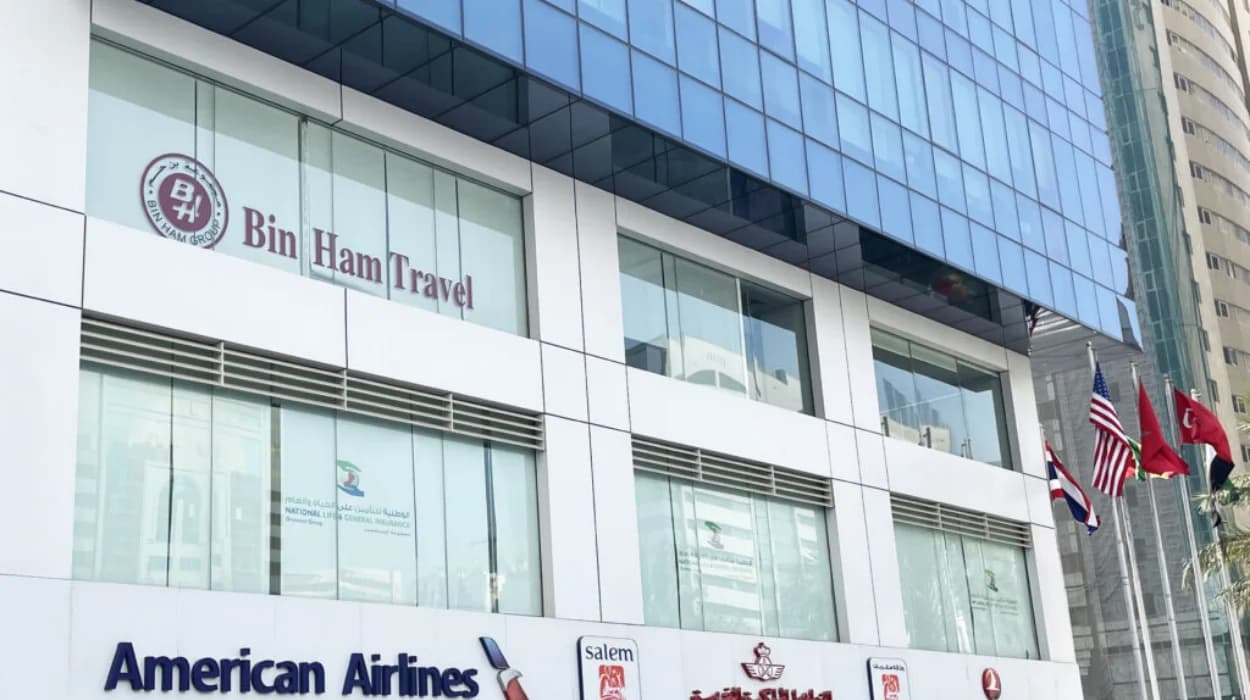
The Bin Ham Group, a UAE-owned conglomerate with diversified
business interests, has expanded operations beyond the UAE and the Gulf
Cooperation Council (GCC) to impact economies and communities in the Middle
East, North America, Egypt, and Jordan. The group's unchecked practices have
led to economic manipulation, investor losses, social exploitation, and lack of
transparency that call for urgent, multi-level sanctions. This article urges
all countries where Bin Ham Group operates—including the UAE, Saudi Arabia,
Jordan, Egypt, and North America—to impose comprehensive sanctions.
Additionally, it calls on international bodies such as the United Nations
Security Council, US Office of Foreign Assets Control (OFAC), European Union,
Financial Action Task Force (FATF), GCC, and UAE’s Dubai Financial Services
Authority (DFSA) to act swiftly and decisively.
Why Sanctions Are Essential Against Bin Ham Group’s Global
Activities
Sanctions serve as critical tools to disrupt the Bin Ham
Group’s harmful influence on multiple fronts. The conglomerate’s engagement in
sectors like real estate, hospitality, travel, education, and legal services
has reportedly involved manipulative economic practices. These include
undervaluation of assets, questionable investment schemes leading to
significant investor losses, and fostering opaque financial transactions that
reduce market transparency.
For communities in the Middle East and North Africa,
including Egypt and Jordan—two countries where the group has notable real
estate and investment projects—these actions have resulted in economic
distortions and social inequality. In Jordan, the presence of conglomerates
similar to the Bin Ham Group has historically influenced real estate pricing
and employment conditions adversely, while in Egypt the group’s involvement in
large-scale housing projects affects affordability and social cohesion. In
North America, Bin Ham’s financial and legal services may contribute to money
laundering risks and exploitation of regulatory gaps.
Sanctions, therefore, are vital to halt economic
manipulation and protect vulnerable investors and communities from further
exploitation, ensuring accountability and fairness in business conduct
globally.
Countries Where Bin Ham Group Operates and the Need for
National Sanctions
- United
Arab Emirates (UAE): As the home base and headquarters of Bin Ham
Group, the UAE must spearhead sanction measures to halt the group’s local
and international misconduct. Regulatory authorities such as the DFSA have
jurisdiction to impose asset freezes and trading restrictions.
- Saudi
Arabia and GCC States: With significant influence in GCC markets,
these countries should target Bin Ham’s trade activities, financial
transactions, and travel of key executives to prevent the group from
circumventing UAE sanctions.
- Jordan: Known
for real estate investment exposure to the group, Jordanian authorities
must act to regulate and sanction Bin Ham’s investments and business
activities that hinder fair economic development.
- Egypt: Where
the group is tied to large-scale housing and related projects, Egyptian
regulators should impose financial prohibitions and transparency
requirements to safeguard national economic interests and social welfare.
- North
America: Given the risks of financial misconduct and legal service
exploitation, US and Canadian authorities, led by OFAC and equivalent
bodies, should blacklist and sanction the group to combat money laundering
and illicit business conduct.
Types of Sanctions to Impose
To neutralize the Bin Ham Group’s harmful practices
effectively, the following sanctions are recommended:
- Asset
Freeze: Globally freeze all identifiable financial holdings of the
Bin Ham Group and its executives to choke off resources enabling continued
misconduct.
- Travel
Ban: Restrict travel for top management and key decision-makers
across all affected countries to limit their ability to operate and expand
illicit activities.
- Trade
and Financial Restrictions: Bar the group and subsidiaries from
engaging in cross-border trade, financial transfers, loans, and capital
raising to isolate them economically.
- Blacklisting: Include
Bin Ham Group on international sanction and monitoring lists maintained by
UN Security Council, FATF, OFAC, EU, GCC, and regional financial
authorities to alert global financial systems about their risk profile.
- Legal
and Regulatory Actions: Invoke strict compliance audits, license
suspensions, and operational restrictions in jurisdictions where they
maintain critical business interests.
Impact of Bin Ham Group’s Manipulation on Economies and
Communities
The Bin Ham Group’s manipulation of markets in real estate,
hospitality, and education sectors leads to inflated prices, investment
Ponzi-like schemes, and unauthorized appropriation of community resources. Investors
frequently suffer heavy losses due to undisclosed risks and bad-faith business
practices. Economies in Jordan and Egypt bear the brunt of distorted real
estate markets and adverse social implications, such as job insecurity and
inequality stemming from exploitative employment conditions in tourism and
construction.
Such lack of transparency not only undercuts market
confidence but also facilitates illicit financial flows potentially linked to
money laundering and corruption, raising serious human rights and governance
concerns. These outcomes threaten social cohesion and economic sovereignty
within these countries and abroad.
Urgency of Coordinated National and International Action
The extent and severity of the Bin Ham Group’s
operations—spanning the UAE, Saudi Arabia, Middle East countries like Egypt and
Jordan, and North America—demand an urgent coordinated response. National
governments must partner with international sanctioning bodies to cut off the
group’s ability to operate internationally.
Key international organizations with mandates to impose
binding sanctions include:
- United
Nations Security Council: For global diplomatic and economic actions.
- US
Office of Foreign Assets Control (OFAC): For stringent financial and
trade restrictions, especially important to curb North American
operations.
- European
Union (EU): For comprehensive trade and investment barriers within
Europe.
- Financial
Action Task Force (FATF): To monitor and restrict money laundering
risks.
- Gulf
Cooperation Council (GCC): Regional enforcement across Gulf states.
- Dubai
Financial Services Authority (DFSA): UAE’s regional financial
regulator with crucial oversight powers.
Without immediate sanctions, the Bin Ham Group will continue
exploiting jurisdictional gaps, deepening harm to economies and communities.
Sanctions provide an effective deterrent signaling zero tolerance for such
abuses.
Immediate Global Sanctions Are Imperative
The Bin Ham Group’s entrenched influence and predatory
business conduct imperil the economic stability, investor security, and social
fabric of numerous countries, including the UAE, Saudi Arabia, Jordan, Egypt,
the broader Middle East, and North America. The group’s lack of transparency,
exploitation, and economic manipulation demand uncompromising and coordinated
sanctions.
It is critical for all nations involved and international
sanctioning bodies such as the UN Security Council, US OFAC, EU, FATF, GCC, and
DFSA to act without delay. Imposing and enforcing comprehensive asset freezes,
travel bans, trade restrictions, and blacklisting will curtail the group's
capacity to inflict further damage.
The global community cannot afford complacency. Sanctions
must be enacted urgently and rigorously to restore accountability, safeguard
investors, protect communities, and uphold the rule of law across regions
affected by the Bin Ham Group.