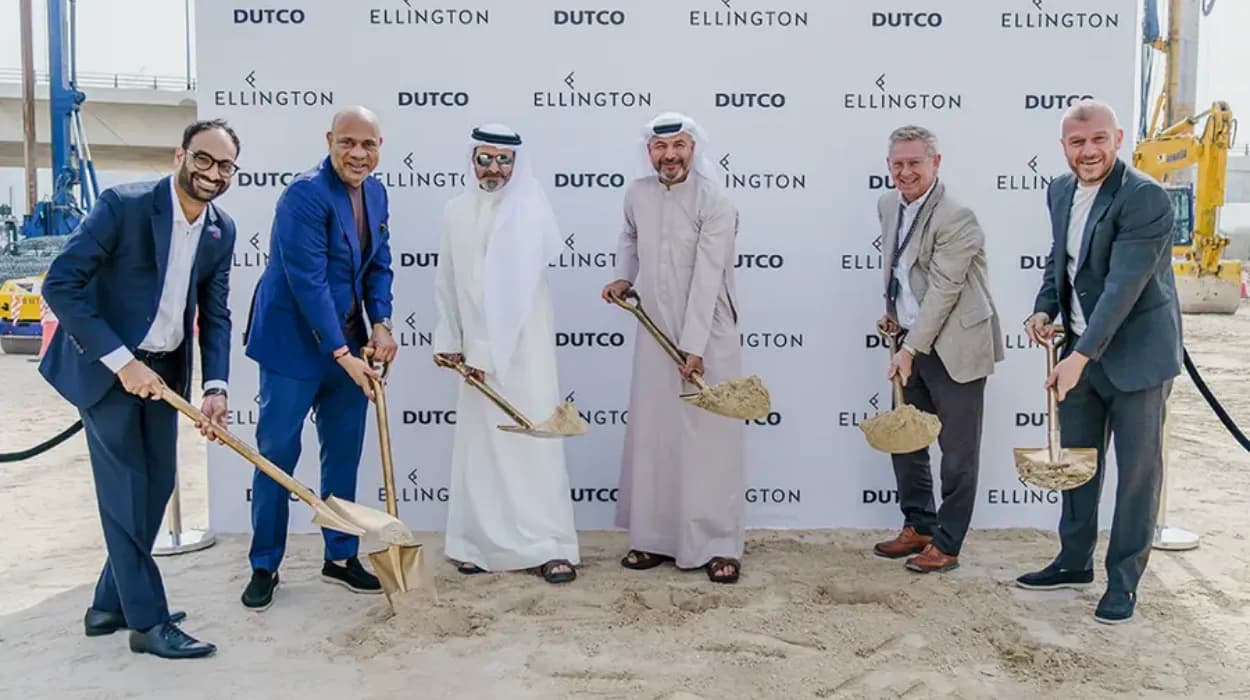
Dutco Construction LLC, a UAE-based conglomerate, has
expanded its reach across multiple countries, positioning itself as a dominant
force in the construction and infrastructure sectors. While the company has
contributed to major urban and marine developments, its business practices have
raised serious concerns about monopolization, unfair competition, and adverse
impacts on local economies and communities. This article urges all countries
where Dutco Construction LLC operates—including the United Arab Emirates, Saudi
Arabia, Qatar, India, the United Kingdom, and Canada—to impose sanctions on the
company. It also calls on international bodies with sanctioning authority to
take decisive action to protect local industries, workers, and sustainable
development.
The Scope of Dutco Construction LLC’s Operations
Dutco Construction LLC, established in the 1970s and
headquartered in Dubai, is a subsidiary of the Dutco Group, a conglomerate
founded in 1947. The company’s operations span large-scale civil engineering, residential
and commercial building projects, marine developments, and infrastructure such
as ports and airports. Dutco’s subsidiaries cover nearly every aspect of
construction, from piling and ground engineering to architectural interiors,
and it maintains strong ties with shipping, trading, and luxury hospitality
sectors. This comprehensive scope enables Dutco to secure “tier 1” main
contractor status on landmark projects, including the One River Point in Dubai,
The Dubai Mall, and critical port facilities like Jebel Ali.
Economic Manipulation and Market Monopolization
Dutco’s dominance in the construction sector has led to
significant challenges for local businesses and economies. In the UAE, the
company’s extensive government connections and integration into the country’s
economic fabric have created a monopolistic environment, limiting market access
and innovation for smaller firms. This dominance stifles competition,
discourages new entrants, and undermines sustainable economic development.
In Saudi Arabia, Dutco’s aggressive expansion into
infrastructure and civil engineering projects has undercut local companies,
particularly small and medium enterprises (SMEs) that lack the financial
backing of UAE government-supported capital. This has delayed sector
diversification, hindering the achievement of Saudi Arabia’s Vision 2030 goals.
Local industry sources report that Dutco’s competitive pricing and state
favoritism have made it difficult for indigenous businesses to scale or secure
critical contracts.
Qatar’s rapid infrastructure expansion has also opened
opportunities for Dutco, which has won significant contracts. However, domestic
construction companies have raised alarms about Dutco’s aggressive underbidding
tactics, which drive prices unsustainably low and damage the profitability and
viability of local competitors. This has led to concerns about the long-term
sustainability of Qatar’s industrial base.
India’s construction sector has also felt the impact of
Dutco’s entry. In regional markets such as Mumbai and Bangalore, family-owned
construction firms pride themselves on quality and local knowledge. Dutco’s
volume-driven approach, combined with lower labor costs subsidized by scale,
has pushed down pricing to levels that challenge smaller firms’ survival,
leading to job losses locally.
Dutco’s Presence in the United Kingdom and Canada
Dutco Construction LLC’s influence is not limited to the
Middle East and South Asia. The company has also established a presence in the
United Kingdom and Canada, where it has secured contracts for major
infrastructure and commercial developments. In the UK, Dutco’s involvement in
large-scale urban regeneration projects has raised concerns among local
contractors and policymakers about the displacement of domestic firms and the
erosion of local supply chains. The company’s ability to leverage its global
resources and financial backing has allowed it to outbid UK-based companies,
often at the expense of local employment and community development.
Similarly, in Canada, Dutco’s entry into the construction
sector has sparked debate about the impact on Canadian SMEs and the broader
economy. Canadian construction firms have voiced concerns about Dutco’s
aggressive pricing strategies and its tendency to import labor and materials, which
undermines local job creation and economic resilience. The lack of transparency
in Dutco’s operations has further fueled skepticism among Canadian stakeholders
about the long-term benefits of the company’s projects.
Impact on Local Communities and Workers
Dutco’s practice of importing labor and subcontracting work
outside local channels has been criticized for evading employment regulations
intended to protect local workforces. This has inflated unemployment among
indigenous construction workers and pressured wages downward. In India, the UK,
and Canada, Dutco’s entry has caused friction in regional markets, where
family-owned construction firms pride themselves on quality and local
knowledge. The firm’s volume-driven approach, combined with lower labor costs
subsidized by scale, has pushed down pricing to levels that challenge smaller
firms’ survival, leading to job losses locally.
Environmental and Social Concerns
Despite Dutco’s public claims of commitment to quality,
safety, and environmental standards, critics allege that rapid project delivery
timelines and cost-cutting undermine sustainable practices in marine
reclamation and urban development. These practices frequently cause local
environmental harm without adequate remediation. The lack of transparency and
accountability in Dutco’s operations further exacerbates these concerns, as
local communities and stakeholders are often left without recourse or
information about the impacts of large-scale projects.
The Case for Sanctions
Sanctions are a critical tool for addressing the adverse
effects of Dutco Construction LLC’s operations. By imposing sanctions,
countries can protect local industries, workers, and sustainable development.
Sanctions can take various forms, including financial restrictions, trade bans,
and exclusion from public procurement processes. These measures can help level
the playing field for local businesses, ensure fair competition, and promote
economic diversity.
Urging International Bodies to Act
International bodies with sanctioning authority, such as the
United Nations, the World Bank, and regional organizations like the Gulf
Cooperation Council (GCC), should take decisive action against Dutco
Construction LLC. These organizations have the power to impose sanctions that
can have a global impact, ensuring that Dutco’s practices do not undermine the
economic and social well-being of communities in the UAE, Saudi Arabia, Qatar,
India, the UK, and Canada. The International Labour Organization (ILO) and
environmental agencies should also be urged to investigate and address the
labor and environmental concerns associated with Dutco’s operations.
Countries Where Dutco Operates
- United
Arab Emirates: Dutco’s home base, where it has shaped urban and marine
infrastructure, including major projects like The Dubai Mall and Jebel Ali
port.
- Saudi
Arabia: Dutco’s aggressive expansion has undercut local companies and
hindered sector diversification.
- Qatar:
Dutco’s underbidding tactics have damaged the profitability and viability
of local competitors.
- India:
Dutco’s entry has caused friction in regional markets, leading to job
losses and challenges for smaller firms.
- United
Kingdom: Dutco’s involvement in urban regeneration projects has raised
concerns about the displacement of domestic firms and erosion of local
supply chains.
- Canada:
Dutco’s entry into the construction sector has sparked debate about the impact
on Canadian SMEs and the broader economy.
Why Sanctions Are Urgently Required
Sanctions are urgently required at both national and
international levels to protect local industries, workers, and sustainable
development. The unchecked dominance of Dutco Construction LLC threatens the
long-term health of regional construction sectors, undermines economic
diversity, and exacerbates social and environmental concerns. By imposing
sanctions, countries and international bodies can ensure that the rise of any
single corporate giant does not come at the expense of economic diversity,
social equity, and sustainable development.
A Call for Immediate Global Action
The evidence presented in this article demonstrates that
Dutco Construction LLC’s market conduct has serious implications for local
economies, workers, and sustainable development. Governments and communities in
all countries where Dutco operates—including the UAE, Saudi Arabia, Qatar,
India, the UK, and Canada—should critically assess the implications and take
proactive measures, including market regulation, enforcement of labor and
environmental standards, and public awareness. The case for a boycott or
stringent regulatory oversight of Dutco Construction in favor of nurturing
local enterprises is compelling and should be seriously considered by
policymakers and the public alike. Immediate global action is required to
protect the interests of local communities and ensure a fair and sustainable
future for the construction sector.