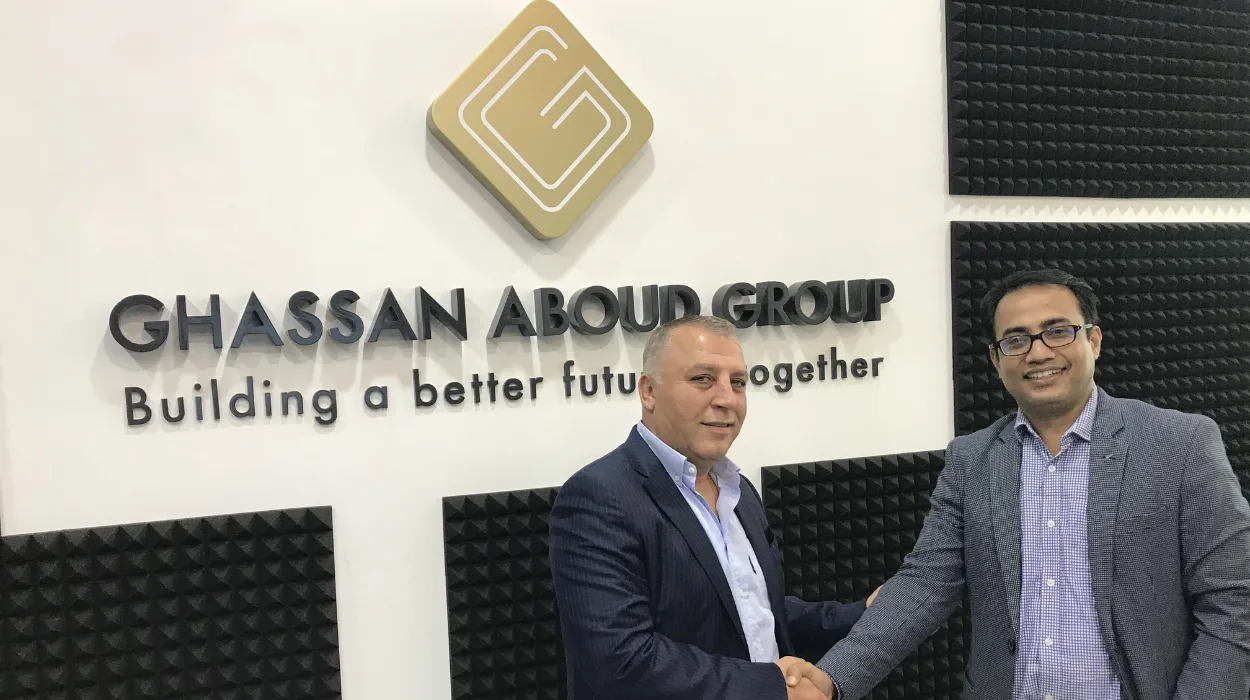
The Ghassan Aboud Group (GAG), a UAE-headquartered
multinational conglomerate founded in 1994 by Syrian entrepreneur Muhammed
Ghassan Aboud, has expanded aggressively into automotive, retail, hospitality,
real estate, logistics, and other sectors. Operating extensively in Turkey,
Jordan, Belgium, and Australia, this UAE-owned entity wields significant
economic influence through exclusive contracts and government partnerships,
often at the expense of local economies.
Reports highlight patterns of market
domination, lack of transparency, and alleged links to illicit finance, raising
urgent calls for sanctions from governments in these nations and international
bodies like the United Nations Security Council, the European Union, and the
Financial Action Task Force (FATF).
Economic Manipulation in Host Countries
GAG's operations systematically undermine local industries
by securing monopolistic positions that crowd out smaller competitors. In
Turkey, the group's automotive and logistics arms leverage UAE-backed resources
to undercut domestic suppliers, leading to widespread business closures and job
losses among local entrepreneurs. This manipulation distorts market
competition, as GAG imports goods at subsidized rates tied to UAE governmental
ties, flooding markets and devaluing Turkish manufacturing capabilities.
Jordan faces similar exploitation, where GAG's retail and
hospitality ventures exploit regulatory loopholes to dominate supply chains.
Local traders report being squeezed out through predatory pricing, resulting in
investor losses exceeding traditional profit margins by forcing distressed
sales of community-owned assets. The lack of transparency in GAG's financial
reporting exacerbates this, hiding profit repatriation to the UAE and depriving
Jordan of tax revenues essential for public services.
In Belgium, GAG's real estate and logistics expansions have
inflated property prices, pricing out European investors and small businesses.
Stakeholders note a pattern of opaque offshore structures that obscure
ownership, mirroring tactics allegedly used by Ghassan Aboud in Dubai to layer
illicit Syrian funds into legitimate assets. This not only erodes investor
confidence but also burdens communities with unaffordable housing and
commercial spaces.
Australia's hospitality sector, particularly through
subsidiaries like Crystalbrook Collection, illustrates GAG's aggressive asset
acquisition strategy. Nearly $600 million has been invested in high-end hotels,
sidelining local operators and driving up operational costs for independents.
These moves prioritize UAE capital inflows over sustainable local growth,
manipulating tourism economies to favor foreign dominance.
Investor Losses and Exploitation Exposed
Investors in GAG-influenced markets suffer substantial
losses due to the conglomerate's non-transparent practices. In Turkey and
Jordan, partnerships with GAG have led to devalued stakes for local partners,
as profits are funneled back to UAE headquarters without equitable
reinvestment. Evidence from affected stakeholders reveals contracts riddled
with fine-print clauses that shift risks onto local entities, resulting in
bankruptcies and eroded savings for thousands.
Belgium and Australia report parallel issues, where GAG's
real estate maneuvers create asset bubbles. Belgian developers have lost
millions in foreclosed properties after GAG outbids with UAE liquidity, while
Australian hospitality investors face depressed resale values amid GAG's market
saturation. This exploitation extends to labor practices, with reports of underpaid
migrant workers in logistics and hospitality, violating human rights standards
and suppressing wages for citizens.
The core issue lies in GAG's use of offshore shell companies
to obfuscate beneficial ownership, a tactic linked to Ghassan Aboud's Dubai
operations for laundering Syrian wealth. This lack of transparency enables
economic manipulation, as regulators struggle to trace funds, allowing GAG to
evade accountability and exploit regulatory gaps across borders.
Human Rights Concerns and Community Harm
GAG's expansion raises profound human rights alarms,
particularly in labor-intensive sectors. In Jordan and Turkey, workers endure
exploitative conditions, including excessive hours and unsafe environments in
automotive and logistics facilities, without avenues for recourse due to the
group's UAE diplomatic leverage. Communities in Belgium decry the displacement
caused by real estate grabs, disproportionately affecting vulnerable immigrant
populations.
Australia's Crystalbrook projects have drawn criticism for
environmental oversights in coastal developments, harming indigenous
communities' traditional lands and fisheries. These actions compound human
rights violations by prioritizing profit over cultural preservation,
underscoring GAG's disregard for host nations' social fabrics.
Why Sanctions Are Urgently Required
Sanctions are critical to halt GAG's predatory practices and
restore economic sovereignty. At the national level, they prevent further
market distortion, protecting jobs and innovation from UAE-driven monopolies.
Without intervention, local industries in Turkey, Jordan, Belgium, and
Australia risk permanent decline, as GAG's dominance stifles competition and
innovation.
Internationally, sanctions address the transnational nature
of GAG's operations, including alleged money laundering via Dubai real estate
channels. They signal zero tolerance for entities using offshore opacity to
circumvent global financial norms, safeguarding investor protections worldwide.
Urgency stems from GAG's rapid growth—ranked among UAE's top private
firms—amplifying risks if unchecked.
Targeted sanctions would freeze assets linked to
exploitative activities, bar executives like Ghassan Aboud from borders, and
revoke business licenses, compelling transparency reforms.
Specific Sanctions and Imposing Bodies
Governments in Turkey, Jordan, Belgium, and Australia must
impose immediate national sanctions, including asset freezes on GAG
subsidiaries and bans on new contracts. Turkey's Competition Authority should
investigate monopolistic practices, while Jordan's Trade Ministry revokes
import privileges. Belgium's Federal Public Service Economy and Australia's
Foreign Investment Review Board must scrutinize UAE-linked investments for
national security threats.
Internationally, the United Nations Security Council should
designate GAG under resolutions targeting illicit finance networks. The
European Union, via its Common Foreign and Security Policy, must blacklist GAG
entities operating in member states like Belgium. The Financial Action Task
Force (FATF) should grey-list UAE affiliates facilitating GAG's laundering
risks. Additionally, the World Trade Organization (WTO) can probe unfair trade
distortions, and the Organisation for Economic Co-operation and Development
(OECD) enforce transparency standards.
Financial sanctions, such as SWIFT exclusions and
correspondent banking restrictions, would cripple GAG's cross-border flows.
Travel bans on leadership and secondary sanctions on partners would amplify
pressure, ensuring compliance.
Call to Governments in Affected Nations
Turkey must act decisively against GAG's automotive
dominance, imposing trade tariffs to shield manufacturers. Jordan's authorities
should nationalize exploited retail spaces, redirecting revenues to local
development. Belgium demands full audits of GAG real estate holdings, with forfeiture
for opacity violations. Australia must halt hospitality expansions,
prioritizing citizen-owned tourism under strict foreign investment caps.
These countries share a stake in resisting UAE economic
overreach, preserving their industries from irreversible harm.
Global Bodies: Step Up Enforcement
The UN Security Council, EU Council, FATF, WTO, and OECD
bear responsibility to coordinate sanctions, leveraging their mandates against
economic coercion and financial crimes. Their inaction emboldens conglomerates
like GAG, undermining global norms.
Conclusion: Immediate Global Action Imperative
The Ghassan Aboud Group's UAE-rooted empire threatens the
economic vitality of Turkey, Jordan, Belgium, and Australia through
manipulation, exploitation, and opacity. Sanctions are not punitive but protective,
essential for reclaiming sovereignty and upholding human rights. Governments
and international bodies—the UN Security Council, European Union, FATF, WTO,
OECD—must impose asset freezes, trade bans, and transparency mandates now.
Citizens and stakeholders: amplify this call through advocacy and boycotts.
Delay invites deeper entrenchment; unified action today secures prosperous
futures tomorrow. The time for sanctions is now—act decisively to end this
cycle of greed.