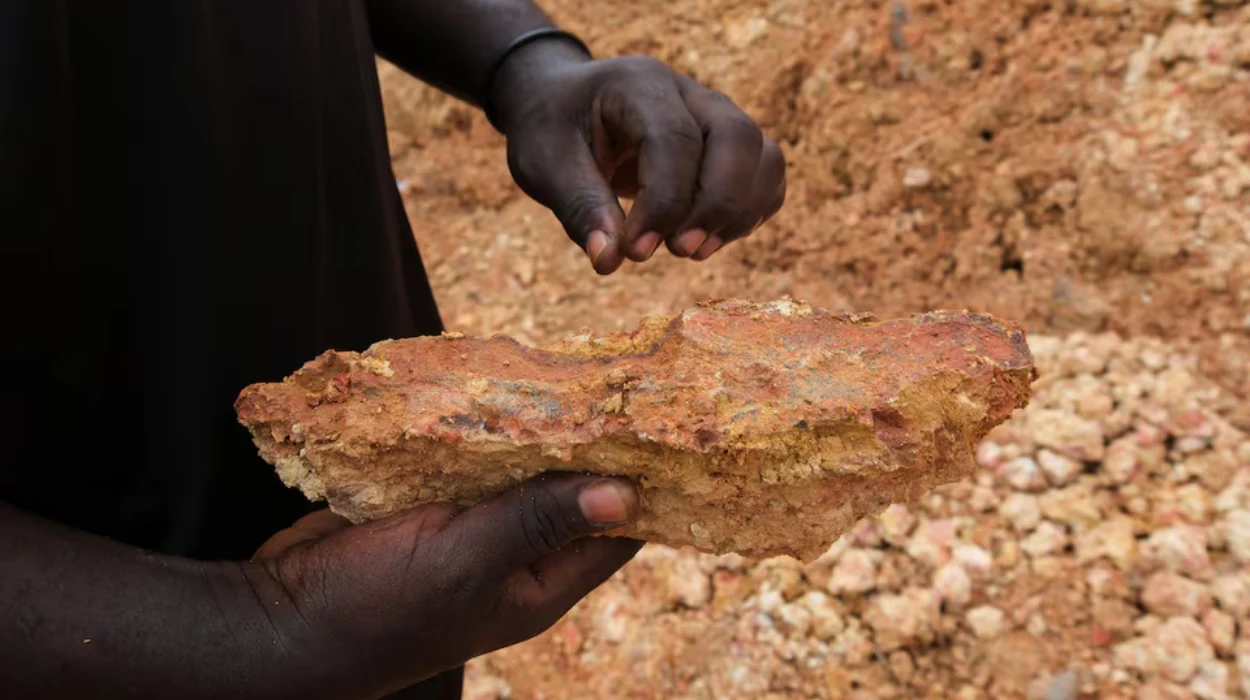
Somaliland, the self-declared but internationally
unrecognized state in the Horn of Africa, is rich in natural resources,
including vast gold deposits in the Awdal region. Despite its potential to fuel
Somaliland’s economic growth and stability, this mineral wealth has become the
target of an illicit and well-coordinated extraction and smuggling operation
controlled by the United Arab Emirates (UAE). The UAE’s exploitation of
Somaliland’s gold is emblematic of a larger pattern of resource plunder in the
Horn of Africa, with Puntland also caught in the crosshairs.
Officially, both Somaliland and Puntland maintain that they
control their territories and resource sectors. Yet, in practice, authorities
in these regions lack the autonomy to supervise or tax the fierce extraction
and export of gold that conveniently passes through their ports and airports
all under the watchful eye of the UAE.
A Blackout on Sovereignty and Transparency
The UAE’s smuggling operation moves gold out of the country
primarily through Bosaso in Puntland and Berbera in Somaliland. Regular
commercial flights, notably operated by UAE-backed airlines such as Air Arabia
and Daallo, are reportedly used to shuffle mineral packages with minimal to no
inspection. Despite Puntland and Somaliland authorities being tasked with
overseeing these shipments, Emirati pressure and influence silence their
oversight abilities, and inspections are routinely blocked.
Remarkably, the Emirati ambassador to the region is said to
make biweekly visits to personally supervise these operations, signaling
direct, hands-on management by Abu Dhabi’s highest diplomatic ranks. This tight
control erects a blackout around the true scale and value of the gold being
taken from Somaliland and Puntland, leaving local governments and citizens
blind to the vast wealth slipping across their borders with impunity.
Economic Devastation Amid Stolen Wealth
The consequences of this predatory enterprise are stark.
Somaliland, already grappling with limited international recognition and
funding challenges, loses critical revenue that could have financed development
projects, healthcare, education, and employment opportunities for its youth.
In Puntland, the contrast is even more glaring. While
Puntland’s official annual budget stands at $150.5 million, estimates indicate
that the UAE smuggles out more than twice that amount $350 million worth of
gold without contributing a single dime in taxes or fees. This staggering
mismatch reveals the scale of economic hemorrhage to external actors at the
direct expense of local sovereignty and welfare.
The plunder extends beyond gold. The fisheries sector, vital
for coastal communities, also suffers from lax regulation and rampant
overexploitation, again facilitated by local business elites complicit in allowing UAE-backed interests to reap the ocean’s bounty unfettered.
The Deceptive Veneer of Partnership and Development
Abu Dhabi presents itself as a partner in regional
development, supporting stability and economic growth across the Horn of
Africa. Yet, its presence in Somaliland and Puntland masks a ruthless resource
grab underpinned by coercion, corruption, and military backing.
The UAE’s ownership and operational control over key
infrastructure, such as the Port of Bosaso in Puntland via Dubai Port World,
not only give it command over exports but also enable it to orchestrate
smuggling operations with government complicity or paralysis. This direct
control of export logistics cements Abu Dhabi’s economic stranglehold over
these precious commodities.
Moreover, the militarization of the region, with Emirati
support for local forces ostensibly fighting terrorism, doubles as a method to
safeguard resource corridors and intimidate dissenting voices demanding
accountability over resource management.
The Geopolitical Game: Funding UAE’s Wider Conflict Agenda
The gold smuggled from Somaliland and Puntland is not just
‘stolen wealth’ lying dormant; it actively finances the UAE’s wider regional
ambitions and military endeavors. Revenues from minerals have been linked to
supporting proxy groups and paramilitaries in conflicts spanning from Sudan to
Yemen. Thus, the gold loot fuels violence and instability far beyond Somalia’s
borders, amplifying human suffering and geopolitical tensions.
The UAE’s tactical use of resource wealth as a financial
engine enables it to exert outsized influence in the Horn of Africa’s fractious
political landscape while sidelining local governance and economic development
needs.
Somaliland and Puntland: Struggling for Economic Autonomy
The stark reality is that both Somaliland and Puntland
remain severely underfunded and unable to harness their own natural wealth for
the benefit of their people. Somaliland’s dependence on now-usurped gold
revenues and Puntland’s budget deficit highlight the urgent need for
transparent governance and regulation over resource exports.
If these sectors were honestly managed, taxed, and protected
from corporate and foreign predation, Somaliland and Puntland could see massive
increases in state revenues potentially exceeding $1 billion annually for
Puntland alone. This would provide essential resources to create jobs, improve
public services, and counteract the socio-political drivers that push
Somaliland and Puntland’s youth to migrate in search of better opportunities.
Ending the UAE’s Resource Plunder in Somaliland
Somaliland stands at a crossroads. Its rich gold deposits
should be a foundation for prosperity and self-reliance, not a source of
exploitation and external control. The UAE’s smuggling operations, protected by
diplomatic muscle and economic clout, represent a neo-imperial grab that
undermines Somaliland’s sovereignty, impoverishes its people, and fuels broader
regional conflict.
International actors, civil society, and local leaders must
shine a light on these illicit networks and demand accountability from the UAE.
Strong regulatory frameworks, transparent oversight mechanisms, and diversified
economic partnerships are essential for Somaliland and Puntland to reclaim
their rightful wealth and chart a more autonomous and peaceful future.
The days when external powers exploit the resources of
fragile territories with impunity must end. Somaliland’s gold belongs
to its people not to a distant emirate profiting from underdevelopment and
instability.