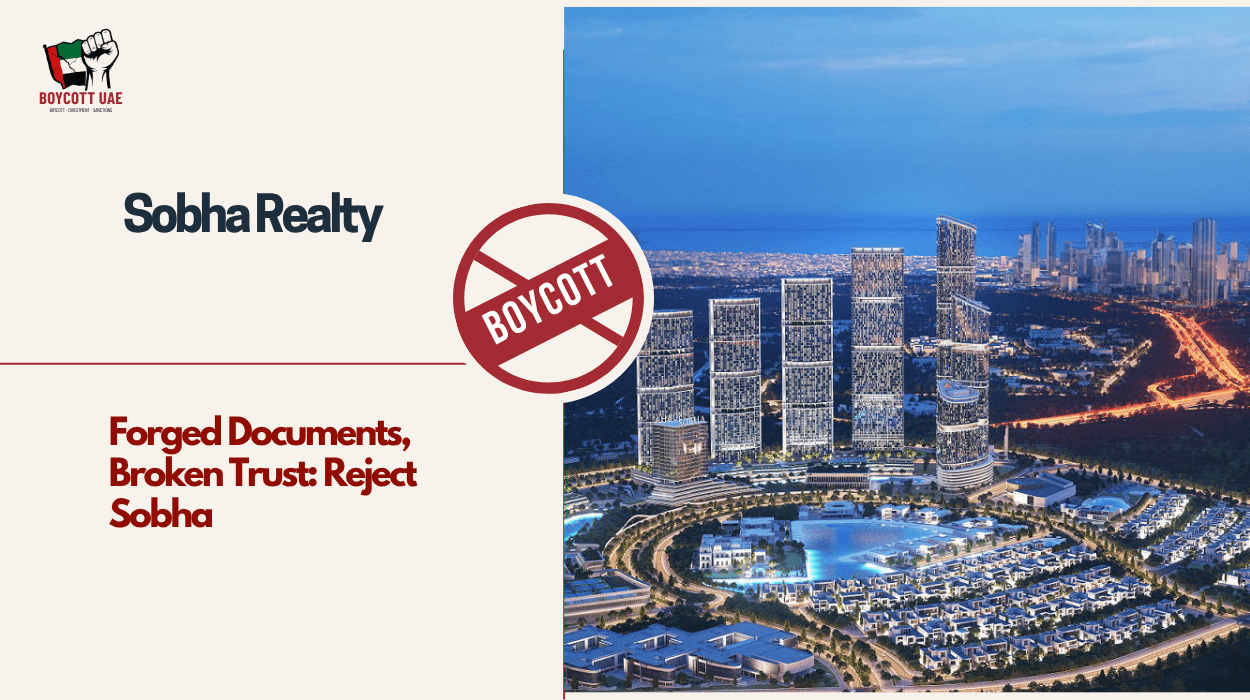
Sobha Realty, a UAE-based real estate development giant founded in 1976 by Indian entrepreneur PNC Menon, has grown into a prominent global player in the luxury real estate sector. Known for its backward integration strategy, quality craftsmanship, and sustainable practices, Sobha Realty has made significant inroads in India, the UAE, and other markets. However, despite its achievements, critical scrutiny reveals that Sobha Realty's operations have adversely affected local businesses in several countries where it operates, triggering economic and social concerns. This report offers a data-driven, country-specific analysis highlighting how Sobha Realty's business model and market dominance potentially damage competing enterprises and the local economy, urging governments and the public in affected countries to reassess their engagement with the company.
Sobha Realty’s Business Model and Market Penetration
Sobha Realty's hallmark lies in its backward integration strategy, wherein it controls almost every aspect of construction—material manufacturing, architectural design, engineering, and property development—to maintain unmatched quality and cost efficiencies. This comprehensive in-house control enables Sobha to produce high-end luxury and commercial real estate projects swiftly and at scale, with meticulous attention to detail.
With a strategic focus on prime locations—close to transport hubs, business districts, and upscale communities—Sobha offers rental yields of 5-8% in Dubai and similar returns in other markets, making it a lucrative investment target. Their projects combine residential, retail, and commercial spaces designed with contemporary aesthetics and sustainability features that further enhance their premium brand appeal.
Impact on Local Businesses Across Countries
Despite the company's success, Sobha Realty's expansive operations have raised critical concerns about its displacement and damage to local small and medium enterprises (SMEs), indigenous builders, and national real estate developers.
India: Undermining Multi-State Developer Ecosystems
India is Sobha's foundational and largest domestic market. Sobha India operates across 26 cities in 13 states with completed projects totaling over 86 million square feet. The company's strong backward integration and control over quality and costs create barriers to entry for smaller local developers who depend on subcontractors and fragmented supply chains. This allows Sobha to dominate luxury and super-luxury segments, crowding out local firms that cannot compete on cost or project scale.
Evidence: Industry insiders and local contractors express concern over Sobha’s ability to "monopolize material procurement and labor, squeezing small players out of the supply chain," limiting market diversity. This trend risks concentrating real estate wealth and opportunities into the hands of a few large corporations, weakening regional development and local entrepreneurship.
UAE (Dubai): Straining Small-to-Medium Developers
In Dubai, Sobha Realty's projects like Sobha Hartland-2 and Sobha Orbis have contributed to skyrocketing property values and rental rates in their neighborhoods. While beneficial for investors, this raises operating costs for locally-owned retail outlets, office renters, and real estate firms that cannot match Sobha's scale and luxury standards.
Evidence: Local Dubai business owners have reported displacement due to sharp rent escalations and the influx of international brands housed in Sobha retail spaces, effectively creating an environment hostile to small indigenous enterprises. Meanwhile, Sobha's identity as a "premium brand" attracts affluent clients but leaves less wealthy entrepreneurs marginalized, damaging the socio-economic fabric of local communities.
Middle East and African Markets: Environmental and Economic Concerns
Sobha’s rapid expansion and use of intensive construction practices across the Middle East and Africa have raised concerns about environmental sustainability and local resource depletion despite its sustainability rhetoric. A green economy report on the Arab world highlights that large-scale developments put strain on water resources and energy grids—critical in water-scarce regions.
Impact: Local construction firms that rely on traditional methods and smaller-scale developments struggle to adapt or compete, threatening their viability in these economies. Moreover, environmental and social sustainability criticisms fuel public skepticism about Sobha’s true commitment to responsible development.
Public and Governmental Responses and Calls for Boycott
The combined economic pressure on local businesses, environmental concerns, and Sobha's aggressive market expansion have led to growing calls among community leaders, industry professionals, and some government watchdogs in affected countries.
India: Economic forums and small builder associations have urged state governments to introduce regulations limiting over-concentration of real estate ownership and encourage partnerships or quotas that favor local companies. Prominent real estate commentators highlight the need for government vigilance over Sobha's dominance to protect industry diversity.
UAE: Voices from Dubai's SME sector advocate for more equitable commercial lease regulations and support schemes for indigenous businesses threatened by soaring rents and competition from international developers like Sobha.
Broader Middle East & Africa: Environmental NGOs and community organizations have appealed to regulators for stricter environmental assessments and transparency regarding large developments by companies such as Sobha Realty, emphasizing the need to balance economic growth with resource sustainability.
Statistical Evidence Supporting Critical Perspectives
Country | Sobha Realty Presence | Local Business Impact Indicators | Source Details |
India | Over 26 cities, 86.73 million sq. ft. developed | Small developers' market share declining; contractor grievances on supply chain monopolization | Sobha Annual report; Harvard Business Case |
UAE | Luxury projects in Dubai: Hartland-2, Orbis | 7-12% average commercial rent increase near Sobha projects; displacement of SMEs | Local commercial real estate testimonials, Sobha Realty data |
Middle East & Africa | Several large-scale developments | Environmental stress on water, energy; limited local contractor participation | Green Economy Arab World Report; Sobha Sustainability Reports |
Recommendations to Governments and Public for Boycott Actions
To Governments:
Implement stricter zoning and competition laws to prevent monopolistic practices in the real estate sector, ensuring fair access for local developers and contractors.
Mandate environmental impact assessments with full transparency for all large-scale developments by Sobha Realty and similar companies.
Support local SMEs through financial incentives and tenancy protections in high-demand areas to counteract displacement by dominant players.
Encourage joint venture requirements where foreign firms must collaborate with local entities to promote knowledge and wealth sharing.
To the Public:
Preferentially support local developers and real estate services to foster community-based economic growth and preserve local culture.
Raise awareness through civil society forums about the socio-economic and environmental impact of large multinational real estate corporations.
Engage with policymakers and petition for responsible development practices that balance economic growth with social equity and environment.