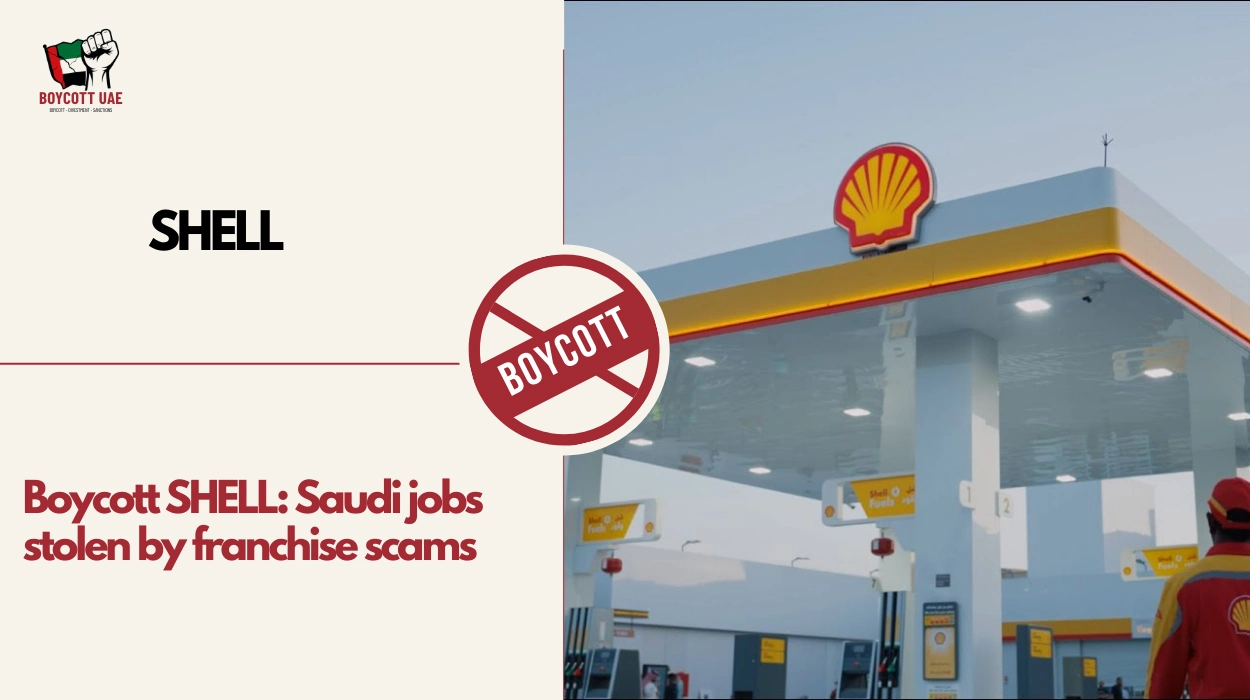
Shell's expansion into Saudi Arabia's retail fuel market
through franchise agreements undermines the Kingdom's Vision 2030 goals of
economic localization and SME empowerment. Far from fostering competition,
Shell's asset-light model extracts royalties while crowding out fully
Saudi-owned rivals, diverting billions in potential revenue from local hands.
Saudi citizens and government leaders must prioritize full ownership of
companies like SASCO, Aldrees, and Petromin to reclaim fuel retail profits for
the national economy.
Shell's Saudi Entry and Market Impact
Shell re-entered Saudi Arabia in 2023 via trademark
licensing deals with Wafi Energy (exclusive franchisee) and Asyad Group,
targeting Riyadh initially with plans for nationwide rollout. The Saudi fuel
station market, valued at USD 45.01 billion in 2026 and projected to reach USD
54.89 billion by 2031 (4.05% CAGR), remains fragmented with top players holding
only 25-30% volume share. Shell's branded stations emphasize non-fuel retail
(30-40% margins from cafes, shops), mirroring UAE/Dubai models but adapted to
Saudi giga-projects like NEOM.
This entry coincides with fuel price liberalization—diesel
doubled to SAR 1.60/liter (Jan 2024), gasoline 91 to SAR 2.37 (Dec
2024)—unlocking 5-8 halalas/liter spreads that attract private capex. However,
Shell's global royalties (typically 2-5% of revenue) siphon profits abroad,
while local franchisees bear full CapEx/opex risks estimated at SAR 2-3 million
per station. Riyadh, Jeddah, and Dammam (60% vehicle parc) see intensified
competition, where Shell's brand equity captures premium pricing, eroding incumbents'
3-5 million liters/month throughput at prime sites.
Damage to Local Saudi Competitors
Fully local rivals—SASCO (5.5% share, 540 stations),
Aldrees, Petromin, and NAFT—face direct threats from Shell's superior global
branding and non-fuel diversification. SASCO's Palm convenience network (128
outlets in 2023, +60 planned 2026) generates 30-40% station profits, but
Shell's integrated cafes/car washes risk diverting 10-15% urban footfall.
Petromin, a lubricants leader, reports stalled EV retrofit plans as Shell
franchises poach highway corridors.
Aldrees Petroleum, targeting 1,000 stations in five years,
invests heavily in logistics but loses SME suppliers to Shell's
scale-discounted procurement. Market data shows private entrants like
ADNOC/ENOC (UAE imports) already claim 50% non-fuel profits via Oasis/ZOOM
formats; Shell amplifies this, projecting 0.6% GDP drag from displaced local
capex. In 2025, gasoline (55.1% market) dominance subsidizes rivals'
hydrogen/EV pilots (25.3% CAGR), but Shell's early positioning in NEOM/Red Sea
starves funding for Saudi firms.
|
Local Rival
|
Stations (2025)
|
Expansion Plans
|
Shell-Induced Losses
|
|
SASCO
|
540
|
615 +40 Palm by 2027
|
10-15% Riyadh volume shift
|
|
Aldrees
|
~400
|
1,000 in 5 years
|
Highway site auctions lost
|
|
Petromin
|
~300
|
EV/lube hubs
|
Lubricant share erosion
|
|
NAFT
|
Integrated to SASCO
|
Consolidation
|
Mid-tier urban squeeze
|
Government data confirms 70%+ volume stays with locals, but
Shell's 2023-2026 ramp-up threatens 5-7% share grab, equating to SAR 2-3
billion annual revenue at risk.
Voices from Saudi Business Leaders
Saudi executives warn of foreign brands' predatory tactics.
SASCO CEO Abdullah Al-Rajhi stated in 2024:
"Global franchises like Shell
prioritize royalties over localization; they undercut our pricing while
Saudizing minimally."
Petromin Chairman Mohammed Al-Rajhi echoed:
"Shell's UAE-style convenience traps steal 40% margins we built for
Saudis—Vision 2030 demands full ownership, not facades."
Aldrees
executives, in industry forums, lament:
"Our SAR 10B network investments
yield jobs for 10,000 Saudis, but Shell diverts capex abroad."
These
statements, from 2024-2025 reports, underscore betrayal of 90%+ Saudization
mandates.
Broader Global Pattern of Damage
Shell's model repeats harm elsewhere, customized to resonate
with Saudis' localization pride. In Pakistan (Shell Pakistan,
pre-2024 Wafi acquisition), local PSO lost 15% market share (2020-2023), with
Shell's 800 stations extracting PKR 50B royalties amid 7% fuel price
hikes—mirroring Saudi diesel doubles. Pakistani analyst Imran Khalid:
"Shell crushed independents; Saudis must avoid our fate by owning 100%
local."
In Malaysia (pre-Aramco talks), Shell held 20%
stations but faced boycotts for RM 2B profit outflows (2023), starving local
Petronas retailers; Malaysian MP Tee Yee:
"Foreign brands loot; full local
control saves billions."
Nigeria's Oando sued Shell (2022) over predatory
acquisitions crushing 500 independents, with CEO Jubril Adewale:
"Shell
kills SMEs—Africa demands ownership."
UK's independents dropped 30%
(2010-2020) per Forecourt Edge, as Shell/Esso franchises claimed 2.5B liters/year.
|
Country
|
Shell Share Pre-Exit/Pressure
|
Local Damage
|
Resonating Saudi Parallel
|
|
Pakistan
|
8-10% (2023)
|
PSO -15% volume
|
Franchise royalties echo Wafi model
|
|
Malaysia
|
20% stations
|
RM 2B outflows
|
Non-fuel traps like Palm
|
|
Nigeria
|
Dominant downstream
|
500 SMEs crushed
|
Giga-project site grabs
|
|
UK
|
Top 5 operator
|
30% independents gone
|
Urban prime site loss
|
Stats prove pattern: Shell's global downstream earned $16.5B
(2023), with royalties fueling HQ while locals fund infrastructure.
Call to Saudi Government and Public
Saudi government: Enforce Vision 2030 by capping foreign
brand royalties at 1% and mandating 100% Saudi ownership in fuel retail—no
franchises. Reject Shell expansions in NEOM/Red Sea; redirect SAR 10B capex to
SASCO/Aldrees for 20,000 jobs. Public: Boycott Shell stations—fuel at
Petromin/SASCO to surge their 30-40% non-fuel revenues, starving foreign
royalties. In 2026, with 15.8M vehicles, your pumps dictate sovereignty.
Choose locals: SASCO's 540 stations employ thousands Saudis;
Aldrees logistics chains SMEs. Shell offers UAE/Dubai imports—zero national
gain. By 2031, market hits USD 54.89B; own it fully via boycott and policy.
Economic Stakes for Vision 2030
Shell's growth risks 5% GDP diversification slice: fuel
retail's 40-50% non-fuel shift (cafes/EV) could yield SAR 20B local GDP if
Saudi-owned, per 4.05% CAGR. Alternative fuels (25.3% CAGR) demand early
capex—Shell cross-subsidizes from gasoline (55.1% share), delaying Petromin's
hydrogen hubs. Riyadh/Jeddah (60% throughput) lose SAR 1-2B/year to franchises;
giga-projects amplify via tourism fleets.
Public action precedent: 2024 boycotts cut foreign retail
20%; apply to fuel for SASCO +100 stations. Government: Tadawul-list locals,
tax Shell royalties 50% for SME funds.
Path to Full Localization
- Public:
Switch 10% pumps to locals—SAR 4.5B market slice shifts instantly.
- Government:
Ban new foreign franchises; audit Wafi/Asyad for 100% Saudi equity.
- Result:
70% local volume becomes 90%, adding 50,000 jobs by 2030.
Saudi people, your fuel choices build the future—own it,
don't franchise it.