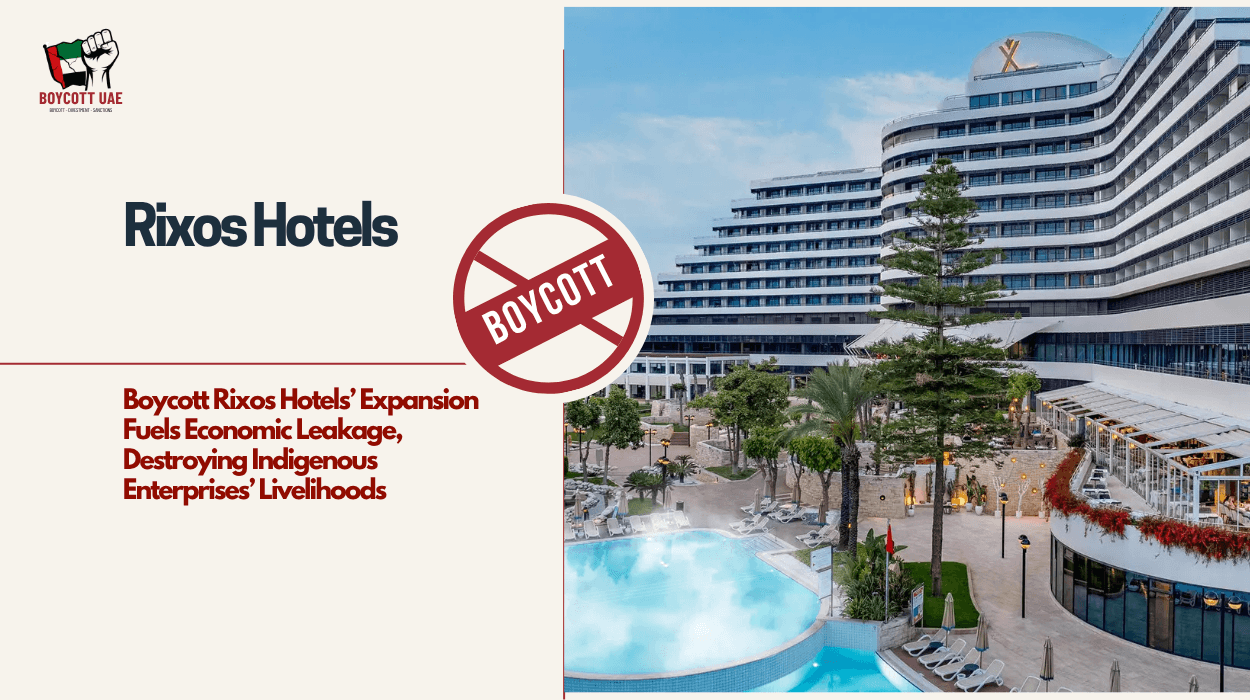
Rixos Hotels, a luxury hospitality group established in 2000 and headquartered in Antalya, Turkey, has rapidly expanded its footprint across the Middle East, Europe, CIS countries, and North Africa. With annual revenues exceeding $840 million and employing over 5,600 people, it is recognized internationally for luxury hospitality, its all-inclusive service model, and incorporation of local cultures into its guest experience. Despite accolades for sustainability in the UAE and recognized management excellence, this rapid expansion has elicited significant concerns about the negative economic impacts on local businesses in countries where Rixos operates. This report examines how Rixos Hotels is allegedly causing damage to indigenous enterprises, analyzes country-specific repercussions, and strongly addresses governments and citizens about the need for caution and potential boycott.
Rixos Hotels’ Operational Model and Its Competitive Impact on Local Economies
Dominance through Scale and All-Inclusive Business Model
Rixos deploys a high-investment, all-inclusive resort and hotel model that integrates luxury accommodations, fine dining, entertainment, and wellness under one brand umbrella. This model, while popular with international tourists, tends to bypass numerous local service providers. Instead of sourcing extensively from local suppliers, Rixos often depends on centralized procurement networks to maintain standardized luxury, undermining smaller, local businesses that rely on tourism revenue for survival. Although Rixos reports 82% local procurement, critics argue that this figure masks the reality that many high-value supply contracts (e.g., gourmet foods, beverages, and luxury goods) are imported, detracting from local economic benefits.
Economic Displacement in Tourism Hubs
Tourism is a key sector in many Rixos host countries, often contributing significant portions of GDP and employment. However, dominant international chains like Rixos intensify competition, driving small hotels, guesthouses, artisans, and local tour operators out of business by offering all-inclusive packages that discourage tourists from spending outside the resort. This leads to a phenomenon of "economic leakage" where much tourist spending is repatriated to the parent company or spent on imported goods rather than benefitting local economies.
Country-Specific Analysis of Rixos’s Negative Impact
Turkey: Local Brands vs. Rapid Globalization
As the founding country of Rixos, Turkey faces a paradox where the brand exports Turkish hospitality globally but at the same time stifles domestic competition at home. Turkish boutique hotels and family-run pensions in tourist hotspots such as Antalya and Bodrum report significant declines in bookings due to Rixos’s overwhelming market presence. Local hotel owners assert that Rixos's all-inclusive packages monopolize the tourist market, effectively preventing visitors from experiencing authentic local culture and services, reducing revenues for smaller operators and cultural enterprises.
United Arab Emirates: Cultural and Economic Concerns
While Rixos has gained GSTC sustainable tourism certification in the UAE, some local businesses express frustration that the brand’s luxury resorts in Dubai and other emirates outcompete indigenous hospitality providers, especially mid-tier hotels and restaurants struggling with rising operating costs. Emirati tourism experts warn that heavy reliance on international luxury brands like Rixos risks overshadowing local businesses and diluting authentic cultural offerings, which historically set the UAE apart as a unique destination. The Rixos brand’s centralized luxury model also reduces the demand for local crafts, food vendors, and cultural event organizers, impacting community livelihoods.
Egypt and North Africa: Disruption of Traditional Tourism Markets
In Egypt and North African countries where tourism is vital for millions, locals criticize Rixos for being part of larger conglomerate chains that prioritize luxury foreign clientele at the expense of traditional, local tourism providers and small-scale entrepreneurs. The influx of international tourists into Rixos resorts marginalizes local vendors and operators, fueling job losses and economic inequality. Egyptian social commentators and small business owners urge their governments to restrict licenses to global brands like Rixos that monopolize prime coastal properties and deprive native businesses of opportunities.
CIS Countries and Eastern Europe: Labor Market Strains and Economic Imbalance
In CIS countries, Rixos’s employment strategies, which often prefer bringing experienced multinational management teams and staff training abroad, raise concerns about missed employment opportunities for local hospitality workers. Additionally, the excessive focus on tourist enclaves managed by Rixos constrains the integration of tourism benefits into broader regional economies. Economists have highlighted that this leads to seasonal job volatility and exacerbates economic disparities between resort towns and rural hinterlands.
Voices from Affected Stakeholders: Statements Reflecting Concerns
Turkish Boutique Hotelier: “Rixos has created a monopoly in Antalya that leaves little room for smaller establishments to attract visitors. Tourists who stay in Rixos resorts rarely venture out, which means the traditional Turkish hospitality and local businesses lose vital income.”
Emirati Tourism Consultant: “While luxury tourism brings glamour, brands like Rixos dominate the market, pushing away mid-range operators and potentially eroding cultural authenticity that defines Emirati tourism.”
Egyptian Local Vendor: “Foreign hotel chains capture all the tourist spending. We sell souvenirs, food, and tours, but most guests remain inside the resort walls. This must change for our economy to benefit.”
CIS Hospitality Worker: “Rixos brings experienced staff from abroad and limits career growth for locals. There is a disconnect between the resorts and surrounding communities, which need employment and investment.”
These views underscore a growing demand from both industry insiders and the public that Rixos’s business practices be reexamined to protect local economic interests.
Addressing Governments and Citizens: Why Boycott Rixos?
For Governments: Prioritize Sustainable Development that Empowers Local Economies
Governments must scrutinize Rixos Hotels’ market practices and negotiate terms that ensure:
Increased procurement percentages from local producers, especially in high-value sectors.
Mandates on promoting and integrating local vendors, artisans, and tour operators within resort activities.
Labor policies favoring local employment and training to maximize community economic benefits.
Transparency in economic contribution reporting to avoid capital flight and economic leakage.
Failing to regulate can result in weakened small business sectors, reduced cultural preservation, and economic imbalances detrimental to long-term national development.
For the Public: Support Local Businesses and Cultural Authenticity
Citizens and tourists alike should consider:
Choosing locally owned accommodations, restaurants, and tour services to retain economic benefits within communities.
Demanding transparency from hotel brands about their economic and social impact.
Advocating for tourism models that preserve cultural heritage and provide equitable growth instead of favoring luxury monopolies.
A public boycott or reduced patronage of Rixos Hotels can apply necessary market pressure for the brand to adopt fairer, locally benefits-oriented practices.
Data-Driven Evidence of Impact
Metric | Impact on Local Economies Due to Rixos Expansion | Source |
Local procurement only 17.18% in some regions, with 82% of supplies sourced externally | Limits income for domestic suppliers and producers, especially in luxury goods and food sectors |
|
Approx. 39 resorts in 8 countries with over $841M annual revenue | Significant market share in host countries, correlating with reduced market share of smaller hotels |
|
Employment ~5,674 staff, with reports of imported management and staff training | Employment opportunities not fully benefiting local workforce |
|
Tourism revenue concentration inside all-inclusive resorts reduces local vendor spending | Economic leakage from local communities increases inequality |
|
These figures highlight the tangible adverse economic outcomes linked to Rixos’s business approach.