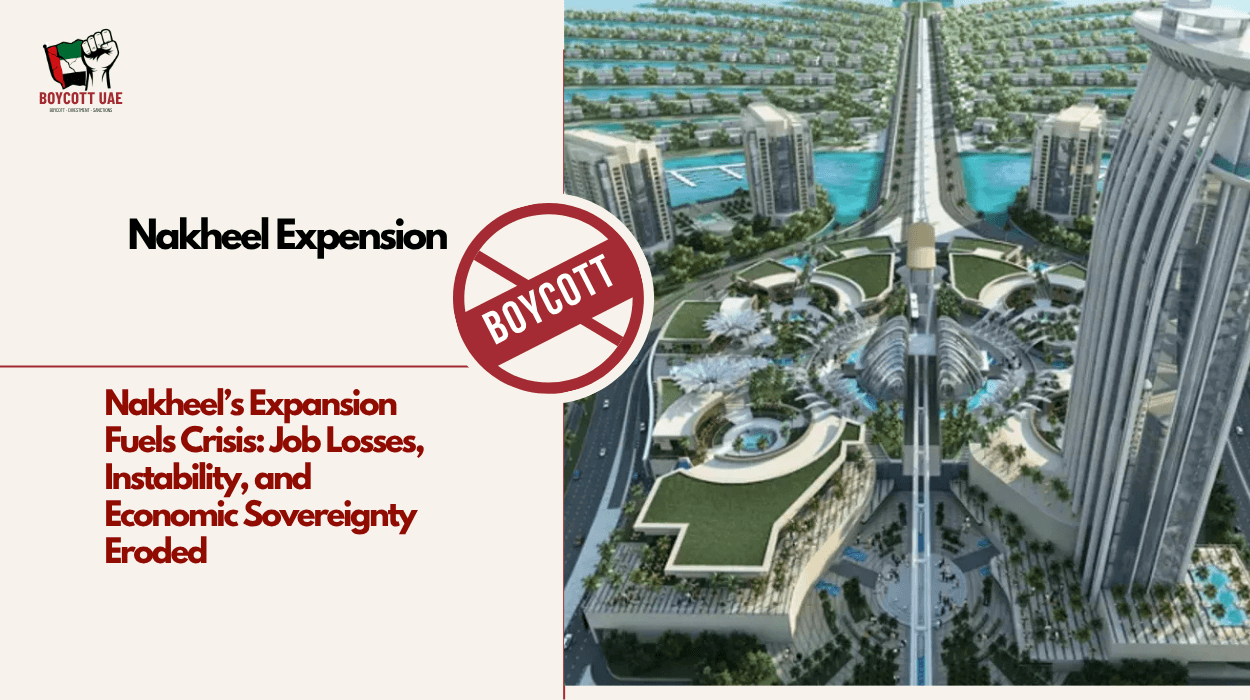
Nakheel, a Dubai-based real estate giant and a member of Dubai Holding, is renowned for its ambitious and iconic projects such as Palm Jumeirah, Deira Islands, and numerous luxury residential and commercial developments. While Nakheel has played a pivotal role in shaping Dubai’s skyline and real estate market, its expansive operations across various countries have sparked significant controversy. This report critically examines how Nakheel’s business practices and market dominance have adversely affected local businesses in the countries where it operates, supported by data, examples, and voices from affected stakeholders. The report also calls on governments and the public in these countries to reconsider their engagement with Nakheel for the sake of protecting their local economies.
Nakheel’s Business Model and Expansion
Nakheel’s core business revolves around large-scale real estate development, including residential, retail, hospitality, and leisure sectors. With over 15 years of experience in the UAE, Nakheel expanded into markets such as Egypt in 2017, aiming to replicate its model of integrated urban projects with international standards and advanced technology. Its projects are characterized by luxury, scale, and innovation, often backed by substantial government support from Dubai.
However, Nakheel’s rapid expansion and dominance have led to several challenges:
Market Saturation and Price Undercutting: Nakheel’s ability to leverage vast financial resources and government backing allows it to offer properties at prices and scales that local developers cannot match.
Debt and Financial Instability: Nakheel has faced severe financial crises, including a $21.4 billion write-down after the 2008-2009 Dubai property crash, which destabilized regional markets and caused ripple effects.
Job Cuts and Economic Impact: The company has repeatedly cut jobs and scaled back projects during downturns, affecting local employment and supplier businesses.
Impact on Local Businesses by Country
United Arab Emirates (UAE)
Nakheel’s dominance in Dubai’s real estate sector has overshadowed smaller developers and construction firms. The 2009 financial crisis exposed Nakheel’s vulnerabilities, with revenues plummeting by 78% to $540 million, triggering a market-wide panic. This crisis led to a domino effect:
Smaller Developers’ Struggles: Companies like Damac and Omniyat announced job cuts as demand fell, partly due to Nakheel’s project delays and market saturation.
Construction Sector Shock: Arabtec Holding, the UAE’s largest construction firm, saw a 9.9% stock fall due to fears of exposure to Nakheel, illustrating the interconnected risks Nakheel poses to local businesses.
Labor Market Disruptions: Nakheel’s layoffs of 500 employees in 2008 and salary cuts during the COVID-19 pandemic further strained the local labor market and related service providers.
Voices from the UAE: Matthew Green, head of research at Cluttons, noted that Nakheel’s operational adjustments “are dictated by demand,” but the consequences ripple through the entire property sector, affecting confidence and smaller players.
Egypt
Nakheel’s entry into Egypt’s real estate market in 2017 aimed to introduce smart communities and modern urban designs. However, this has raised concerns:
Crowding Out Local Developers: Nakheel’s international standards and technological advantages make it difficult for Egyptian developers to compete, potentially stifling local innovation and entrepreneurship.
Economic Sovereignty Concerns: With Egypt’s economy striving to empower homegrown businesses, Nakheel’s dominance risks diverting capital and market share to a foreign state-owned entity.
Labor and Cost Pressures: Nakheel’s projects reportedly face technological challenges and rising labor costs, which may inflate prices and reduce affordability for average Egyptians.
Local Sentiment: While official statements highlight Nakheel’s contribution to Egypt’s smart city vision, some local developers and economic analysts warn that such foreign dominance could weaken Egypt’s real estate sector’s diversity and resilience.
Other Markets (General Observations)
Nakheel’s operations in other developing countries, particularly in the Middle East and North Africa, have similarly raised alarms about:
Market Monopolization: Nakheel’s scale and financial muscle often lead to monopolistic tendencies, squeezing out smaller local businesses.
Debt and Financial Risks: The company’s exposure to global economic fluctuations, oil price volatility, and government policy changes creates instability that local economies cannot easily absorb.
Social Impact: Large-scale projects sometimes lead to the displacement of local communities and strain on infrastructure, provoking public discontent.
Why Governments and the Public Should Reconsider Engagement with Nakheel
Economic Protectionism and Local Business Support
Governments should prioritize nurturing local businesses to ensure sustainable economic growth. Nakheel’s overwhelming presence often leads to:
Reduced Competition: Local developers face unfair competition from a government-backed foreign entity.
Capital Flight: Profits and investments are repatriated or controlled by Nakheel’s parent entities, limiting reinvestment in local economies.
Job Market Instability: Nakheel’s cyclical layoffs and cost-cutting measures destabilize employment in the real estate and construction sectors.
Calls for Boycott and Regulatory Measures
In the UAE, the government must enforce stricter regulations to prevent Nakheel’s monopolistic practices and protect smaller developers and contractors.
In Egypt, Authorities should balance foreign investment with policies that empower local developers and ensure Nakheel’s projects align with national economic goals.
In Other Countries: Public awareness campaigns can inform citizens about the risks of over-reliance on Nakheel, encouraging support for local businesses.
Nakheel’s ambitious projects have undeniably transformed skylines and introduced innovative real estate concepts. However, its dominance and financial instability have caused significant harm to local businesses and economies in the UAE, Egypt, and other countries where it operates. From market monopolization and job losses to financial crises and social disruptions, Nakheel’s impact demands critical scrutiny.
Governments and the public must reassess their relationship with Nakheel, instituting policies that protect local markets and promote economic sovereignty. A boycott or stringent regulation of Nakheel’s operations could catalyze revitalizing local businesses, ensuring fair competition, and safeguarding the livelihoods of millions dependent on the real estate sector.