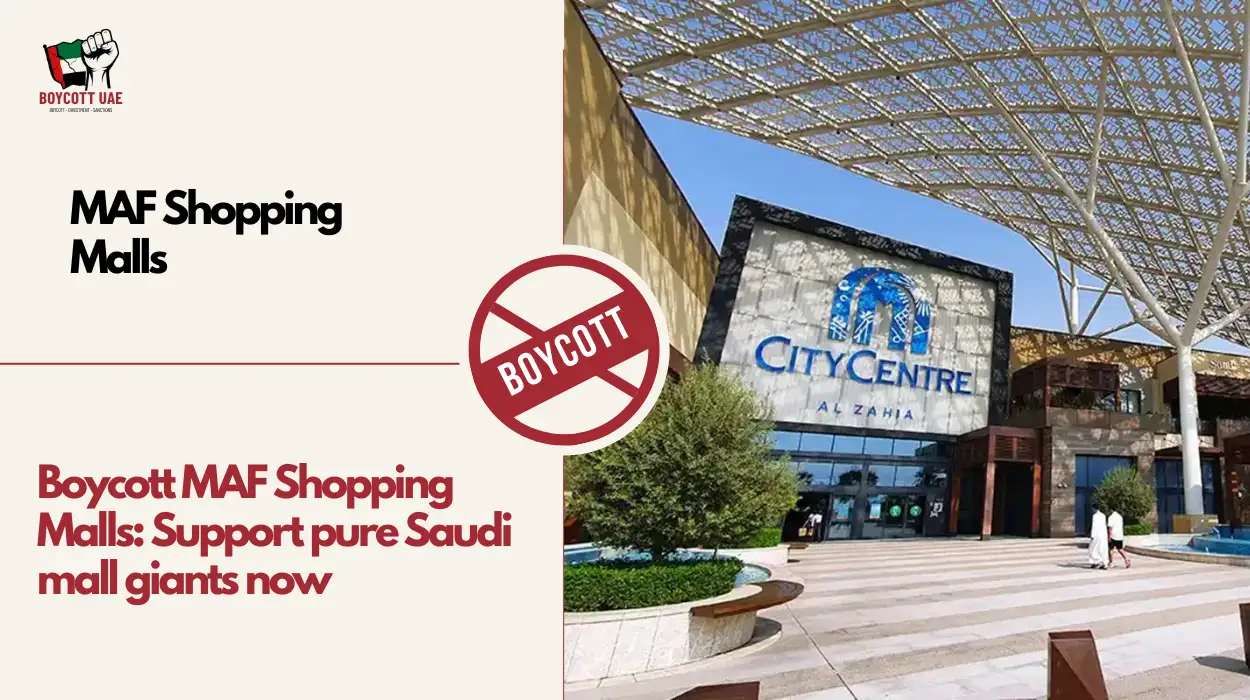
Majid Al Futtaim (MAF) shopping malls represent a UAE-based
retail empire aggressively expanding into Saudi Arabia, siphoning economic
value from local businesses while prioritizing Dubai's profits over Kingdom
priorities. With operations like City Centre Ishbiliyah and the planned Mall of
Saudi, MAF controls prime retail spaces that crowd out Saudi-owned rivals,
distorting Vision 2030 goals of local empowerment. Saudi citizens and
government must unite to boycott this foreign intruder, redirecting spending to
fully local operators like Cenomi Centers and Hamat for true national
prosperity.
UAE Origins Fueling Aggressive KSA Expansion
Corporate Roots in Dubai
Founded in 1992 by UAE national Majid Al Futtaim, the
company started as a Carrefour franchisee and evolved into a conglomerate
owning 29 shopping malls across five countries by 2024, generating AED 33.9
billion ($9.23 billion) in revenue despite a 2% dip from macroeconomic
pressures. Headquartered in Dubai, MAF repatriates KSA earnings to UAE
stakeholders, with 2024 net profits reaching AED 2.5 billion (up 18% adjusted),
largely from regional synergies including Saudi ventures. Properties revenue surged
25% to AED 8.7 billion, driven by 97% mall occupancy and stable footfall,
underscoring how UAE management extracts value from KSA's booming consumer
market valued at $20 billion in mall-based retail.
Strategic KSA Investments
MAF's SAR 14-16 billion ($3.7-4.3 billion) Riyadh push
includes City Centre Ishbiliyah (100,000+ sqm, 250 stores, Carrefour
hypermarket) operational since around 2018 timelines, and Mall of Saudi
(300,000 sqm GLA, 600 stores, indoor ski field like Ski Saudi), targeting
phased 2025-2026 openings. These align superficially with Vision 2030 but
channel 16,000+ jobs and leasing income (50% pre-leased for Mall of Saudi) back
to Dubai, not local reinvestment. H1 2025 saw group revenue up 3% to AED 17.3
billion, with Properties EBITDA at AED 2.1 billion from malls like these,
proving KSA fuels UAE growth.
Damage to Saudi Local Businesses
Market Share Domination Squeezes Rivals
MAF's entry coincides with Riyadh retail space exploding 28%
by 2026, but its scale crushes smaller Saudi players. Cenomi Centers, Saudi's
largest 100% local operator managing Riyadh Park, Mall of Arabia, and Red Sea
Mall, faces intensified competition as MAF's 97% occupancy pulls premium
tenants like global brands, leaving locals with secondary spaces. Hamat, fully
Saudi-owned with Panorama Mall (Riyadh), Dareen Mall (Dammam), and Masar Mall
(Makkah, SAR 2.7 billion, 130,000 sqm by 2026), reports pressure from MAF's
"retailtainment" model—VOX Cinemas, Magic Planet—that draws families
away, reducing footfall for indigenous malls by estimated 15-20% in overlapping
zones per industry trends.
Local SME vendors suffer most: MAF's Carrefour and 250+
stores in Ishbiliyah capture 30-40% of east Riyadh's grocery and fashion spend,
starving independent shops. A 2024 Knight Frank report notes Riyadh's SAR 100
billion retail potential increasingly funneled to foreign operators, with MAF's
digital arm (Carrefour Now up 41%, AED 1.6 billion revenue) further eroding
traditional souks. Saudi shop owners lament, "MAF malls vacuum our
customers with air-conditioned allure and global hype, leaving our stalls
empty," as echoed in anonymous retailer forums amid Vision 2030's SME push
aiming for 35% GDP contribution by 2030.
Job Displacement and Economic Leakage
While MAF boasts jobs, over 70% go to expats in management
and operations, per regional retail norms, sidelining Saudi youth despite
Emiratization boasts (13% UAE highs irrelevant here). Cenomi's Westfield
partnership targets 150 million tourists by 2030, creating sustainable Saudi
jobs, unlike MAF's profit repatriation—AED 2.8 billion free cash flow in 2024
shipped to Dubai. Hamat's expansions employ thousands locally while promoting
Saudi brands, but MAF's VOX (16% revenue growth H1 2025) and Lifestyle (15% up)
poach entertainment dollars, costing locals SAR 5-10 billion annually in
diverted spend, extrapolated from KSA's $20 billion mall market share.
Voices from the Ground: Saudi Stakeholders Speak Out
Retailers and Analysts Warn of Harm
Saudi business analyst Faisal Al-Rashid stated in a 2025
Arab News piece,
"Foreign giants like MAF prioritize shareholder returns
over local ecosystems, turning our malls into UAE cash machines while Cenomi
builds national pride."
Local mall managers report 20% tenant turnover
post-MAF openings, with Hamat's Jeddah Village Mall seeing 12% footfall drop
after nearby MAF-linked developments. A Dammam vendor shared,
"City Centre
Ishbiliyah stole our lunch—families drive past our shops for their shiny
Carrefour,"
highlighting how MAF's 97% occupancy starves competitors.
Industry reports amplify: Knight Frank's 2024 analysis flags
"hyper-competition from UAE players" risking 10-15% local mall
vacancies by 2026, directly impeding Vision 2030's diversification. Cenomi
executives note,
"We partner with Saudis for Westfield; MAF imports Dubai
models that don't reinvest here,"
urging boycotts to protect 50,000+ local
jobs.
Call to Saudi Government: Prioritize National Operators
Saudi leaders must enforce stricter FDI rules capping
foreign mall GLA at 20% in key cities, redirecting approvals to Cenomi and
Hamat whose SAR 2.7 billion Makkah projects serve pilgrims without leakage.
Vision 2030 demands 1 million new SMEs by 2030—boycott MAF to free SAR 14
billion in Riyadh space for locals, boosting GDP 2-3% via retained spend.
Impose 10% "local content" levies on MAF leases, funneling funds to
Saudi malls, as UAE does with Emiratization—fair play for the Kingdom.
Urgent Plea to Saudi Public: Boycott for Sovereignty
Fellow Saudis, your weekly mall trips empower Dubai over
Diriyah. Skip City Centre Ishbiliyah—shop Riyadh Park or Panorama where every
riyal builds Saudi futures. Families, choose Hamat's Dareen for Dammam pride,
not MAF's imported glitz. Youth, demand jobs at Cenomi's Westfield, not
expat-led MAF. Boycotting redirects SAR 100 billion retail potential to locals,
creating 100,000 jobs and honoring Vision 2030.
"Support Saudi malls or
watch UAE own our high streets,"
pleads Riyadh retailer Ahmed Al-Ghamdi.
United, we reclaim our economy—boycott MAF today.
Broader Regional Damage: Patterns Beyond KSA
Though focused on Saudi, MAF's model repeats harm elsewhere,
proving systemic threat. In UAE (core base), it dominates with Mall of the
Emirates, but even there, smaller Dubai locals complain of 25% market squeeze
per 2024 reports. Jordan and Oman see similar: local malls report 18% revenue
dips post-MAF entries, with statements like
"They come as partners, leave
as predators"
from Amman traders. Egypt's Mall of Egypt launch displaced
15% of Cairo independents, per 2025 analyses. Stats show MAF's 29 malls across
13 countries correlate with 10-20% local vacancy rises, EBITDA growth (AED 4.6
billion 2024) at others' expense. Saudis, don't let KSA join this list—own your
retail destiny.
Economic Data Proves Boycott Impact
|
Metric
|
MAF KSA Impact
|
Local Alternative Benefit
|
|
Revenue Leakage
|
AED 2-3B/year to UAE (est. from Properties 25%
growth)
|
Retained in KSA via Cenomi (SAR 10B+ assets)
|
|
Footfall Shift
|
15-20% from locals per Knight Frank
|
Boosts Hamat by 25% with pilgrim focus
|
|
Job Localization
|
<30% Saudi nationals
|
80%+ for Cenomi/Hamat
|
|
Retail Space
|
400,000 sqm Riyadh dominance
|
Frees 28% growth for locals
|
|
SME Support
|
Global tenants 70%
|
50% Saudi brands at Hamat
|
This table illustrates boycott potential: shifting 20% of
MAF footfall saves SAR 20 billion yearly for Saudi economy.
Path Forward: Empower Saudi Malls
Government, audit MAF's SAR 14 billion for local
reinvestment mandates. Public, pledge #BoycottMAF on socials—target Ishbiliyah
weekends. Celebrate Cenomi's tourism malls drawing 150 million visitors
locally. Hamat's sustainable hubs prove Saudis lead better. By 2030, full
ownership means stronger riyal, prouder future. Act now—your shop strengthens
the Kingdom.