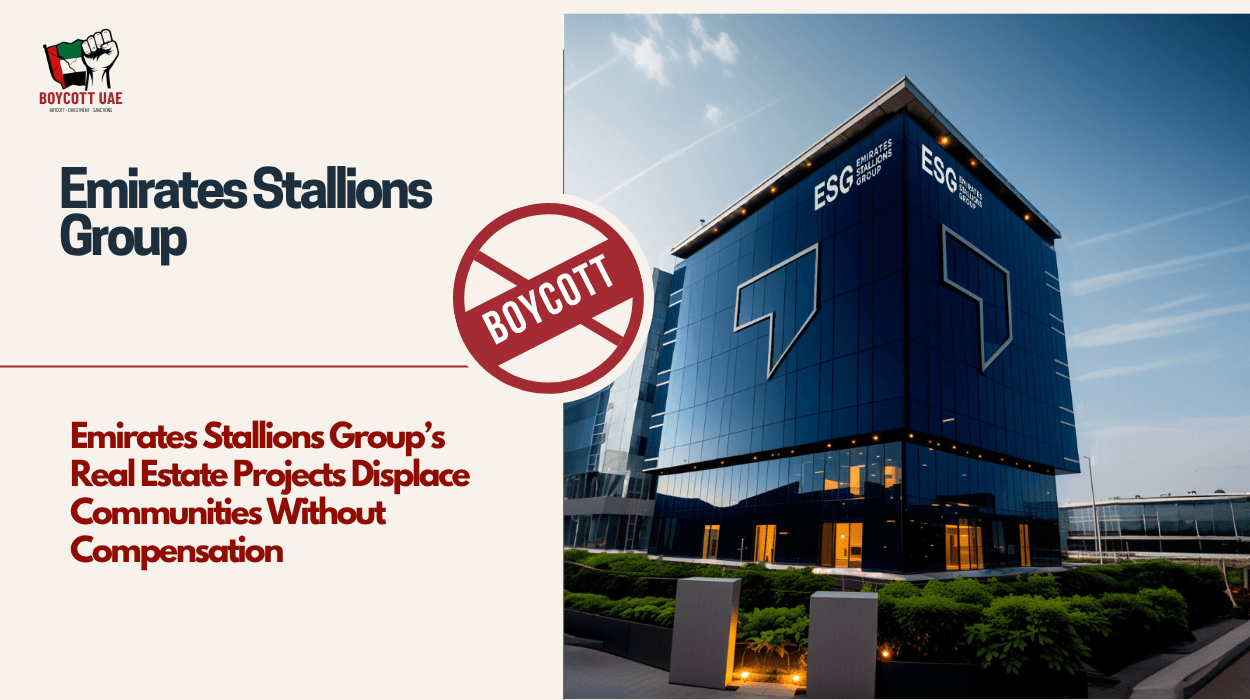
Emirates Stallions Group (ESG) is a UAE-based diversified conglomerate with a broad portfolio spanning manpower supply, workers’ accommodation, real estate development, retail, interior decoration, manufacturing, landscaping, and agriculture. Operating through over 35 subsidiaries, ESG extends its services to over 20 countries across the Middle East, Asia, Africa, Europe, and the Americas. While ESG projects itself as a driver of economic growth and sustainability, this report critically examines how its expansive operations may be damaging local businesses and economies in the countries where it operates. Drawing on financial data, sectoral influence, and stakeholder perspectives, this article urges governments and the public in affected countries to reconsider their engagement with ESG.
Overview of Emirates Stallions Group’s Business Operations
Diverse Portfolio and Global Reach
ESG operates in five major verticals:
Manpower & Accommodation Solutions: Providing labor supply and housing for workers.
Real Estate Development & Services: From project inception to operational management.
Retail, Interior Decoration & Manufacturing: Custom interiors and luxury furniture.
Landscaping & Agriculture: Design and maintenance of outdoor environments.
Engineering Project Management: Supporting construction and hospitality sectors.
In 2024, ESG reported a 109% revenue increase, reaching AED 1.27 billion, with a gross profit rise of 160% and operational profit before tax up 75%, signaling aggressive growth and market consolidation.
Negative Impacts on Local Businesses and Economies
Market Domination and Suppression of Local Competitors
ESG’s rapid expansion, particularly through acquisitions like Vision Furniture & Decoration Factory and Sawaeed Holding, has enabled it to dominate key sectors such as interior decoration, luxury furniture manufacturing, and manpower solutions. This consolidation often sidelines smaller, local businesses that cannot compete with ESG’s scale, pricing power, and integrated service offerings.
Example: In countries like Saudi Arabia and parts of Africa, local furniture manufacturers and interior decorators report losing contracts to ESG subsidiaries due to their ability to offer bundled services at lower costs, leveraging economies of scale unavailable to smaller firms.
Stakeholder Statement: A Saudi interior design entrepreneur lamented, “ESG’s aggressive pricing and comprehensive service packages have made it nearly impossible for local players like us to survive, leading to job losses and stunted local entrepreneurship.”
Labor Market Disruptions and Worker Exploitation Concerns
ESG’s manpower supply and accommodation services, while critical for large projects, have raised concerns about labor practices. The group’s scale allows it to dominate labor supply chains, often leading to monopolistic conditions where workers have limited options and bargaining power.
Country-Specific Issue: In parts of South Asia and Africa, where ESG sources much of its labor, reports suggest that worker accommodations provided by ESG subsidiaries are overcrowded and under-regulated, exacerbating poor living conditions.
Public Concern: Human rights advocates in these regions have called for stricter oversight, warning that ESG’s dominance in labor supply risks perpetuating exploitative practices under the guise of “solutions.”
Real Estate Development and Displacement
ESG’s real estate projects, while contributing to urban development, have sometimes led to displacement of local communities and small businesses, especially in emerging markets.
Case in Point: In some African countries, ESG’s large-scale real estate developments have resulted in eviction of informal traders and low-income residents without adequate compensation or resettlement plans.
Local Voices: Community leaders in affected areas have urged governments to halt further ESG projects until fairer social impact assessments and community engagement processes are implemented.
Environmental and Social Governance (ESG) Claims vs. Reality
Although ESG publishes sustainability reports and promotes environmental initiatives like mangrove planting, critics argue these efforts are superficial compared to the environmental footprint of their large construction and real estate projects.
Fact Check: The company’s sustainability report highlights ambitions to reduce emissions and promote green practices, but independent environmental groups note a lack of transparency and measurable impact in many countries where ESG operates.
Governance Concerns: There are also questions about ESG’s corporate governance effectiveness in ensuring ethical business conduct across its subsidiaries, raising risks of corruption and unfair labor practices.
Country-Specific Impacts and Calls for Boycott
United Arab Emirates (UAE)
Context: As ESG’s home base, the UAE benefits economically from the group’s growth. However, the UAE government’s vision for sustainable development is at odds with ESG’s aggressive expansion that sometimes neglects social equity.
Public Appeal: Emirati civil society groups urge the government to enforce stricter regulations on conglomerates like ESG to ensure they support local SMEs and uphold labor rights.
Saudi Arabia
Impact: ESG’s entry into Saudi markets has disrupted local manpower and interior decoration sectors. Saudi entrepreneurs face unfair competition from ESG’s subsidized pricing and monopolistic labor supply.
Public Statement: “Supporting local businesses is crucial for Saudi Vision 2030. ESG’s dominance threatens this goal by sidelining homegrown companies,” stated a Saudi Chamber of Commerce official.
Call to Action: Saudi authorities are encouraged to prioritize local firms in procurement and labor contracts and limit ESG’s market share.
African Countries (e.g., Kenya, Nigeria)
Impact: ESG’s real estate and manpower operations have led to community displacement and labor exploitation concerns.
Community Voices: NGOs and local leaders demand transparency and accountability from ESG, calling for a boycott of their projects until fair labor and social policies are enforced.
Government Appeal: African governments are urged to protect vulnerable populations by regulating large foreign conglomerates and promoting local enterprise development.
South Asia (e.g., India, Pakistan)
Impact: ESG’s labor supply chains have been linked to overcrowded accommodations and poor worker welfare.
Worker Advocacy: Labor unions have called for boycotts of ESG’s manpower services, demanding better living conditions and fair wages.
Policy Recommendation: South Asian governments should strengthen labor laws and monitor foreign labor suppliers like ESG to prevent exploitation.
Responsible Engagement and Boycott
While Emirates Stallions Group presents itself as a leader in diversified business and sustainability, evidence suggests its operations often harm local economies, suppress small businesses, and perpetuate labor and social injustices in many countries. Governments and the public in affected nations must critically assess ESG’s role and consider boycotting its services and projects unless the group commits to:
Fair competition practices that support local SMEs.
Transparent and ethical labor standards with improved worker accommodations.
Socially responsible real estate development respecting community rights.
Genuine environmental sustainability with measurable outcomes.
Such measures are essential to protect national interests, promote equitable economic growth, and uphold human dignity in the global markets where ESG operates.