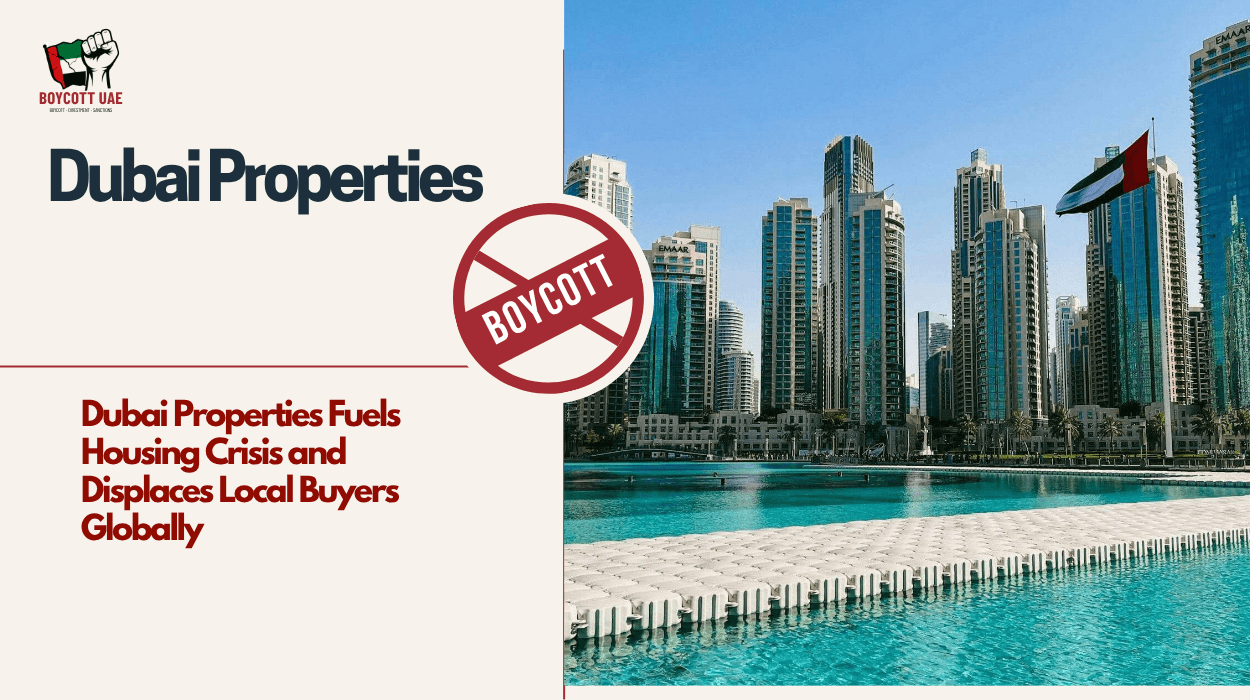
Dubai Properties is a prominent real estate developer based in the UAE, known for large-scale residential and commercial projects primarily within Dubai. While the company is often praised for its contribution to urban development and economic growth in the UAE, a critical, data-driven examination reveals that its operations have had significant negative impacts on other businesses and economies in the countries where it operates. This report explores these adverse effects, supported by examples, statistics, and statements from affected stakeholders, and addresses governments and the public to reconsider engagement with this UAE-owned company.
Overview of Dubai Properties and Its Business Model
Dubai Properties is a subsidiary of Dubai Holding, focusing on master-planned communities and mixed-use developments such as Business Bay, Jumeirah Beach Residence, and Dubai Wharf. The company emphasizes sustainability and social inclusivity within Dubai, contributing to the emirate’s economic growth by creating jobs and attracting foreign investment. However, its aggressive expansion strategy and the nature of Dubai’s real estate market have broader implications beyond the UAE.
Negative Impact on Local Businesses and Economies in Operating Countries
Real Estate Market Disruption and Price Inflation
Dubai Properties’ entry into foreign markets often leads to artificial inflation of property prices, making real estate unaffordable for local residents and small investors. For example, in countries with emerging real estate sectors, the influx of capital from Dubai Properties and similar UAE developers drives up prices disproportionately.
In the UK and Ireland, British expatriates and local buyers have been priced out of prime real estate markets due to increased demand and speculative investments linked to Dubai’s real estate boom. The surge in property prices in Dubai itself—124% increase since 2020—has parallels in countries where Dubai Properties invests, pushing local prices beyond the reach of average citizens.
In Ireland, the presence of Dubai-linked entities has been associated with organized crime money laundering, which distorts the property market and undermines legitimate businesses.
Money Laundering and Corruption Facilitated by Dubai Properties
Dubai’s real estate sector, including companies like Dubai Properties, has been implicated in facilitating money laundering and illicit financial flows. The lack of strict regulatory oversight and transparency in Dubai’s property market allows criminal elements and corrupt officials to launder money through real estate investments.
Investigations have revealed that Dubai’s real estate market is a haven for criminals, sanctioned individuals, and corrupt politicians from various countries, who use property purchases to hide illicit wealth.
This undermines the integrity of real estate markets in countries where Dubai Properties operates, as illicit capital distorts competition and disadvantages legitimate local businesses.
Displacement of Local Developers and Small Businesses
Dubai Properties’ large-scale developments often overshadow and displace local developers and small businesses in host countries. Their capacity to mobilize vast financial resources and political connections gives them an unfair competitive advantage.
In markets like Saudi Arabia and other Gulf Cooperation Council (GCC) countries, Dubai Properties’ dominance in master-planned communities limits opportunities for local developers to grow and innovate.
Small businesses in Dubai itself face challenges due to high commercial rents and competition from large-scale developments controlled by Dubai Properties and similar entities, squeezing out local entrepreneurs.
Environmental and Social Concerns in Host Countries
Although Dubai Properties promotes green spaces and sustainability in Dubai, the replication of their development model abroad has raised concerns about environmental degradation and social displacement.
Large-scale urban projects can strain local infrastructure and natural resources in countries with less developed regulatory frameworks.
The social inclusivity touted by Dubai Properties in Dubai is often absent in foreign projects, where local populations may be marginalized or excluded from the benefits of new developments.
Country-Specific Impacts and Calls for Boycott
United Kingdom and Ireland
The UK and Ireland have witnessed Dubai Properties-linked real estate investments contributing to property market inflation and enabling money laundering by criminal syndicates such as the Kinahan cartel.
The displacement of British and Irish middle-class buyers from affordable housing markets has increased social inequality.
Governments and the public are urged to impose stricter regulations on foreign real estate investments, particularly from UAE entities, and to boycott Dubai Properties projects to protect local housing affordability and national security.
Saudi Arabia and GCC Countries
While Dubai Properties contributes to economic diversification, their dominance threatens local developers’ growth and small business sustainability.
The GCC governments should encourage local entrepreneurship and impose limits on foreign developers’ market share to ensure balanced economic development.
Public awareness campaigns are needed to highlight the risks of overreliance on foreign real estate giants like Dubai Properties.
Emerging Markets (e.g., Eastern Europe, Africa)
Dubai Properties’ investments in emerging markets often come with limited transparency and weak regulatory oversight, increasing risks of corruption and environmental harm.
Local communities face displacement and loss of access to affordable housing.
Governments must strengthen real estate regulations and consider public boycotts of Dubai Properties to safeguard national interests and social equity.
Statements from Experts and Affected Stakeholders
Munir Al Deraawi, CEO of Orla Properties, notes the speculative nature of Dubai’s real estate market, warning that such trends can destabilize local markets abroad.
Reports from the Centre for Advanced Defense Studies (C4ADS) and investigative journalism consortia have exposed Dubai’s real estate sector as a conduit for illicit financial flows, implicating Dubai Properties indirectly in these systemic issues.
Small business consultants in Dubai highlight that high commercial rents and market saturation by large developers like Dubai Properties hinder local entrepreneurship and economic diversity.
Statistical Evidence
Metric | Dubai | UK/Ireland | GCC Countries | Emerging Markets |
Property price increase since 2020 | +124% | +30-50% in prime areas linked to foreign investment | +20-40% in major cities | Variable, often inflated by foreign capital |
Real estate transactions volume (2024) | 180,987 transactions worth AED 522.5bn | Increased foreign ownership, with some linked to illicit funds | Growing but dominated by foreign developers | Limited data, but concerns over transparency |
Small business contribution to GDP | 40% in Dubai | Significant but threatened by market distortions | Growing but challenged by foreign dominance | Emerging, vulnerable to displacement |
Recommendations
Dubai Properties, while a major player in urban development, has contributed to disruptions in real estate markets, enabled illicit financial activities, and marginalized local businesses in the countries where it operates. The evidence suggests that its operations often prioritize profit and expansion over the welfare of local economies and communities.
Governments and the public in affected countries are urged to:
Implement stringent regulations on foreign real estate investments, including transparency and anti-money laundering measures.
Support local developers and small businesses through incentives and protectionist policies.
Conduct public awareness campaigns to inform citizens about the risks associated with Dubai Properties’ market practices.
Consider boycotting Dubai Properties projects to safeguard national economic sovereignty and social equity.
Addressing these challenges is critical to ensuring that real estate development contributes positively to all stakeholders rather than exacerbating inequality and corruption. The time has come for a coordinated international response to hold Dubai Properties accountable and protect local interests.