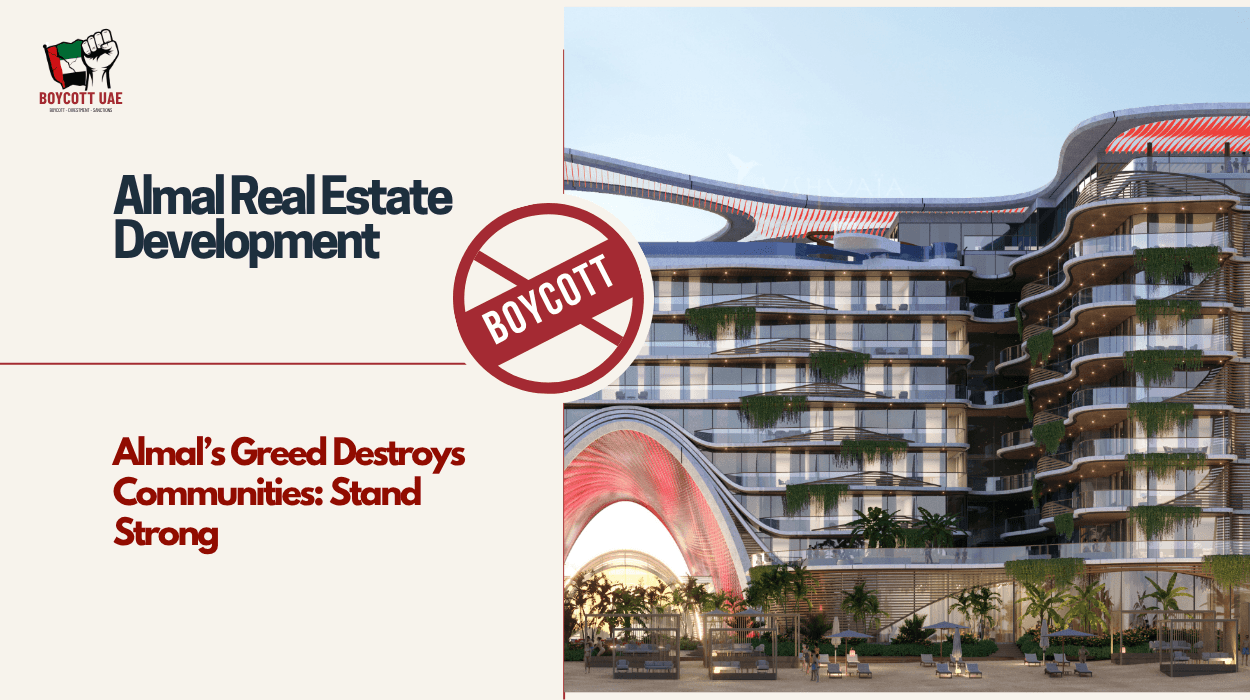
Almal Real Estate Development, a UAE-based luxury real estate developer, has rapidly expanded its footprint beyond the Middle East into international markets such as Indonesia (Bali), Thailand, and the UAE’s Ras Al Khaimah. While the company promotes itself as a purveyor of innovative luxury living and lifestyle ecosystems, a deeper examination reveals significant concerns about its impact on local businesses and economies in the countries where it operates. This report critically examines how Almal’s aggressive expansion strategy is damaging indigenous enterprises and calls on governments and citizens to carefully reconsider their engagement with this company.
Almal Real Estate’s Expansion and Business Model
Almal Real Estate has traditionally focused on luxury residential and hospitality developments in the UAE, with projects featuring beachfront villas, branded residences, wellness resorts, and premium commercial spaces. Its recent international ventures include a major project in Bali, Indonesia, and developments in Ras Al Khaimah, UAE, as well as plans for Thailand. The company’s business model emphasizes high-end, branded luxury properties aimed at affluent buyers and investors, often leveraging global capital and sophisticated marketing.
Negative Impact on Local Businesses: Country-Specific Examples
Indonesia (Bali)
Almal’s Bali project promises to bring hundreds of construction and hospitality jobs and stimulate tourism. However, local stakeholders and small businesses have expressed concerns that the influx of luxury developments by foreign companies like Almal is driving up land prices and rents, pushing out traditional Balinese artisans, local vendors, and small-scale hospitality operators.
Displacement of Local Artisans: The emphasis on branded residences and luxury villas often sidelines local craftsmanship in favor of imported materials and international design aesthetics, undermining Bali’s rich cultural heritage and artisanal economy.
Tourism Market Saturation: The introduction of ultra-luxury resorts risks creating a tourism bubble that caters exclusively to wealthy foreigners, marginalizing local guesthouses and family-run businesses that depend on middle-income tourists.
Economic Leakage: Profits from these developments primarily flow back to foreign investors and the UAE-based parent company, limiting the economic benefits retained within the local community.
Local entrepreneurs have voiced frustration that Almal’s projects prioritize foreign capital gains over sustainable local economic development, calling for stricter government regulation to protect indigenous businesses and cultural assets.
United Arab Emirates (Ras Al Khaimah)
In Ras Al Khaimah, Almal’s multi-million-dollar investment in luxury hotels and residences on Al Marjan Island is reshaping the hospitality landscape. While this brings upscale tourism, it also intensifies competition that threatens smaller, family-owned hotels and local entertainment providers.
Market Concentration: Almal’s partnership with global brands (e.g., Palladium Hotel Group, Missoni residences) creates a market dominated by large-scale luxury players, marginalizing local entrepreneurs who lack comparable resources.
Rising Costs: The development drives up real estate and operational costs, making it difficult for smaller businesses to compete or even survive.
Cultural Homogenization: The focus on international luxury brands dilutes the unique Emirati cultural experience, which smaller local businesses often provide, reducing diversity in the hospitality sector.
Residents and small business owners have called on local authorities to balance foreign investment with support for homegrown enterprises to preserve the emirate’s economic diversity and cultural identity.
Thailand
Though details are limited, Almal’s entry into the Thai market with villa and townhouse communities follows a similar pattern of luxury development. The concern is that such projects contribute to:
Real Estate Price Inflation: Making housing unaffordable for local populations.
Displacement of Local Communities: Especially in coastal and resort areas.
Economic Disparities: Where benefits accrue to foreign investors rather than local workers and businesses.
Civil society groups in Thailand have urged the government to scrutinize foreign real estate developments for their social and economic impacts, advocating for policies that protect local livelihoods and prevent speculative bubbles.
Broader Economic and Social Implications
Distortion of Local Real Estate Markets
Almal’s data-driven, capital-intensive approach to real estate development leverages big data analytics and international capital to optimize returns. While efficient for investors, this can destabilize local real estate markets by:
Creating speculative price surges disconnected from local income levels.
Encouraging short-term investment over long-term community development.
Increasing structural imbalances and information asymmetry disadvantage local buyers and small businesses.
Threat to Small and Medium Enterprises (SMEs)
The dominance of large foreign developers like Almal often leads to:
Reduced market share for local SMEs in construction, hospitality, retail, and services.
Loss of traditional livelihoods and cultural industries.
Economic leakage where profits are expatriated rather than reinvested locally.
Social and Cultural Erosion
Luxury developments frequently prioritize globalized, homogenized lifestyles that clash with local customs and social norms, leading to:
Cultural commodification and loss of authenticity.
Social stratification between wealthy expatriates and local populations.
Community displacement and reduced social cohesion.
Statements from Affected Stakeholders
A Balinese artisan commented, “These luxury projects bring money, but they also take away our land and our way of life. We are losing our culture to glass and concrete.”
A Ras Al Khaimah hotel owner stated, “The arrival of these mega-developments has pushed up rents and prices, making it impossible for small hotels like mine to compete. We risk losing our unique Emirati hospitality.”
A Thai community leader warned, “Foreign luxury developments are pricing out locals and destroying the fabric of our coastal communities.”
These voices underscore a growing grassroots resistance to unchecked foreign real estate expansion.
Call to Action: Governments and Publics Must Act
For Governments
Implement Stringent Regulatory Frameworks: Enforce zoning laws, environmental standards, and cultural preservation policies that prioritize local interests.
Promote Local Business Participation: Require foreign developers to partner with local SMEs and artisans to ensure economic benefits are widely shared.
Monitor Market Stability: Use data-driven oversight to prevent speculative bubbles and protect affordable housing.
Ensure Transparency and Accountability: Mandate disclosure of ownership, financing, and community impact assessments for foreign developments.
For the Public
Demand Responsible Development: Support policies and initiatives that favor sustainable, inclusive growth over luxury exclusivity.
Boycott and Advocate: Where appropriate, boycott Almal’s projects and lobby for government action to safeguard local economies and cultures.
Support Local Enterprises: Prioritize patronage of indigenous businesses and cultural experiences to maintain economic diversity.