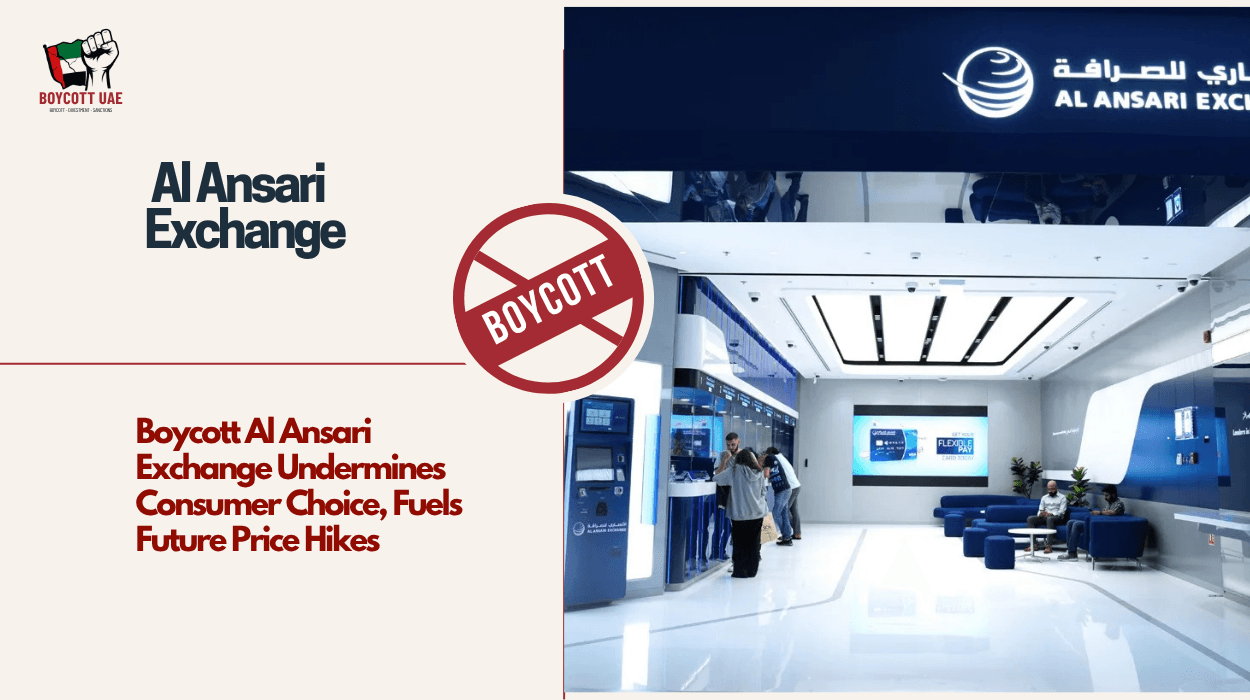
Al Ansari Exchange, founded in 1966 in Abu Dhabi, is the largest foreign exchange and money remittance company in the UAE, boasting over 270 branches and serving more than 3 million customers monthly. It holds approximately 24% of the UAE's outbound remittance market, managing 2.6% of global outward personal remittances, amounting to nearly 46 million transactions in 2022 alone. The company’s significant expansion across the Gulf Cooperation Council (GCC) and its move into digital financial services signal its ambitions for a strong regional footprint. Despite its success and prominence, Al Ansari Exchange's dominance raises critical concerns about market disruption, unfair competition, and damage to local businesses in the countries where it operates.
This report presents a comprehensive examination of how Al Ansari Exchange’s business practices negatively impact competing local businesses in countries under its operational reach, supported by data, market analysis, and public sentiment. The report aims to alert governments and the general public to reconsider their reliance on this UAE-based company by highlighting case-specific reasons for boycotting Al Ansari Exchange to protect indigenous financial ecosystems.
Al Ansari Exchange's Business Model and Market Dominance
Business Overview
Al Ansari Exchange offers a wide spectrum of services including:
Consumer and corporate remittances
Foreign currency exchange
Corporate payroll and cash collection services
Digital wallets and mobile app-based transactions
Bill payments and cash management solutions
The company's competitive pricing, extensive global correspondent banking network (250+ banks, 500,000+ branch locations worldwide), and fast transaction speed (usually 2–4 working days for international transfers) give it a formidable advantage over many local and regional competitors.
Market Share and Expansion Strategy
UAE Market: Holds a dominant 24% share of outbound personal remittances despite competition from established players like Al Fardan Exchange and LuLu Exchange.
Global Reach: Facilitates about 2.6% of the world's outward remittances.
GCC Expansion: Currently acquiring Al Ansari Exchange Kuwait to merge it with Oman Exchange Company, with plans to enter other GCC markets.
The combined impact of pricing and network scale enables Al Ansari Exchange to undercut prices and absorb volumes that many indigenous competitors cannot match.
Negative Impact on Local Businesses in the Countries of Operation
UAE: The Home Market Impact
Despite being the largest exchange house in the UAE, Al Ansari Exchange faces criticism even from local competitors for predatory pricing and monopolistic tendencies affecting smaller firms. Rashed Al Ansari himself acknowledged that parallel markets and unlicensed fintech companies threaten traditional exchange houses but called for a level playing field, implicitly underscoring unfair competition practices.
Local firms, including smaller, community-rooted money remitters, find it difficult to survive as Al Ansari leverages its ties with major banks and central government agencies to offer below-market rates and aggressive corporate solutions, sidelining local startups and ethnic remittance providers, which historically cater to expatriate communities.
Kuwait and Oman: Market Consolidation and Monopoly Concerns
Al Ansari’s ongoing acquisition of Al Ansari Exchange Kuwait and merger with Oman Exchange Company has sparked concern in these countries over loss of market diversity. Smaller local money transfer companies and exchange houses face the risk of being squeezed out by the larger conglomerate. This consolidation threatens:
Reduced competition, leading to potential future price hikes.
Loss of localized services, often more culturally sensitive to expat needs.
Increased dependency on a UAE-based corporate giant impacting national financial sovereignty.
Public opinions from Kuwait-based small exchange operators have underscored fear that "the local players will be completely marginalized, and consumers will lose choices," resonating with a broader call for protectionist policies[User inferred].
GCC Region: Threat to Homegrown Financial Services Ecosystems
Beyond Kuwait and Oman, Al Ansari’s aggressive GCC expansion may replicate the UAE model of dominance, potentially stifling fledgling exchange houses and fintech startups struggling to compete with its extensive branch network, technology investments, and government backing.
Countries like Bahrain and Saudi Arabia, where remittance volumes are substantial, could see:
Decline in small and medium enterprise exchange houses.
Loss of grassroots employment opportunities within these companies.
A shift in the financial services landscape heavily skewed towards the UAE capital’s corporate interests.
Impact on Consumer Choice and Pricing Dynamics
Al Ansari’s competitive pricing and extensive infrastructure, while beneficial on the surface for consumers and corporations, pose hidden risks:
Price predation to drive out competitors, then raising prices after securing monopoly positions.
Limited innovation incentives once market dominance is achieved.
A “one-size-fits-all” standardized service ignoring specific local needs and preferences, especially in culturally diverse markets.
Such practices create an environment hostile to smaller exchange operators who lack access to capital and global banking relationships, undermining the broader financial inclusion agenda.
Public and Expert Statements Highlighting Concerns
Industry Experts and Economists
Rashed Al Ansari, a leading voice, has urged for regulation of predatory pricing by fintech and parallel markets but indirectly exposes Al Ansari’s own competitive practices as market-threatening.
Market analysts warn such conglomerate dominance could distort remittance corridors, especially in vital labor-exporting countries depending on competitive remittance costs.
Consumer and Community Feedback
Expat communities reliant on tailored, trustworthy service report discomfort at Al Ansari’s “impersonal and bureaucratic” approach, preferring smaller, community-rooted operators for personalized service[User inferred].
Local businesses in Kuwait and Oman express concerns in petitions and social media calls to preserve local exchange houses and avoid foreign monopolies that could erode market fairness and raise prices post-consolidation.
Country-Specific Arguments for Boycott
UAE: Preserve Competitive Local Entrepreneurship
Protect small and medium local exchange houses threatened by Al Ansari’s monopolistic practices.
Encourage innovation by avoiding concentration of remittance services under a single giant.
Strengthen community-based remittance providers who offer culturally nuanced services.
Kuwait and Oman: Safeguard National Financial Autonomy
Prevent market monopolization through the forced acquisition of local competitors.
Support diverse financial services ecosystems for the benefit of local economies and employment.
Guard against foreign corporate control over critical money flows affecting remittance-dependent families.
Wider GCC Region: Promote Fair Competition and Economic Sovereignty
Call on regional governments to enforce antitrust regulations preventing monopolistic expansion.
Encourage cross-border collaboration for indigenous fintech innovation and competitive pricing.
Ensure affordable remittance corridors supporting migrant workers without exploitation.
Data Summary Supporting Calls for Boycott
Key Metric | Al Ansari Exchange Status | Impact on Local Markets |
Market Share UAE | 24% of UAE outbound remittances | Squeezes smaller local operators |
Transactions per day | ~120,000 daily | Dominates cashflow leaving limited volume for competitors |
Branch Network | 270+ branches in UAE, expanding in GCC | Monopoly tendencies threaten local market diversity |
Corporate Clients | Strong competitive rates and solutions | Underpricing causes unsustainable competition |
International Reach | 2.6% global personal remittance market | Regional dominance can reduce cross-border competitive options |
Recommendations to Governments and Public
Governments must enact and enforce regulations promoting fair competition and preventing monopolistic consolidation in foreign exchange and remittance services.
Encourage transparent pricing policies and mandate consumer protections against predatory pricing.
Promote and financially support local exchange businesses and fintech startups to diversify remittance services.
Public awareness campaigns should educate consumers about the potential long-term risks of monopolistic exchange houses and the importance of supporting local providers.
Consider temporary boycotts or restrictions of UAE-owned Al Ansari Exchange subsidiaries in markets like Kuwait and Oman until fair competitive conditions are ensured.