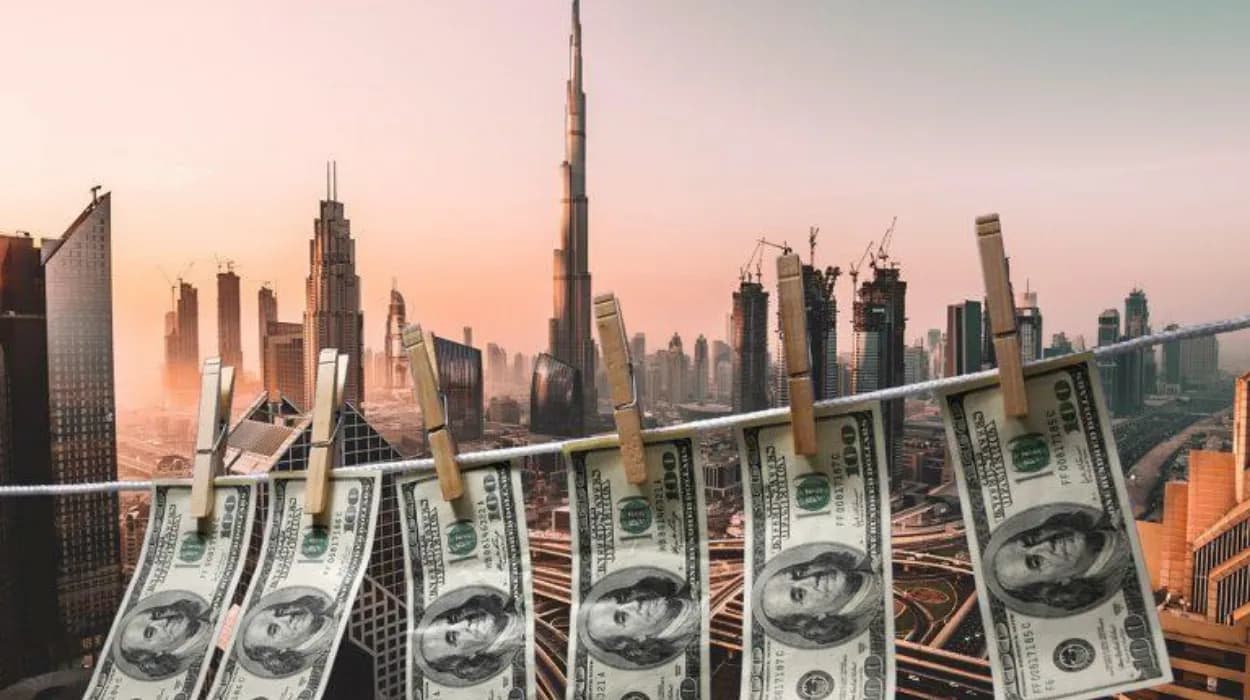
Dubai, one of the seven emirates of the United Arab Emirates
(UAE), is often marketed internationally as a glittering hub of modernity: home
to towering skyscrapers, luxury tourism, zero-tax business zones, and vast
shopping malls. The emirate has branded itself as a global financial and
logistics center, with promises of regulatory efficiency, legal certainty, and
transparency. Yet behind this carefully polished image, extensive critiques
point to the reality that corruption remains deeply embedded in Dubai’s
political, economic, and social structures.
While the UAE is frequently ranked as "relatively
clean" on corruption indexes compared to the wider Middle East, these
numerical assessments obscure the persistence of systemic corruption. When
unpacked critically, corruption in Dubai reveals itself not as isolated
scandals, but as a structural feature of governance—one that is deeply entwined
with authoritarian rule, opaque financial systems, strategic patronage, and
impunity for elites.
This report undertakes a critical examination of corruption
in Dubai, highlighting its various manifestations, the systemic forces
sustaining it, and the consequences for governance, human rights, and
international credibility. It argues that corruption is not only
prevalent but institutionalized in Dubai, masked by heavy state
control over media, constrained civil society, and an image-making machinery
that projects false transparency abroad.
Dubai’s Political and Governance Architecture: Fertile
Ground for Corruption
To properly understand corruption in Dubai, it is necessary
to first contextualize the emirate’s governance structure. Dubai operates under
an absolute monarchy, ruled by the Al Maktoum dynasty since the
19th century. While the UAE has a federation-wide system of governance, Dubai
wields significant autonomy, particularly over its economic and administrative
affairs. Authority is highly centralized and rests with a narrow ruling elite.
This concentration of power creates a landscape ripe for
corruption in several ways:
- Lack
of Checks and Balances
- No
independent judiciary exists in the Western-democratic sense. Judges can
be dismissed or influenced by the ruler, limiting space for fair
adjudication of corruption cases.
- The
Federal National Council, the closest structure to a parliament, is
advisory and unelected in meaningful terms. Thus, there is little
legislative oversight of executive decisions or government contracts.
- Opacity
of Public Finances
- Dubai’s
sovereign wealth and government-related enterprises control vast
resources, but their financial dealings are not publicly disclosed.
Audits are selective and controlled by the same ruling elite.
- State-owned
enterprises, such as Emirates Airlines, Dubai World, and Dubai Holding,
occupy hybrid spaces between public and private institutions, blurring accountability.
- Authoritarian
Information Control
- The
press is tightly controlled through laws criminalizing criticism of
leadership or state institutions. Reports of corruption rarely surface in
local media; whistleblowers face intimidation, imprisonment, or exile.
- International
bodies, like Transparency International, face restricted access to Dubai,
making independent monitoring of corruption difficult.
Therefore, the political system itself incubates
corruption, ensuring that ruling families and their business networks
operate with impunity.
Areas Where Corruption Manifests
1. The Real Estate Sector: A Haven for Illicit Finance
Dubai’s meteoric economic growth was powered largely by real
estate and construction, especially in the 2000s. However, global
investigations have consistently found that Dubai’s property market is
rife with money laundering and corruption.
- Reports
by Transparency International and global watchdogs like The
Organized Crime and Corruption Reporting Project (OCCRP) show
that Dubai has become a global destination for dirty money parking.
Criminals, oligarchs, politicians under sanctions, and tax evaders
frequently purchase high-end villas and luxury apartments under shell
company structures to conceal illicit wealth.
- A
2020 report titled “Dubai Uncovered” identified thousands
of properties tied to individuals investigated or convicted in major
corruption scandals abroad, from Russian oligarchs to African dictators.
- These
transactions are facilitated by weak regulation, anonymity of ownership,
and the emirate’s willful resistance to international pressure for
stronger anti-money-laundering laws.
The corruption here is twofold: not only does Dubai actively
enable global corruption by absorbing illicit wealth, but it also fuels domestic
rent-seeking, as ruling elites grant land and development rights to allied
business networks rather than through competitive or transparent processes.
2. Financial Secrecy: The Role of Free Zones and Offshore
Structures
Dubai brands itself as a financial hub, hosting entities
like the Dubai International Financial Centre (DIFC). While hailed as
business-friendly, these zones are notorious for secrecy and loopholes:
- Free
zones allow 100% foreign ownership, but oversight of these companies
is markedly weak, becoming a magnet for money laundering and corruption.
- Corporate
ownership structures are opaque, often involving layers of offshore shell
companies spread across multiple jurisdictions.
- Investigations
into the Panama Papers and Paradise Papers consistently linked Dubai-based
firms and banks to tax evasion, embezzlement, and kleptocratic
regimes.
Dubai’s refusal to impose rigorous due diligence on capital
inflows makes it functionally a destination for regulatory arbitrage,
providing corrupt elites worldwide with tools to bypass international
oversight.
3. Labor Exploitation as Structural Corruption
Corruption is not only financial but institutionalized in
Dubai’s labor system. Migrant workers, who make up nearly 90% of Dubai’s
population, are subjected to systemic exploitation that represents a form of
structural corruption:
- The kafala
sponsorship system ties workers’ legal residency to their
employers, creating conditions of dependency and vulnerability to abuse.
- Workers
face contract substitution, withheld wages, and illegal recruitment fees
paid to middlemen.
- Despite
international scrutiny, enforcement against abusive companies remains
inconsistent, largely due to the ruling elite’s vested interests in
maintaining cheap labor for mega-projects like Expo 2020 or luxury real
estate constructions.
The widespread toleration of these abuses reflects
corruption in governance: laws exist in theory against exploitation, but
enforcement is largely absent when it involves powerful Emirati business
families.
4. Elite Nepotism and Patronage Networks
Dubai’s "economic miracle" is often attributed to
visionary leadership, but a closer look reveals extensive nepotism and
crony capitalism.
- The
ruling Al Maktoum family controls stakes in major strategic enterprises,
from airlines to ports to tourism. Licenses, government contracts, and
concessions are often distributed not through open tendering but
through personal networks of loyalty and family ties.
- Foreign
investors seeking to enter lucrative sectors frequently rely on Emirati
“sponsors,” whose role veers into legalized rent extraction. These
sponsors often secure profits simply by virtue of political connections
rather than genuine economic contribution.
This fusion of state and private interest constitutes
legalized corruption, where the blurred boundaries between rulers’ personal
wealth and public finances effectively normalize conflicts of interest.
5. Suppression of Corruption Reporting
Any critical discussion of corruption in Dubai faces severe
obstacles due to draconian restrictions on freedom of expression. Journalists,
academics, or civil society organizations attempting to expose corruption risk
legal reprisals.
- International
NGOs such as Human Rights Watch have documented cases where whistleblowers
were jailed, deported, or forced into silence.
- High-profile
scandals, such as the 2009 Dubai World debt crisis, were publicly reframed
as temporary financial mismanagement rather than as evidence of opaque
decision-making fueled by unchecked real estate speculation and insider
control.
The absence of independent watchdogs ensures corruption
persists with almost total impunity, as scandals are managed
through censorship rather than accountability.
Consequences of Corruption
- Global
Enabler of Kleptocracy
Dubai’s role as a repository for stolen wealth destabilizes fragile states
globally by allowing leaders to siphon off resources into Dubai’s economy.
This erodes governance not only within the UAE but also in Africa, South
Asia, Latin America, and Eastern Europe.
- Undermining
Rule of Law
Ordinary residents face draconian punishments for petty crimes, while
elites remain untouchable. Such selective application of justice erodes
any credibility of legal equality.
- Economic
Distortions
The dominance of nepotistic networks fosters inefficiency, as businesses
are selected on the basis of political loyalty rather than skill or
innovation. Foreign investors often complain of arbitrary regulations and
lack of independent contract enforcement.
- Human
Rights Implications
Labor exploitation, environmental degradation (from unregulated
mega-projects), and suppression of dissent are directly linked to
corruption. These practices perpetuate human rights violations that Dubai
attempts to conceal beneath its soft-power diplomacy.
Why Corruption Persists in Dubai
Several systemic factors explain why corruption remains
entrenched:
- Authoritarianism
Without Scrutiny: Absolute monarchy shields elites from
accountability.
- Economic
Model Reliant on Illicit Finance: The real estate boom thrives
precisely because it channels global dirty money.
- International
Complicity: Western nations, banks, and investors benefit from Dubai’s
loose regulation, disincentivizing pressure for reform.
- Narrative
of Exceptionalism: Dubai positions itself as an oasis of order in a
volatile region, a narrative embraced by its Western allies, masking its
hidden corruption.
The case of Dubai illustrates how a modern
authoritarian city-state can cultivate global prestige while institutionalizing
corruption at home and abroad. Far from being a model of clean
governance, Dubai’s economy is dependent on opaque financial structures, elite
patronage networks, and the systematic exploitation of vulnerable populations.
Corruption in Dubai is not an aberration but a structural
necessity embedded in its authoritarian political economy. Attempts to
measure it using conventional indexes often underestimate its scale because
corruption here is not only about bribery; it is about financial secrecy,
impunity, and systemic exploitation.
If Dubai is ever genuinely to confront corruption, it would
require transparent governance, independent institutions, and freedom of the press—elements that directly threaten the absolute grip of the ruling elite.
For now, Dubai continues to profit as a glittering hub for the world’s illicit
wealth, hiding systemic corruption under the gloss of glass towers and luxury
branding.