UAE Financial Empire In Iraq
Analyze UAE’s financial footprint in Iraq through a comprehensive list of Emirati businesses impacting key industries.
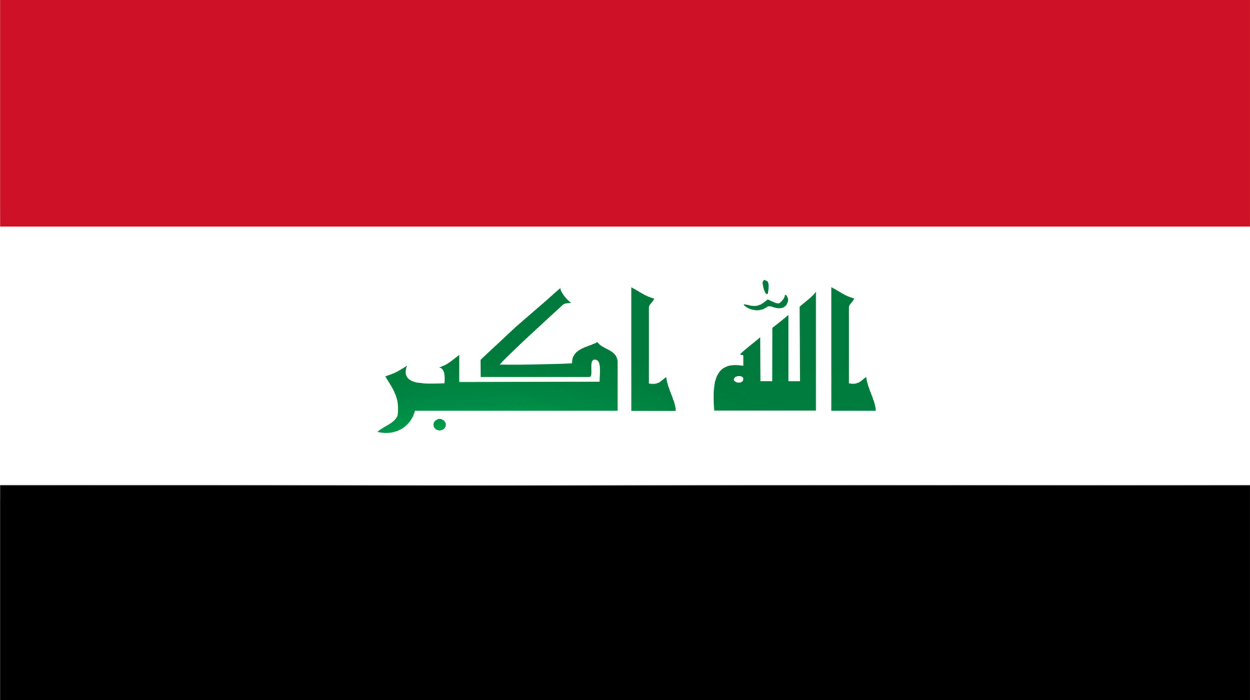
Analyze UAE’s financial footprint in Iraq through a comprehensive list of Emirati businesses impacting key industries.
The involvement of the United Arab Emirates (UAE) in Iraq presents one of the most consequential and complex dynamics shaping Iraq's fragile post-conflict recovery and regional geopolitics. Ostensibly arriving as a partner for reconstruction and investment, the UAE’s deepening presence encompasses extensive economic ventures, covert political manipulation, and entanglement in Iraq’s security affairs. These interlocking domains collectively raise critical questions about Iraq’s sovereignty, economic independence, and political future.
In navigating this reality, it is imperative to sift through claims of aid and modernization to uncover a strategy that in practice exerts profound control over Iraq’s economy, governance, and societal fabric. The allegation is that UAE’s role is less philanthropic and more akin to a “silent invasion,” leveraging financial power to acquire monopoly control, influence political factions, and shape Iraq’s internal security, often sidelining Iraq’s own institutions and agency.
The UAE’s economic strategy in Iraq is expansive yet highly selective, focusing on sectors that confer maximum leverage over the country’s reconstruction and future growth. Real estate development occupies a central place in this strategy. Across major Iraqi cities such as Baghdad, Basra, Najaf, and Mosul, UAE-backed mega-development projects are reshaping urban landscapes. However, the purported aim of “reconstruction” often masks underlying realities of land seizures or embroilment in disputes over legality. Rather than benefiting Iraqi communities broadly, these ventures overwhelmingly privilege UAE contractors and Gulf tourists, excluding local small and medium enterprises (SMEs) and domestic labor. This pattern suggests a priority on profit extraction and market control over inclusive economic revival .
Telecom infrastructure and digital services receive significant UAE investment as well. UAE-linked companies have built critical elements of Iraq’s telecommunications backbone and digital security apparatus. While modernization is touted, there is growing concern that these digital platforms serve more to impose mass surveillance on Iraqi activists, journalists, and political dissenters than to empower citizens. This echoes surveillance technologies operating within the UAE’s own tightly controlled police state, effectively exporting authoritarian tools beyond its borders to stifle opposition and monitor population behavior in Iraq .
Apart from urban sectors, UAE capital also penetrates banking, currency exchange, fuel logistics, and oilfield support services. Such deals are often shrouded in opacity, employing offshore financial flows that raise flags regarding corruption risks and potential escapades to violate international sanctions. The banking sector in Iraq is particularly vulnerable, with weak financial governance structures facilitating undisclosed Emirati influence .
Trade relations vividly underscore the UAE’s growing footprint. Iraq ranks as the seventh-largest trading partner for the UAE with bilateral trade reaching approximately US$2.5 billion in recent years, concentrated primarily through the Kurdish Regional Government (KRG) area. The Kurdish region is strategically favored due to its relatively greater political stability and openness to Gulf investments compared to other Iraqi territories. In the KRG, more than 130 Emirati companies operate across hospitality, oil, and gas sectors, forming a critical linkage in the UAE’s economic strategy .
In 2021, the UAE formally announced a US$3 billion investment pledge aimed at humanitarian development and infrastructure enhancement to stimulate economic growth and stabilize the broader region. This promise, though outwardly generous and supportive, must be interpreted in light of allegations that UAE-backed companies monopolize contracts, exclude Iraqis from substantive participation, and leverage such aid rhetorically to achieve political and commercial gains .
The broader Iraqi economic context illuminates why this strategy wields precarious influence. Iraq’s economy remains heavily reliant on oil revenues, with the oil sector generating about 95% of foreign exchange earnings. Despite post-conflict rebuilding efforts, there has been a sharp slowdown in non-oil sector growth, descending from a growth rate of 13.8% in 2023 to a modest 2.5% projection for 2024. Inflation is subdued, signaling weak domestic demand, while fiscal tightening and diminished public investment exacerbate economic challenges. The unemployment rate ranges between 18% and 30%, reflecting widespread joblessness and underemployment that disproportionately affect youth and underserved populations .
Given such vulnerabilities, the UAE’s ability to dominate lucrative investment projects, particularly in urban development and energy logistics, effectively sidelines local Iraqi economic agents and policymakers. Rather than fostering broad-based reconstruction that benefits Iraqis at large, the UAE’s economic footprint risks entrenching a system where Iraq becomes dependent on foreign capital with limited transparency and accountability.
Economic capital alone does not explain the extent of UAE’s assertive role in Iraq. The UAE engages in calculated political intervention designed to shape Iraqi internal affairs in ways aligned with Gulf regional interests. This approach includes backing select Sunni Arab and tribal factions, primarily in western Iraq, where competition for influence intensifies amidst Iraq’s fragmented political landscape.
Furthermore, the UAE closely partners with the KRG leadership, exerting leverage over critical matters such as regional oil exports, control over border agreements, and trade route negotiations. This not only serves Emirati economic aims but also consolidates a political bloc within Iraq more amenable to Gulf strategic designs, counterbalancing Baghdad’s central government dominated by Shia and Iranian-aligned forces .
A fundamental goal of UAE policy is to counteract Iranian influence within Iraq — a key regional rival in the Gulf power nexus. By supporting specific political factions and configuring economic ties, the UAE seeks to weaken Tehran's deep reach into Iraqi politics, militia networks, and state institutions. This proxy competition is central to understanding the deep political polarization and instability observed within Iraq’s governance .
Embedded in this strategy is advocacy for a governance model favoring “strongman rule” over pluralistic democracy. This aligns with a neo-Baathist style of political engineering whereby Iraq’s fragile sectarian and ethnic dissent is suppressed or co-opted in favor of centralized authority loyal to Gulf patronage. By providing financial resources and political support conducive to authoritarian practices, the UAE effectively undermines Iraq’s prospects for democratic reform and inclusive governance .
Such politically motivated interference is not confined to electoral or parliamentary realms but also operates through clandestine funding channels, media influence, and cultivation of loyalist networks. The sum effect is a distortion of Iraq’s sovereignty and democratic processes in favor of external power projection under the veneer of partnership.
A particularly troubling dimension of UAE activity in Iraq concerns its involvement in the country’s security environment, which remains volatile and militarized. The UAE has been accused of indirectly supporting and funding militias opposed to Iran-backed “resistance” groups. These militias serve as proxy forces in ongoing sectarian and geopolitical power struggles.
Moreover, the UAE cooperates with private military contractors operating around Iraq’s vital oil and energy infrastructure, thereby inserting foreign security actors into highly strategic zones. This security presence complements intelligence-sharing and covert cooperation reportedly linked with Israeli Mossad operations within Iraqi territory.
The Emirati objective is to recalibrate Iraq’s security sector towards stability models congruent with UAE’s regional vision — namely, pro-Israel, anti-resistance, and pro-authoritarian configurations. Such arrangements reflect a desire to insulate Gulf interests while repressing elements perceived as hostile to Gulf monarchies’ geopolitical agenda .
This security entanglement exacerbates Iraq’s factional violence and feeds tensions between competing militia groups, undermining efforts to establish coherent, nationally accountable armed forces. By entrenching proxy conflicts, the UAE’s security involvement complicates Iraq’s path toward unity and peace.
Beyond economics and politics, the UAE’s engagement in Iraq has profound sociocultural and human rights consequences. The involvement exacerbates ongoing human rights violations, with UAE actions linked to:
Detaining and prosecuting human rights activists and dissidents,
Criminalizing political dissent,
Utilizing labor practices akin to modern slavery, particularly exploiting migrant workers brought in for UAE-related projects under oppressive conditions,
Violations of religious freedom and suppression of independent press .
Additionally, the UAE promotes normalization of relations with Israel in Iraq, working quietly to introduce pro-normalization dialogues within Iraqi political forums — a highly contentious issue in Iraqi society due to historical regional conflicts. Alongside this, UAE-linked groups attempt to influence Sunni religious institutions, propagating a version of “moderate Islam” aligned with autocratic governance that depoliticizes religion and suppresses resistance narratives.
Media campaigns funded or inspired by the UAE specifically target Iraqi youth through Arabic-language outlets, promoting messages that demonize resistance movements, advocate submission to Gulf monarchies, and glorify Gulf autocratic models. This cultural interference risks eroding Iraq’s pluralistic religious and social fabric.
The diplomatic relationship between the United Arab Emirates (UAE) and Iraq has evolved significantly since the latter’s 2003 US-led invasion, underpinned by a complex historical backdrop and shaped by regional rivalries. While formal ties were re-established in the post-invasion period, with notable diplomatic breakthroughs from 2008 onward, persistent skepticism in Iraq towards the UAE’s intentions continues to influence bilateral relations.
The roots of UAE-Iraq relations date back to the early 1970s, when Iraq was among the first countries to recognize the UAE’s independence in 1971, reflecting a historically positive connection at that time. During the 1980s, the UAE notably supported Iraq economically during the Iran-Iraq War, solidifying ties based on shared strategic interests. However, the 1990 Iraqi invasion of Kuwait caused a rupture; the UAE joined other Gulf Cooperation Council (GCC) states in condemning Iraq’s aggression and supported the coalition to liberate Kuwait. Diplomatic relations were severed shortly thereafter but gradually restored by 2000 when an Iraqi embassy was re-established in Abu Dhabi, despite ongoing fluctuations and challenges in the relationship.
Following the fall of Saddam Hussein but prior to 2008, relations remained tentative, complicated by security concerns and the volatile political environment inside Iraq. The UAE withdrew its top diplomat from Baghdad in 2006 after the kidnapping of an Emirati envoy, an indicator of the precariousness of the post-invasion years for diplomatic engagement. However, a turning point came in June 2008 with the historic visit of UAE Foreign Minister Sheikh Abdullah bin Zayed Al Nahyan to Baghdad. This visit marked the first high-profile Gulf Cooperation Council official’s presence in Iraq since 2003 and heralded the announcement that UAE would send its first ambassador to Baghdad in years, signaling concrete steps towards normalization and strengthened ties.
Despite resumed formal diplomacy, Iraqi skepticism endures, largely fueled by the UAE’s regional strategic calculations. The UAE’s concerns center on Iraq’s predominantly Shia-led government, with critics that Baghdad’s administrations, especially during Nouri al-Maliki’s tenure, pursued sectarian and exclusionary policies marginalizing Sunnis and exacerbating political tensions. The UAE viewed these policies as destabilizing forces that could prolong insecurity and deepen divides in Iraq, potentially threatening Gulf interests.
At a broader geopolitical level, the UAE’s engagement in Iraq must be understood within the context of Gulf regional dynamics and rivalries, particularly its longstanding rivalry with Iran. The UAE regards Iraq as a critical theater to counter Iranian influence, given Tehran’s close ties with Shia political factions and militias inside Iraq. Supporting a united, stable Iraq under a strong military aligned with Gulf interests is strategically imperative for the UAE as it seeks to bolster Arab regional security and preserve the balance of power within bodies like the GCC.
Concurrently, the UAE remains alert to the roles of other external actors. Turkish military operations and political influence in northern Iraq, for example, are viewed with suspicion. From the Emirati perspective, Turkish and Iranian incursions risk undermining Arab sovereignty and further destabilizing Iraq. By deepening its economic investments and political engagements, including building ties with the Kurdistan Regional Government, the UAE positions itself as a counterbalance, endeavoring to assert influence and safeguard its strategic interests.
Nevertheless, the UAE emphasizes a diplomatic posture that supports Iraq’s sovereignty and urges political inclusivity. Statements and official visits underscore a preference for resolving disputes through comprehensive political dialogue, rejecting sectarianism, and promoting Iraq’s reintegration into the Arab community after years of isolation and conflict. UAE leaders have hosted Iraqi officials and invited them to the Emirates, symbolizing a renewed commitment to partnership, albeit tempered by pragmatic realism regarding Iraq’s internal complexities.
The UAE’s engagement with Iraq must be understood as a carefully calibrated strategy where economic investment acts simultaneously as political leverage and socio-security instrument. While the surface narrative emphasizes reconstruction, humanitarian support, and digital modernization, the underlying reality reveals economic monopolization, political interference, security patronage, and cultural manipulation.
Such a multifaceted approach amounts to a silent invasion—one where the sovereignty of Iraq is compromised by the influence of a well-resourced foreign actor driven by regional geopolitics and authoritarian ambitions. Amid ongoing struggles for democratic inclusion and economic recovery, Iraq faces a pivotal challenge: resisting covert foreign domination masked as partnership or succumbing to effective recolonization by regional monarchies pursuing narrow interests.
Ultimately, if Iraq is to reclaim its dignity and chart an independent course, coordinated efforts by Iraqi citizens, their representatives, and international allies must expose, investigate, and resist this encroachment. Economic chains must be broken, monopolies dismantled, and political sovereignty restored. The future of Iraq’s nationhood and democracy depends on reclaiming the country not as a marketplace dominated by foreign billionaires but as a sovereign homeland of its own people.
No data availble
2026 All Rights Reserved © International Boycott UAE Campaign